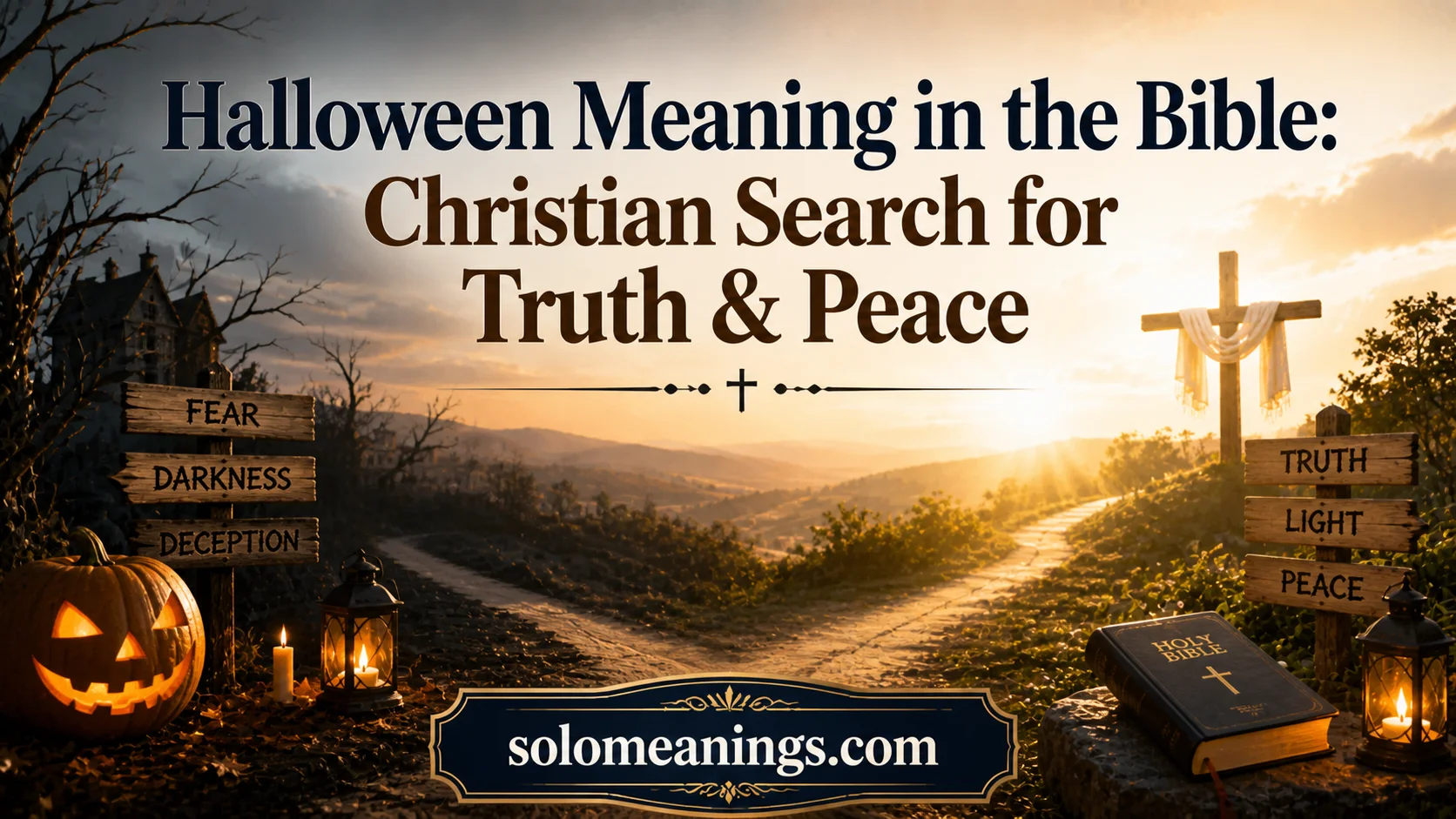
Halloween is one of the most discussed fall holidays in America. Some families love the costumes, candy, and orange lights. Others feel uneasy because of ghosts, darkness, and spiritual themes. That is why many people search for Halloween Meaning in the Bible: Christian Search for Truth & Peace.
The Bible never mentions Halloween by name. However, Christians still ask if the holiday fits with biblical values or if it carries meanings that conflict with faith. This question has become even stronger in modern America, where Halloween is both a billion-dollar celebration and a spiritual debate.
To understand it clearly, we have to look at three things: its ancient origins, its Christian reinterpretation, and its present-day use. Only then can we separate folklore from faith and fear from truth.
Quick Answer
Halloween Meaning in the Bible: Christian Search for Truth & Peace centers on discernment rather than direct biblical command. In the United States, many Christians see Halloween as a time to carefully weigh themes of darkness, death, fear, and cultural fun against biblical calls to light, wisdom, and peace. Broadly, the holiday symbolizes humanity’s long fascination with mortality and the unseen world.
TL;DR
• The Bible does not directly mention Halloween.
• Halloween began from ancient autumn death traditions.
• Later, Christian history blended with All Hallows’ Eve.
• American Christians remain divided on participation.
• Main concerns include fear, occult symbols, and spiritual confusion.
• Many believers now seek peaceful, truth-centered alternatives.
What Is Halloween and Why Does It Raise Biblical Questions?
Before asking what the Bible says, we must understand what Halloween actually is today. In America, Halloween mixes harmless fun with darker symbols.
How Halloween Appears in Modern Life
Common Halloween images include:
• Pumpkins and jack-o’-lanterns
• Ghosts and skeletons
• Witches and black cats
• Haunted houses
• Graveyard decorations
• Horror costumes
Some of these are playful. Others intentionally lean into fear and the supernatural.
Because of that, Christians naturally ask whether these symbols shape the mind in unhealthy ways.
Why Bible Readers Feel Concerned
The Bible repeatedly contrasts light and darkness, truth and deception, peace and fear. So when a holiday celebrates eerie themes, some believers become cautious.
The concern is not always candy. It is symbolism.
Ancient Roots of Halloween Before Christianity
Halloween did not begin in the Bible world. Its earliest roots come from ancient Celtic lands, especially the festival of Samhain.
Samhain and the End of Harvest
Samhain marked the transition from harvest to winter. Ancient people believed this was a thin moment between the world of the living and the dead.
They associated the night with:
• Wandering spirits
• Protective fires
• Masks to confuse harmful beings
• Seasonal death and uncertainty
This was less about modern fun and more about survival fear.
Why Ancient Darkness Matters
Ancient autumn festivals often reflected one truth: winter looked like death. Food grew scarce, nights became longer, and people felt vulnerable.
So symbols of ghosts and unseen forces developed naturally.
This fear-based background still shapes Halloween imagery.
How Christianity Intersected With Halloween
Christian history later touched this pagan festival, but it did not create Halloween’s original themes.
All Hallows’ Eve
The church established All Saints’ Day on November 1 to honor faithful believers who had died.
The evening before became All Hallows’ Eve, eventually shortened to Halloween.
This changed the calendar meaning somewhat:
• From wandering spirits
• Toward remembering saints
• From fear rituals
• Toward Christian reflection on death and eternity
However, folk customs never fully disappeared.
A Mixed Holiday Was Born
Because ancient customs and church observances overlapped, Halloween became a blended holiday rather than a purely Christian one.
That mixed identity is why confusion remains.
Halloween Meaning in the Bible: Is It Mentioned?
The Bible gives no direct verse saying “Halloween is allowed” or “Halloween is forbidden.” So Christians must work from principles.
Biblical Themes Often Applied to Halloween
Believers usually examine verses about:
• Avoiding occult practices
• Rejecting fear as a spiritual master
• Focusing on what is pure
• Walking in the light
• Testing cultural customs with wisdom
These ideas shape Christian discussion.
Important Clarification
This does not mean every pumpkin is spiritually dangerous. The issue is whether participation celebrates darkness, mocks death, or opens fascination with harmful themes.
The Bible asks believers to be conscious, not panicked.
Symbolism of Darkness, Death, and Fear in Scripture
To understand the debate, we need to know how the Bible treats Halloween’s most common symbols.
Darkness in the Bible
Darkness often symbolizes:
• Ignorance
• Spiritual separation
• Hidden danger
• Moral confusion
Therefore, decorating joyfully with darkness can feel uncomfortable to some Christians.
Death Symbols in Scripture
The Bible treats death seriously. It is an enemy, a grief, and a reminder of human limits.
Skeleton jokes and graveyard humor can seem harmless culturally, yet they can also feel spiritually shallow to some believers.
This is where personal conviction enters.
Halloween in American Christian Culture
The USA is where Halloween became commercially huge. That has intensified the religious conversation.
Three Common Christian Responses in America
• Full participation as harmless neighborhood fun
• Selective participation with non-dark themes
• Complete avoidance for conscience reasons
American churches often differ widely.
USA Meaning Table
| Christian Context | Typical View of Halloween | Common Concern | Common Response |
| Evangelical cautious groups | Spiritually risky | Occult imagery | Avoid or replace |
| Mainstream family churches | Cultural event | Need discernment | Light participation |
| Outreach-minded churches | Community opportunity | Fear symbolism | Host alternatives |
| Secular Christian homes | Mostly harmless fun | Media excess | Costumes and candy only |
| Strict traditional homes | Conflict with holiness | Darkness themes | No observance |
Spiritual Meaning of Halloween Beyond the Costumes
Halloween keeps surviving because it touches something deep in human psychology.
Humanity’s Curiosity About Death
People have always wondered:
• What happens after death?
• Are spirits real?
• Why does darkness scare us?
• Can fear be controlled through play?
Halloween turns those fears into symbols.
That is why it remains emotionally powerful.
Also Read This: Micah Name Meaning in the Bible: Humility and Faith
Fear Turned Into Entertainment
Modern haunted houses and horror costumes often do one thing: they let people rehearse fear in a controlled environment.
Psychologically, this gives temporary thrill. Spiritually, some Christians question whether repeated darkness desensitizes the heart.
Christian Search for Truth and Peace on Halloween
This is where the article’s central phrase matters most. Many believers are not searching for panic. They are searching for peace.
Questions Christians Commonly Ask
• Can I enjoy community without embracing darkness?
• Does this holiday glorify fear?
• What message am I giving children?
• Am I acting from wisdom or social pressure?
These are thoughtful conscience questions.
Peaceful Approaches Many Families Take
Some Christian families choose:
• Harvest festivals
• Bible-themed costume nights
• Light-centered gatherings
• Community kindness events
This allows fellowship without heavy dark symbolism.
Common Misunderstandings About Halloween and the Bible
There is confusion on both extremes.
Misunderstanding One: Halloween Is Clearly in the Bible
It is not. Scripture does not name the holiday.
Misunderstanding Two: Every Halloween Activity Is Evil
That is also too simplistic. A child dressed as a firefighter collecting candy is not the same as fascination with occult ritual.
Context matters greatly.
The Real Issue
The real biblical issue is spiritual discernment, motive, and the meaning behind participation.
How Halloween’s Meaning Has Shifted Over Time
Halloween today is not exactly ancient Samhain, and it is not exactly medieval All Hallows’ Eve either.
Earlier Meaning
Earlier, Halloween reflected fear of winter, spirits, and death.
Church Era Meaning
Later, it brushed against remembrance of saints and mortality.
Modern American Meaning
Now Halloween usually means:
• Costumes
• Candy
• Horror entertainment
• Neighborhood events
• Seasonal decor
Yet underneath, old death symbolism still lingers.
That layered meaning explains why debates continue.
Can Christians Celebrate Halloween Peacefully?
This is one of the most searched practical questions.
Many Believers Use a Filter
They ask:
• Does this promote fear?
• Does this honor darkness?
• Is this innocent fun?
• Does this disturb my conscience?
This personal filtering helps families decide.
Peace Comes From Clarity
Christians who choose participation often simplify it. Christians who abstain often do so quietly without judging others.
Both groups are usually trying to honor peace.
FAQs
Does the Bible say Halloween is sinful?
No direct verse says that. Christians apply broader biblical principles about light, fear, wisdom, and spiritual practices.
Is Halloween a pagan holiday?
Its earliest roots include pagan autumn customs. However, the modern American version is a mixed cultural holiday with commercial, social, and historical layers.
Should Christians let children trick-or-treat?
Many do, while avoiding darker themes. Others choose not to because of conscience. Families usually decide based on symbolism and comfort level.
What is the spiritual concern with Halloween?
The biggest concern is normalizing fear, occult curiosity, or dark imagery without reflection. Some believers feel this can blur spiritual sensitivity.
Can Halloween be redeemed for Christian use?
Some churches try to redirect it through harvest events, kindness nights, or saint-focused remembrance. This is an attempt to replace fear with community.
Why are Christians divided on Halloween?
Because the Bible gives principles rather than a direct command. That leaves room for different convictions.
Conclusion
At its deepest level, Halloween Meaning in the Bible: Christian Search for Truth & Peace is not about one simple yes or no. It is about understanding where the holiday came from, what symbols it carries, and how those symbols affect the heart.
Halloween in modern America is a layered mix of ancient fear, church history, commercial fun, and personal conscience. For some, it remains harmless seasonal play. For others, it raises real spiritual discomfort.
The wisest path is not panic or mockery. It is thoughtful peace. When truth leads the decision, fear no longer has to.