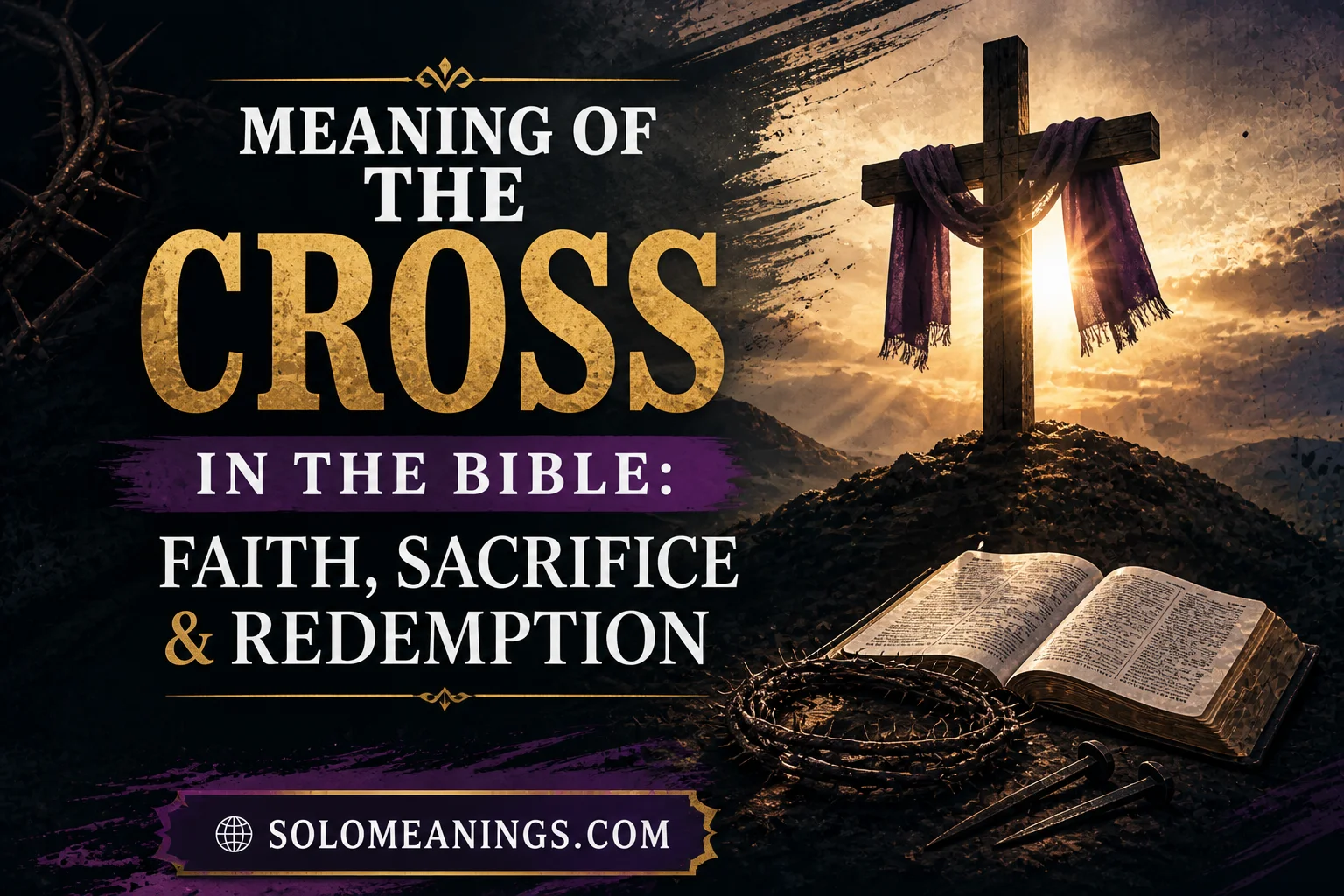
Few symbols are as instantly recognized as the cross. It appears on church buildings, necklaces, tattoos, graves, prayer books, and social media profiles. For Christians, it is more than a shape made of two intersecting beams. It carries the heart of the gospel story.
The Meaning of the Cross in the Bible: Faith, Sacrifice & Redemption begins in a place of pain. In the ancient world, the cross was not beautiful. It was an instrument of Roman execution used for humiliation, suffering, and public death. Yet the Bible transforms this dark object into one of the strongest symbols of divine love and spiritual rescue.
In the United States, the cross remains the most visible sign of Christian identity. However, many people wear it or display it without fully knowing how its meaning developed. Once we trace its biblical journey, the symbol becomes far richer.
Quick Answer
In American Christian understanding, the Meaning of the Cross in the Bible: Faith, Sacrifice & Redemption symbolizes Jesus Christ’s sacrificial death, humanity’s redemption from sin, and the believer’s faith in God’s saving love. More broadly, it represents forgiveness, victory over death, spiritual identity, and hope after suffering.
TL;DR
• The cross began as a Roman death tool.
• Jesus’ crucifixion transformed its meaning.
• It now symbolizes sacrifice and salvation.
• American Christians use it as faith identity.
• It also signals hope, endurance, and forgiveness.
• The symbol moved from shame to glory.
What Is the Cross in Biblical Terms?
To modern eyes, the cross often looks decorative. In biblical times, it looked terrifying. Understanding that original image changes everything.
The Physical Appearance of the Cross
A Roman cross was usually made from rough wood. It consisted of an upright beam and a crossbeam. Victims were fastened to it publicly.
Its visual features carried emotional force:
• Harsh wooden texture
• Elevated public display
• Outstretched body position
• Visible suffering
• Slow humiliating death
So the cross originally meant disgrace, not comfort.
Why Scripture Keeps Returning to It
The New Testament centers on the crucifixion because it treats this event as the turning point of salvation history. The object itself becomes inseparable from what happened on it.
Historical Background: The Cross Before Christianity
The cross was not invented by Christians. It existed long before church worship or Christian art.
Roman Execution and Public Shame
Romans used crucifixion to punish rebels, slaves, and criminals. It was designed not only to kill but also to warn society.
• Maximum pain
• Maximum exposure
• Maximum humiliation
• Maximum fear
Because of this, early listeners would have found cross language shocking.
Earlier Symbolic Echoes
Long before Roman crucifixion, intersecting beams and sacred directional shapes appeared in some ancient cultures. However, these earlier forms were not the same as the Christian cross.
The Bible’s cross meaning comes mainly from the crucifixion event, not decorative geometry.
The Cross as the Symbol of Sacrifice
The first great biblical layer of the cross is sacrifice. Jesus does not die accidentally in Christian teaching. His death is presented as intentional offering.
A Sacrifice in Place of Others
New Testament writers describe Christ as giving His life “for many.” This gives the cross substitution meaning.
• Innocence bearing guilt
• Love absorbing violence
• One suffering for many
• Blood sealing covenant mercy
The cross becomes an altar, not merely a death post.
Why Sacrifice Matters Emotionally
Sacrifice speaks deeply because it suggests cost. Love feels stronger when something precious is given away.
That is why the cross still moves people emotionally after two thousand years.
The Cross as Redemption and Rescue
Sacrifice alone is not the whole picture. The Bible also treats the cross as the place where redemption happens.
What Redemption Means
Redemption means release by payment. In ancient life, slaves could be redeemed through a price.
Christians connect this to the cross:
• Debt answered
• Captivity interrupted
• Sin barrier removed
• Spiritual freedom opened
So redemption adds liberation to sacrifice.
From Condemnation to Acceptance
The Bible teaches that what stood against humanity was dealt with through the cross. This is why Christians see it not only as tragedy but as rescue.
Also Read This: Meaning of Propitiation in the Bible: Mercy That Removes Sin
The Cross and Forgiveness of Sin
Many American believers first learn the cross through forgiveness language. “Jesus died for my sins” is a common summary.
Why Sin Is Central to Cross Meaning
Without the idea of sin, the cross becomes only martyrdom. Scripture insists it is more than that. It is connected to guilt, separation, and reconciliation.
Mercy Through Blood
This can sound severe to modern ears, but biblical writers repeat the point:
• Wrongdoing is serious
• Justice is not ignored
• Mercy is still offered
• Forgiveness is made available
So the cross becomes where truth and compassion meet.
Meaning of the Cross in American Christian Culture
No Christian symbol is more widespread in the USA than the cross. It functions both spiritually and socially.
Where Americans Display the Cross
• Church steeples
• Grave markers
• Wall décor
• Necklaces and rings
• Car decals
• Bible covers
Its visibility shows how fully the symbol became part of American faith life.
The Cross as Personal Testimony
For many, wearing a cross means:
• I belong to Christ
• I remember His sacrifice
• My faith is public
• Hope is stronger than shame
So it acts as identity as much as doctrine.
Spiritual Meaning of Carrying the Cross
Jesus also says believers must “take up” their cross. This expands the symbol beyond Christ’s death into Christian living.
More Than Wearing Jewelry
Carrying the cross does not mean simply displaying a pendant. It means accepting sacrifice, obedience, and perseverance.
• Enduring hardship faithfully
• Choosing obedience over comfort
• Dying to selfish desires
• Staying loyal under pressure
This gives the symbol a daily discipleship meaning.
Why This Still Resonates
Americans often connect this with personal trials, caregiving burdens, ministry challenges, or moral endurance.
Emotional and Psychological Symbolism of the Cross
The cross survives because it holds multiple emotional meanings at once.
Common Feelings Associated With the Cross
• Sorrow
• Gratitude
• Safety
• Humility
• Hope
• Reverence
Few symbols combine grief and comfort so strongly.
Why It Feels Like a Refuge
Psychologically, the cross tells believers that suffering has been entered by God Himself. This makes pain feel less lonely.
The Cross in Tattoos, Fashion, and Social Media
The cross is no longer confined to church spaces. It appears throughout modern visual culture.
Common Modern Uses
• Minimalist cross tattoos
• Fashion necklaces
• Prayer room wall art
• Instagram faith bios
• Memorial jewelry
Some use it mainly as style, while others use it devotionally.
The Risk of Symbol Without Meaning
Because the cross is common, it can become decorative and disconnected. Yet for serious believers, its original story still gives it depth.
Misunderstandings and Controversies Around the Cross
A symbol this famous naturally gathers confusion and misuse.
The Cross Is Not a Lucky Charm
Some treat crosses like protective objects by themselves. Biblically, the power is not in wood or metal but in what the cross represents.
Cultural and Historical Tensions
The cross has also been misused in moments of forced religion, political aggression, or public hypocrisy. These abuses do not erase its biblical meaning, but they do show how sacred symbols can be manipulated.
Cross Meanings at a Glance
| Context | Meaning in the Bible | Common Association in USA | Notes |
| Roman Crucifixion | Death and shame | Historical suffering | Original setting |
| Jesus’ Sacrifice | Atoning love | Salvation message | Core gospel symbol |
| Redemption | Freedom from sin | Spiritual rescue | Hope language |
| Christian Identity | Belonging to Christ | Public faith display | Personal testimony |
| Daily Discipleship | Self-denial and endurance | Carrying burdens faithfully | Lifestyle meaning |
How the Meaning of the Cross Changed Over Time
This may be the Bible’s greatest symbolic reversal. An object built for terror becomes a sign of worship.
Early Meaning: Fear and Humiliation
At first, the cross represented defeat. No one would naturally choose it as a beloved symbol.
Later Meaning: Victory and Grace
After the resurrection, Christians re-read the cross as triumph through suffering.
• Shame becomes glory
• Death becomes life
• Punishment becomes pardon
• Loss becomes redemption
That reversal is why the symbol remains so compelling.
FAQs
What does the cross symbolize in the Bible?
The cross symbolizes Jesus’ sacrificial death, forgiveness of sins, redemption, and the believer’s faith in God’s saving love.
Why is the cross important to Christians?
Because Christians believe Jesus died on the cross to bring salvation. It stands at the center of the gospel story.
Was the cross always a positive symbol?
No. In Roman times it was a cruel execution device associated with shame and terror.
What does carrying your cross mean?
It means living with obedience, sacrifice, and faithfulness even when life is difficult.
Why do Christians wear cross necklaces?
Many wear them as reminders of Christ’s sacrifice, public expressions of faith, or personal symbols of hope.
Is the cross only about death?
No. While it includes death, Christianity sees it as the doorway to resurrection, redemption, and eternal life.
Conclusion
The cross began as one of history’s harshest tools of punishment, a wooden frame built to shame and destroy. Yet in the Bible, that same object becomes the meeting place of sacrifice, mercy, and spiritual rescue.
That is why the Meaning of the Cross in the Bible: Faith, Sacrifice & Redemption still stands at the center of Christian belief. It tells a story where suffering is not the end, guilt is not final, and love is willing to pay a great cost.
For modern readers, the cross remains more than a church emblem. It is a reminder that the darkest instruments can, in God’s hands, become signs of enduring hope.