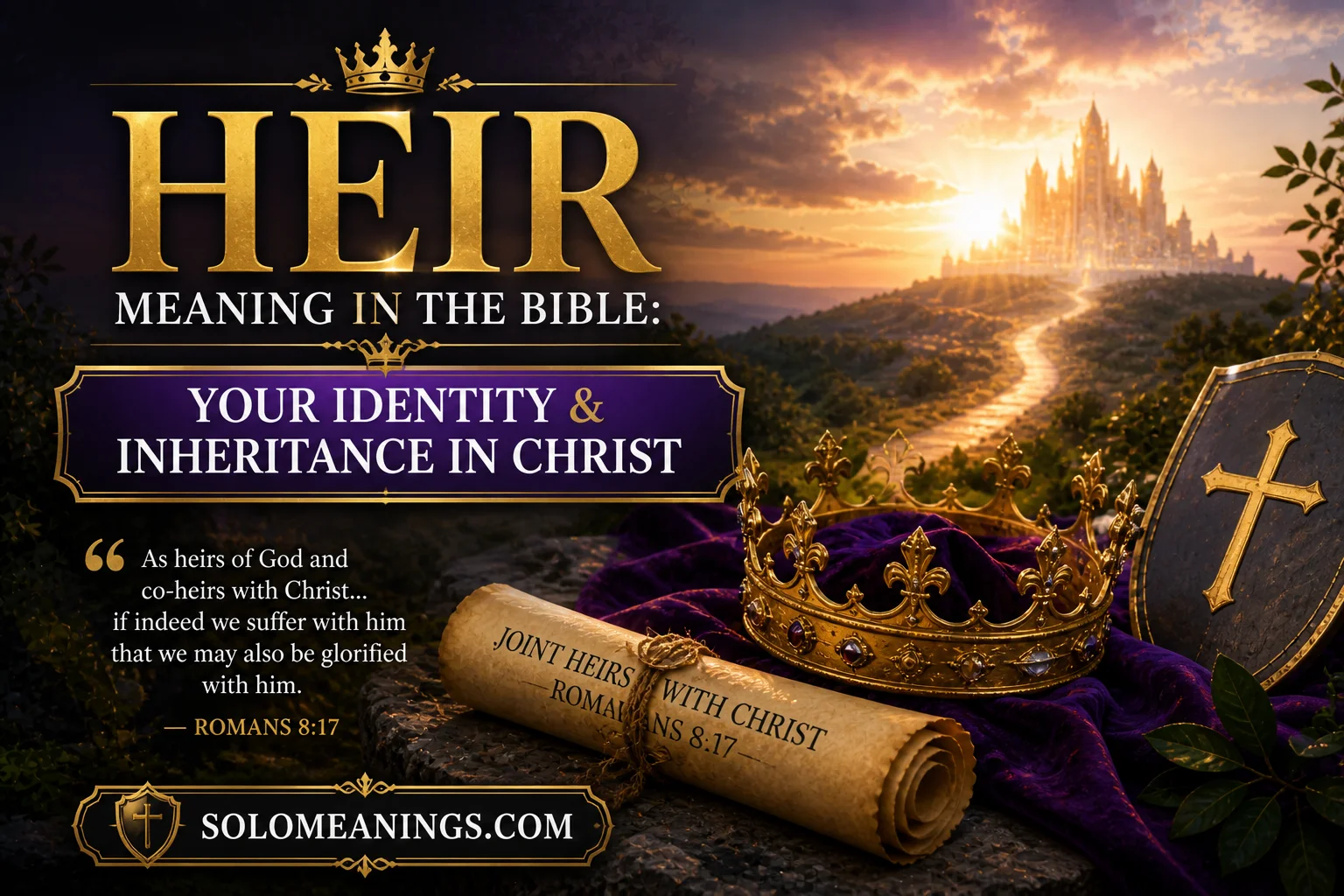
The word heir usually makes people think of money, land, or family property. In the Bible, however, it reaches much deeper than legal inheritance. Heir Meaning in the Bible: Your Identity & Inheritance in Christ speaks about belonging, covenant promise, spiritual adoption, and receiving what God gives to His children.
For many Christians in the United States, this idea feels deeply personal. It tells believers they are not outsiders, servants, or spiritual strangers. Instead, they are part of God’s household with access to grace, hope, and eternal promise.
This biblical image also carries strong emotional power. Ancient inheritance was tied to name, family future, protection, and social standing. Because of that, the Bible’s use of heir language becomes one of the clearest pictures of spiritual identity.
Quick Answer
Heir Meaning in the Bible: Your Identity & Inheritance in Christ means that believers are spiritually adopted into God’s family and receive His promises as children, not merely followers. In American Christian teaching, this symbolizes worth, belonging, authority, and eternal hope, while broader biblical tradition ties it to covenant lineage and divine favor.
TL;DR
• An heir is someone who receives an inheritance.
• In Scripture, heirs receive God’s promises.
• Christ is the central heir of all things.
• Believers become co-heirs through faith.
• The symbol points to identity, not just reward.
• It remains powerful in modern Christian life.
Overview of the Biblical Meaning of Heir
The Bible uses heir language in both literal and spiritual ways. At the basic level, an heir is the person legally entitled to receive family possessions, land, title, or blessing after another’s death.
However, Scripture quickly expands that simple idea. In many passages, heir means the one chosen to carry covenant promise, divine mission, and family identity into the future.
More Than Property Transfer
Biblical inheritance was never only financial. It often included:
• Family name
• Tribal position
• Covenant blessing
• Land rights
• Authority
• Future leadership
Because of this, becoming an heir meant receiving both privilege and responsibility.
Why This Matters Spiritually
When the New Testament calls believers heirs, it is saying they receive far more than heaven later. They receive a new family position now.
That changes the way Christians understand themselves.
Historical Background of Inheritance in the Ancient Bible World
To understand heir symbolism, we need the legal world behind it. Ancient Israel and nearby cultures treated inheritance as a major social structure.
Family Inheritance in Ancient Israel
Land stayed within family lines whenever possible. The firstborn son often received a double portion because he carried family continuity.
Inheritance protected:
• Economic survival
• Family memory
• Tribal territory
• Social honor
• Generational security
Without inheritance, a person could lose standing and protection.
Ancient Near Eastern Covenant Patterns
Beyond Israel, surrounding societies also treated heirs as official continuers of household authority. The heir represented the future life of the family.
That cultural pattern made inheritance language emotionally loaded. To be named heir meant to be publicly recognized as belonging.
Why the Bible Uses This So Often
Because inheritance touched security and identity, God used this legal image to explain covenant relationship. People instantly understood the weight of the comparison.
Heir as a Covenant Promise in the Old Testament
In the Old Testament, heirship often begins with Abraham. God repeatedly promises descendants, land, and blessing.
Abraham and the Promise Line
Abraham worried because he had no child to continue his line. In ancient terms, that meant no covenant heir.
When Isaac was born, he was more than a son. He became the visible carrier of divine promise.
This established a major biblical truth: heirs are chosen to continue what God starts.
Heirs of Promise
Old Testament heirs often represent:
• Continuation
• Chosen lineage
• Future blessing
• Preserved covenant
• Family destiny
This is why genealogies matter so much in Scripture. They trace who carries the promise.
Christ as the Ultimate Heir
The New Testament shifts the symbol higher. Jesus is described as the true heir, the Son who receives all things from the Father.
Why Christ Stands at the Center
He does not inherit merely land or tribe. He inherits kingdom authority, divine rule, and the fulfillment of every covenant promise.
This changes heirship from a family issue into a cosmic one.
Meanings Attached to Christ the Heir
• Sonship
• Authority
• Ownership
• Fulfillment
• Kingdom rule
• Covenant completion
In simple words, all biblical inheritance finds its center in Christ.
Believers as Heirs in Christ
This is where the symbol becomes deeply personal. The New Testament says believers become heirs through union with Christ.
Adopted Into God’s Family
Christians are not described only as forgiven people. They are described as adopted sons and daughters.
That means:
• They belong in the household
• They share family promise
• They receive spiritual access
• They stand under divine care
This is why many American sermons call salvation “a change of family.”
Co-Heirs With Christ
The phrase co-heirs means sharing in what belongs to Christ by grace. Believers do not earn heirship through status. They receive it through relationship.
That gives the symbol warmth instead of cold legalism.
Your Identity in Christ as an Heir
Modern believers often struggle with worth, insecurity, and spiritual distance. Biblical heir language directly speaks into those fears.
Heirship Changes Personal Identity
An heir is not a guest. An heir is not temporary. An heir is part of the house.
Spiritually, this means Christians are invited to see themselves as:
• Wanted
• Chosen
• Recognized
• Secure
• Valued
• Entrusted
This is why heir language is often used in Christian counseling and devotional writing in the USA.
Emotional Weight of Belonging
Many people live with a hidden fear of exclusion. The Bible answers that fear with family language, not just religious commands.
Heirship says: you have a place.
What Is the Inheritance Christians Receive?
A common misunderstanding is that inheritance means only heaven after death. The biblical picture is larger.
Present and Future Inheritance
Believers receive both present spiritual realities and future eternal fulfillment.
These include:
• Relationship with God
• Grace and forgiveness
• Inner peace
• Access to prayer
• Kingdom citizenship
• Eternal life
So inheritance is both now and not yet.
Symbolism Table: Biblical Heirship Meanings
| Context | Meaning in the USA | Common Associations | Notes |
| Family heir | Belonging and legacy | Name, house, continuity | Basic legal image |
| Covenant heir | God’s chosen promise carrier | Abraham, Isaac, Israel | Old Testament focus |
| Christ as heir | Supreme Sonship | Kingdom, authority, fulfillment | New Testament center |
| Believer as heir | Spiritual adoption | Identity, grace, security | Popular sermon theme |
| Eternal inheritance | Future glory | Heaven, reward, promise | Hope-centered image |
Heir Meaning in American Christian Culture
The USA church world strongly emphasizes personal identity. Because of that, heir language often appears in preaching, worship songs, and devotionals.
Common American Christian Themes
When pastors discuss believers as heirs, they usually connect it with:
• Confidence in prayer
• Freedom from shame
• Kingdom authority
• Sonship and daughterhood
• Spiritual confidence
• Eternal security
This makes the symbol emotionally encouraging.
Why It Resonates So Strongly
American faith culture often focuses on individual relationship with God. Heirship supports that by saying believers are not distant followers but intimate family members.
Cross-Cultural Spiritual Meaning of Inheritance
The idea of inheritance appears in many cultures, but the Bible gives it a unique covenant shape.
Universal Human Meaning
Across societies, inheritance often means:
• Family continuation
• Honor
• Protection
• Generational blessing
• Public recognition
People naturally connect inheritance with worth.
Biblical Distinctiveness
Scripture adds one major difference: divine inheritance is not only bloodline based. Through faith, outsiders can be brought into the family.
That spiritual adoption makes the symbol broader and more hopeful.
Emotional and Psychological Symbolism of Being an Heir
Symbols survive because they meet emotional needs. The heir image speaks to security, dignity, and future assurance.
Deep Psychological Signals
Being named an heir suggests:
• I am included
• I am remembered
• I am trusted
• I have a future
• I am not abandoned
This explains why the language feels healing to many believers.
Why It Still Works Today
Even in modern America, people understand the emotional difference between visitor and family. The biblical symbol taps that same instinct.
Modern Usage of Heir Symbolism in Christian Life
Although few people use inheritance language in daily speech, churches keep it alive through worship and teaching.
Common Modern Uses
• Devotional books on identity
• Sermons about sonship
• Christian wall art quotes
• Social media faith graphics
• Prayer journal affirmations
• Bible study lessons
Faith Language Online
Phrases like “daughter of the King,” “kingdom heir,” and “heir of promise” are common digital expressions. They are modern versions of biblical heir theology.
Misunderstandings and Controversies Around Heirship
Some teachings misuse heir language by reducing it to wealth promises alone. That creates confusion.
Not Just Material Prosperity
Biblical inheritance is primarily relational and spiritual. It includes promise, access, and future glory—not merely earthly riches.
Avoiding Entitlement Thinking
Heirship does not mean believers control God or deserve luxury. Instead, it means they live from family belonging and covenant trust.
That is a major difference.
Also Read This: Raiment Meaning in the Bible: A Symbol of Faith and Purity
How the Meaning of Heir Has Shifted Over Time
Originally, heir was mostly a legal family term. Over centuries, Christian teaching made it a deeply spiritual identity term.
From Legal Status to Heart Identity
Older readers focused on inheritance rights. Modern Christians often focus more on emotional belonging and personal worth.
Both are connected, but the emphasis has shifted.
Why This Shift Matters
Today’s readers often need reassurance of identity. Because of that, heir language now feels more intimate than formal.
FAQs
What does heir mean spiritually in the Bible?
Spiritually, an heir is someone who receives God’s promises as part of His family. It points to belonging, covenant blessing, and eternal hope.
Are all Christians called heirs?
Yes, the New Testament describes believers in Christ as heirs through spiritual adoption. This means they share in divine promise.
What inheritance do believers receive?
Believers receive grace, access to God, identity, kingdom citizenship, and eternal life. The inheritance is both present and future.
What does co-heir with Christ mean?
It means believers share in Christ’s promised blessing because they are united with Him. The relationship creates shared inheritance.
Is heirship about money in the Bible?
Sometimes literal inheritance appears, but spiritual passages focus on covenant promise rather than wealth alone.
Why is heir language important today?
It answers modern feelings of insecurity and distance. The symbol reminds believers that they belong in God’s household.
Conclusion
The Heir Meaning in the Bible: Your Identity & Inheritance in Christ reveals one of Scripture’s most comforting truths: believers are not spiritual outsiders trying to earn a place. They are welcomed children with covenant promise, divine care, and lasting future.
From Abraham’s family line to Christ’s eternal kingdom, the Bible uses heirship to show continuity, belonging, and trust. For modern readers, this ancient legal image still offers something deeply human—the assurance that you are remembered, included, and given a future in God’s house.
The next time you read the word heir in Scripture, read it as more than inheritance law. Read it as identity.