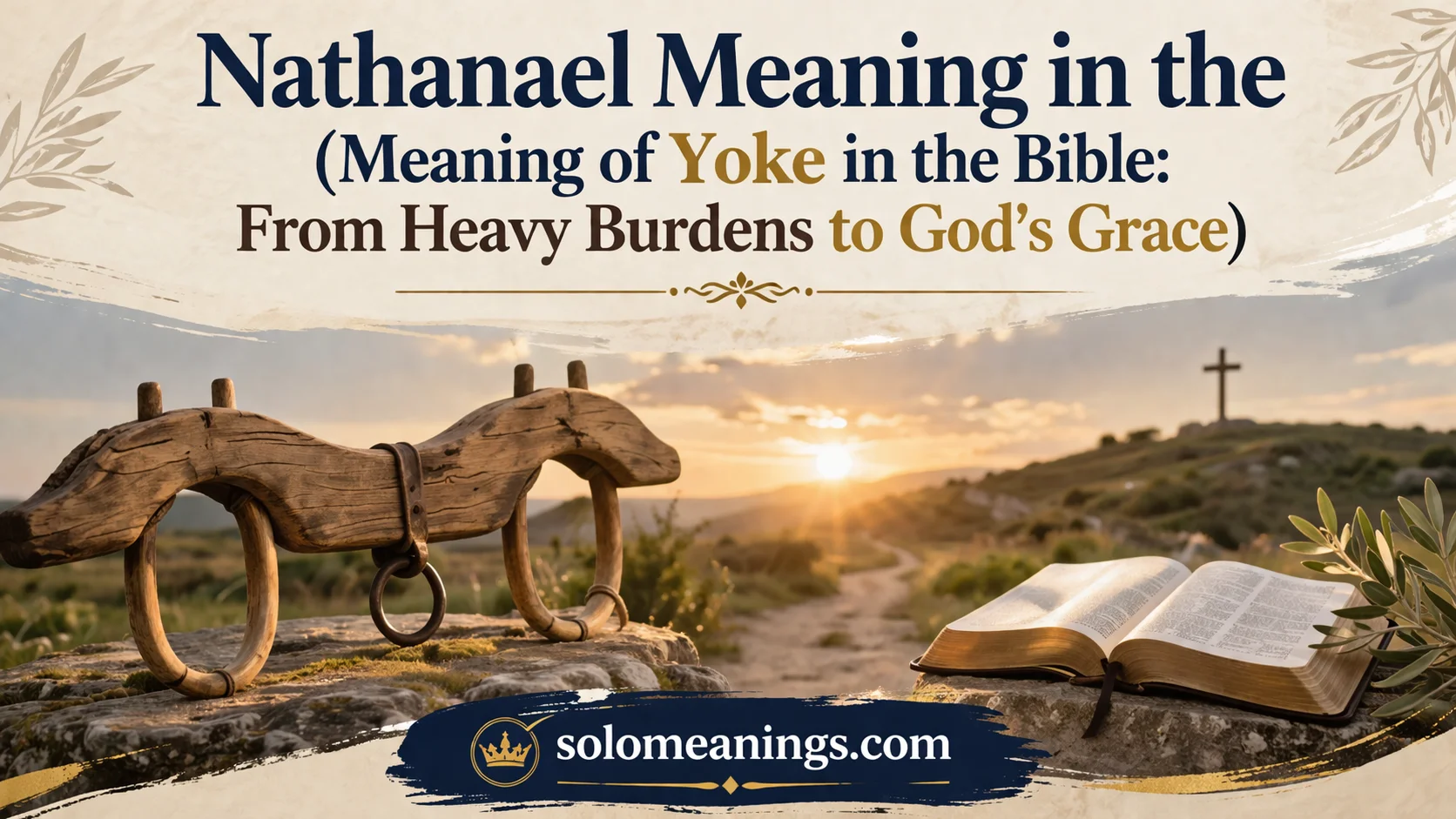
The word yoke may sound old-fashioned, but it carries one of the strongest images in the Bible. In ancient times, a yoke was a wooden beam placed across the necks of oxen. It joined them together so they could pull heavy loads or plow hard ground.
Because that image was familiar to Bible readers, Scripture used the yoke to describe much more than farming. It became a picture of slavery, oppression, duty, discipline, partnership, and finally spiritual rest. That surprising shift is what makes the Meaning of Yoke in the Bible: From Heavy Burdens to God’s Grace so powerful.
In the United States, Christians still use this image in sermons, devotionals, recovery ministries, and inspirational art. Many hear Jesus’ words, “My yoke is easy,” without fully understanding how radical that promise really was. Once the full biblical history is seen, the symbol becomes much deeper.
Quick Answer
In American Christian understanding, the Meaning of Yoke in the Bible: From Heavy Burdens to God’s Grace symbolizes a spiritual load placed on a person’s life—sometimes oppression, sin, or duty, and other times partnership with God. Across Scripture, the yoke shifts from a sign of crushing bondage to Jesus’ invitation into guided rest, shared strength, and divine grace.
TL;DR
• A yoke was a wooden farming harness.
• The Bible uses it as a burden symbol.
• It can mean slavery, law, sin, or discipline.
• Prophets used yoke imagery for oppression.
• Jesus transformed the symbol into rest.
• Today it often means surrender with support.
What Is a Yoke in Simple Biblical Terms?
Before looking at spiritual meaning, we need the physical picture. Ancient readers knew exactly what a yoke looked like because it was part of daily farm life.
The Physical Description of a Yoke
A yoke was usually made of carved wood. It sat across the shoulders or necks of two oxen. Leather straps or ropes held it in place, allowing the animals to pull together.
Its features made it a perfect symbol:
• Heavy wooden beam
• Restrictive neck placement
• Shared pulling force
• Guided movement under authority
• Limited freedom while carrying weight
So from the start, the object suggested control and labor.
Why the Bible Chose This Farming Image
The Bible often teaches through ordinary things: seeds, lamps, bread, water, sheep, and tools. A yoke fit this pattern because everyone understood its pressure.
Even without words, a yoke visually said: something is on you.
Historical Background of the Yoke Symbol
The yoke image did not begin as a church metaphor. It came from agricultural life across the ancient Near East, including Egypt, Israel, Babylon, and Rome.
Ancient Near Eastern Use
Kings and rulers often used “yoke” language politically. To place a yoke on people meant forcing them into tribute, labor, or submission.
This made the symbol larger than farming.
• National conquest
• Forced labor systems
• Tax burden under empire
• Human ownership and control
So when biblical writers used yoke language, readers heard both farm hardship and political domination.
Hebrew Language Roots
The Hebrew word commonly translated as yoke is ol. It often appears in passages dealing with servitude, discipline, and foreign oppression.
Because Israel repeatedly lived under hostile powers, the yoke became a vivid national symbol of pressure.
Yoke as a Symbol of Slavery and Oppression
In many Old Testament passages, the yoke is not comforting. It is harsh. It means people are trapped under crushing power.
Egypt and Bondage Memory
Israel’s slavery in Egypt shaped much of biblical imagination. Though the word yoke is not the only image used, later writers connect heavy bondage with a yoke on the neck.
• No freedom
• Endless labor
• Harsh masters
• Physical exhaustion
• Crushed identity
This creates the first emotional layer of the symbol: burden without relief.
Prophets and National Enemies
Prophets like Isaiah, Jeremiah, and Ezekiel use yoke language when speaking about Babylonian or Assyrian control. God promises at times to “break the yoke” from off His people.
That phrase becomes a liberation cry.
The Yoke of the Law and Religious Duty
As biblical thought develops, yoke begins to mean more than political slavery. It also points to strict obligation.
Duty Under Command
A yoke can symbolize rules placed upon a person. In Jewish thought, obedience to God’s law could be described as taking on a yoke.
This was not always negative. Sometimes it meant willing submission.
However, over time the image also became linked with heavy religious expectations.
When Duty Feels Crushing
By the New Testament era, many people felt weighed down by layers of legal demands.
• Ritual performance pressure
• Fear of failing commandments
• Social judgment
• Constant moral anxiety
So the yoke starts carrying an inward burden, not just an outward one.
Jeremiah’s Wooden Yoke Prophecy
One of the strongest visual scenes appears in Jeremiah. God tells the prophet to literally wear a wooden yoke on his neck.
A Living Symbol of Submission
Jeremiah walks publicly with the yoke to show Judah that Babylonian domination is coming. It is a shocking prophetic sign.
People did not just hear a sermon. They saw burden hanging on a human body.
The Broken Yoke Drama
Another prophet, Hananiah, breaks Jeremiah’s yoke and claims quick freedom is near. But Jeremiah warns that a broken wooden yoke will become an iron yoke.
This changes the symbolism:
• Wooden yoke = difficult burden
• Iron yoke = unavoidable severe burden
The message is simple: resisting truth can increase pressure.
Jesus and “My Yoke Is Easy”
This is the turning point of the whole biblical symbol. The same object that once meant slavery becomes transformed by Christ.
Why Jesus’ Statement Was So Radical
When Jesus says, “Take my yoke upon you,” listeners expected another burden. Rabbis often spoke of taking on teaching like a yoke.
But Jesus adds something shocking: “My yoke is easy, and my burden is light.”
He presents authority without crushing weight.
Shared Pulling, Not Isolated Struggling
A yoke usually joins two animals. Many Christian teachers see this as a picture of Christ carrying the deeper load while believers walk beside Him.
• Guidance replaces confusion
• Shared labor replaces lonely strain
• Gentle leadership replaces harsh mastery
• Rest appears inside responsibility
This is where burden becomes grace.
Also Read This: Grace Bible Meaning: God’s Love and Favor Explained
Meaning of Yoke in American Christian Culture
In the United States, this verse from Matthew is one of the most quoted uses of yoke imagery. Churches often use it in healing ministries.
Common American Interpretations
Today, believers connect yoke with:
• Stress and burnout
• Sin habits
• Emotional baggage
• Legalistic religion
• Need for surrender
Then Jesus’ easy yoke becomes the answer.
Why This Image Connects in Modern Life
Modern Americans live under invisible yokes: debt, deadlines, image pressure, trauma, comparison, and constant performance.
Because of that, the old farming symbol still feels current.
Spiritual Meaning of a Broken Yoke
Breaking the yoke is one of the Bible’s most hopeful phrases. It suggests release after long strain.
What a Broken Yoke Represents
Spiritually, a broken yoke often symbolizes:
• Freedom from addiction
• End of oppression
• Deliverance from fear
• Release from guilt
• New season of peace
This is why many Pentecostal and evangelical sermons still use the phrase often.
Yet Not Every Yoke Is Removed
Scripture makes an important distinction. Some yokes must be broken, but Christ’s yoke must be accepted. So the goal is not living without any authority. It is living under the right authority.
Also Read This: Grace Bible Meaning: God’s Love and Favor Explained
Emotional and Psychological Symbolism of the Yoke
The yoke works so well because it matches human feeling. Many people know what it means to feel something pressing on their neck.
Common Emotions Linked to Yoke Imagery
• Tension
• Restriction
• Weariness
• Obligation
• Dependence
These emotions make the metaphor memorable even for modern readers who have never seen oxen plow.
Why Jesus’ Promise Feels Personal
When people feel overworked, ashamed, trapped, or mentally exhausted, the image of a lighter yoke creates immediate relief. It says spiritual life should not feel like endless suffocation.
Yoke Symbolism in Christian Art, Tattoos, and Teaching
Though not as common as the cross, the yoke appears in niche Christian imagery today.
Where the Symbol Appears
• Sermon graphics about rest
• Recovery ministry books
• Faith journals
• Liberation testimonies
• Rustic farmhouse wall scripture
Some Christians also use broken chain or broken yoke tattoos to represent freedom.
Why It Endures Visually
The symbol is plain but strong. One wooden beam can communicate burden, bondage, surrender, and release all at once.
Biblical Yoke Meanings at a Glance
| Context | Meaning in the Bible | Common Association in USA | Notes |
| Farming Tool | Work and guidance | Shared labor | Physical origin |
| Egypt/Babylon | Oppression and slavery | Heavy life burden | National suffering |
| Religious Law | Duty and discipline | Legalism pressure | Moral weight |
| Jeremiah Prophecy | Forced submission | Unavoidable consequences | Warning image |
| Jesus’ Yoke | Gentle surrender and rest | Grace and healing | Symbol transformed |
How the Meaning of Yoke Changed Over Time
This symbol travels a long road in Scripture. It starts dark and ends gentle.
Earlier Meaning: Burden from Outside
At first, yoke is something rulers, masters, or systems put on people. It feels imposed.
Later Meaning: Chosen Partnership
With Jesus, the image changes into willing connection. The burden does not fully disappear, but the relationship changes everything.
This is one of the Bible’s most beautiful reversals: the same object of strain becomes an object of support.
FAQs
What does yoke symbolize in the Bible?
A yoke symbolizes burden, control, submission, labor, or partnership. Its meaning depends on whether the force behind it is oppression or God’s guidance.
Why did Jesus say His yoke is easy?
Jesus contrasted His leadership with crushing religious and worldly burdens. He offered direction joined with compassion and inner rest.
Is yoke always a negative symbol in Scripture?
No. Many Old Testament uses are negative, but New Testament teaching gives it a hopeful meaning when tied to Christ.
What does breaking the yoke mean spiritually?
It means release from something that has held a person down, such as fear, sin, guilt, or oppression.
Why is the yoke important to Christians today?
Because it describes modern exhaustion in a visual way. It also offers a picture of surrender that does not destroy peace.
Does a yoke mean being controlled?
Yes, but biblical teaching asks who is doing the controlling. Harmful masters crush, while Christ directs with grace.
Conclusion
The yoke begins in the Bible as a rough wooden harness, but it quickly grows into a symbol of life’s deepest pressures. It speaks of slavery, harsh duty, spiritual exhaustion, and systems that weigh human beings down.
Yet the Meaning of Yoke in the Bible: From Heavy Burdens to God’s Grace does not end there. Through Jesus, the same image becomes one of companionship, guidance, and rest under a gentler hand.
That is why this ancient farm tool still speaks to modern hearts. Everyone carries something. The biblical question is not whether you bear a yoke, but which yoke you are carrying—and whether it leads to crushing strain or quiet grace.