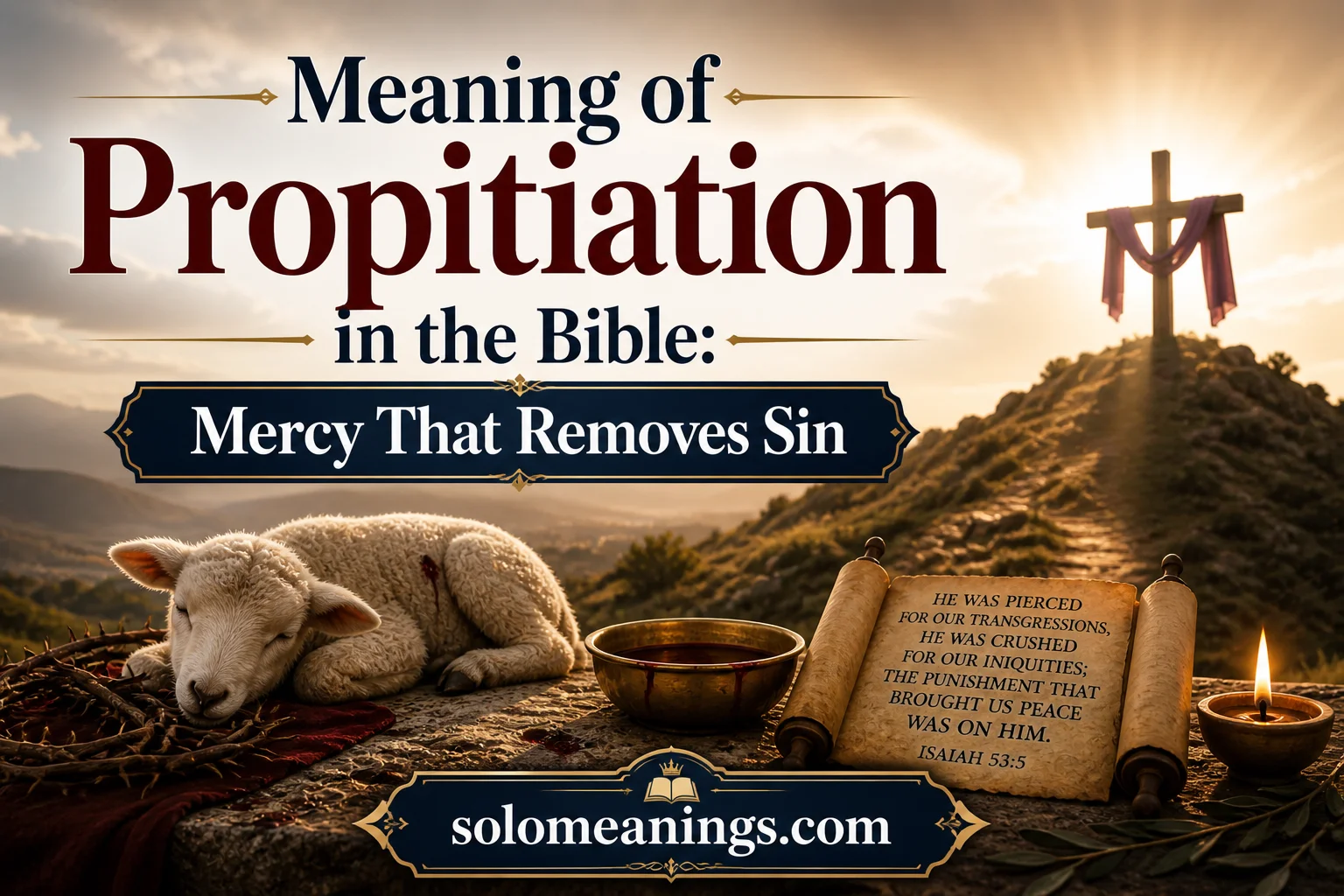
The Meaning of Propitiation in the Bible: Mercy That Removes Sin is about how God deals with human wrongdoing without abandoning either justice or love. It explains why sacrifice mattered, why Jesus’ death is described so deeply, and how mercy becomes more than simple pardon.
In the United States, many Christians hear this word in sermons, study Bibles, or Easter messages but still struggle to explain it clearly. Once broken down into simple language, propitiation becomes less intimidating. In fact, it reveals the emotional center of the Christian story.
Quick Answer
In American Christian understanding, the Meaning of Propitiation in the Bible: Mercy That Removes Sin symbolizes God’s holy response to sin through an accepted sacrifice. It means divine wrath is satisfied, guilt is covered, and mercy is opened so that people can be restored to fellowship with God. In simple terms, propitiation is mercy that does not ignore justice.
TL;DR
• Propitiation is a Bible word about atoning sacrifice.
• It deals with sin, guilt, and divine justice.
• Mercy is given through an accepted offering.
• In Christianity, Jesus becomes the final propitiation.
• The symbol joins holiness with forgiveness.
• It remains central in American Christian teaching.
What Does Propitiation Mean in the Bible?
This word sounds technical, but its heart is simple. Propitiation answers one question: How can sinful people be accepted by a holy God?
Simple Definition of Propitiation
Propitiation means turning away deserved judgment by means of an approved sacrifice. It does not mean pretending sin never happened. Instead, it means the offense is addressed so mercy can flow.
• Sin creates separation
• Justice demands a response
• Sacrifice stands in the gap
• Wrath is satisfied
• Relationship can be restored
This gives the word both legal and emotional depth.
More Than Basic Forgiveness
Ordinary forgiveness may sound like letting something go. Biblical propitiation is stronger. It says the wrong has been dealt with in a meaningful way.
Because of that, the mercy offered is not shallow. It is costly.
Historical Roots of Propitiation in Ancient Worship
Propitiation did not begin in the New Testament. The idea stretches deep into ancient sacrificial systems where offerings symbolized cleansing, appeasement, and restored peace.
Ancient Near Eastern Sacrifice Background
Across ancient cultures, people brought offerings to deities seeking favor or relief from judgment. Israel existed in this wider world, but biblical sacrifice took on a distinct meaning.
Instead of manipulating God, Israel’s sacrifices emphasized holiness and covenant repair.
Old Testament Hebrew Foundations
The Hebrew root often connected to this idea is kaphar, meaning cover, atone, or reconcile.
This appears especially in:
• Sin offerings
• Burnt offerings
• Day of Atonement rituals
• Mercy seat imagery
• Priestly intercession
So the concept was already active long before Jesus.
Propitiation and the Mercy Seat
One of the richest symbols connected to propitiation is the mercy seat in the Tabernacle and Temple.
What Was the Mercy Seat?
The mercy seat was the golden cover placed over the Ark of the Covenant. Above it sat cherubim, and beneath it rested the tablets of the law.
That picture matters greatly. Law beneath. Mercy above.
Blood and Atonement Connection
On the Day of Atonement, the high priest sprinkled sacrificial blood there. This act symbolized that guilt was being covered before God’s holy presence.
• Justice acknowledged
• Sin not denied
• Blood presented
• Mercy extended
• Covenant preserved
This becomes one of the clearest Old Testament pictures of propitiation.
Propitiation in the New Testament
The New Testament takes the older temple language and points it directly toward Jesus Christ.
Key Bible Verses Using the Word
The term appears most famously in Romans 3:25, 1 John 2:2, and 1 John 4:10. These passages say Christ Himself is the propitiation for sins.
That means He is not merely offering a sacrifice. He becomes the sacrifice.
Why This Changed Christian Theology
This transformed worship completely.
• No repeated animal sacrifices needed
• One final offering is presented
• Divine justice is met
• Mercy becomes open to all believers
So propitiation moves from temple ritual to personal salvation.
Jesus as the Final Propitiation
For American Christians, this is the most preached meaning. Easter, communion services, and gospel messages all return here.
The Cross as the Meeting Place of Justice and Mercy
The cross is where two ideas meet:
• God does not ignore sin
• God still loves sinners deeply
Propitiation explains how both can be true at once.
Instead of wrath falling randomly, Christ bears the weight of human guilt.
Why This Feels Emotionally Powerful
Without propitiation, the cross may seem like only suffering. With propitiation, it becomes intentional rescue.
Believers often read this as: Someone took what stood against me so mercy could reach me.
Meaning of Propitiation in American Christian Culture
Though the word is ancient, it remains active in modern Christian life across the USA.
Where Americans Hear This Term
• Easter sermons
• Bible study groups
• Reformed theology teaching
• Communion meditations
• Christian books on atonement
Even when the exact word is not used, the concept is preached often.
Everyday Simplified American Understanding
Many churches explain propitiation in phrases like:
• Jesus paid the price
• Wrath was satisfied
• Mercy covered my sin
• The debt was removed
These are simplified cultural echoes of the same doctrine.
Propitiation vs Atonement vs Expiation
These words often confuse readers because they sound similar. Yet each highlights a slightly different angle.
Quick Difference Explained
Propitiation focuses on satisfying divine justice.
Atonement focuses on reconciliation and making peace.
Expiation focuses on removing guilt or cleansing sin.
They overlap, but they are not identical.
Comparison Table
| Term | Main Focus | Biblical Feel | Common USA Understanding | Key Idea |
| Propitiation | Wrath satisfied | Justice meets mercy | Christ took judgment | Acceptance restored |
| Atonement | Reconciliation | Peace with God | Relationship repaired | Unity regained |
| Expiation | Sin removed | Cleansing guilt | Stain washed away | Purification |
Spiritual Meaning of Propitiation
Beyond theology books, this word carries spiritual emotion. It speaks to what many people feel when facing guilt.
Inner Human Need Addressed by Propitiation
People often wrestle with:
• Shame
• Fear of punishment
• Moral failure
• Desire for cleansing
• Need for acceptance
Propitiation answers that longing by saying guilt is not merely noticed—it is dealt with.
Why It Feels Like Deep Mercy
Mercy feels strongest when the offense is serious. If nothing costly happened, forgiveness can feel cheap.
Propitiation gives mercy weight, and that is why it touches hearts.
Misunderstandings and Modern Debates About Propitiation
This word is meaningful, but it also creates debate. Some modern readers feel uneasy about the language of wrath and sacrifice.
Common Misunderstanding: Angry God vs Loving Jesus
Some imagine propitiation means Jesus loving people while God only wants punishment. Biblical teaching does not present that split.
Instead, the Father Himself provides the means of mercy. Love and justice are acting together.
Ongoing Theological Discussion
Some scholars prefer softer words like “atoning sacrifice” because propitiation sounds severe. Others insist the original strength should remain.
The neutral truth is this: the Bible presents sin as serious and mercy as costly.
How the Meaning Has Shifted Over Time
Propitiation once sat mostly in formal doctrine. Today, many churches explain it through stories of debt, courtroom release, or paid ransom.
Earlier Church Language
Older teaching often left the word untranslated and highly academic. That made it sound distant.
Modern 2025–2026 Teaching Style
Today pastors usually explain it emotionally:
• God made a way back
• Judgment was intercepted
• Mercy removed the barrier
• Christ stood in our place
So the doctrine is becoming more understandable to everyday readers.
Also Read This: Meaning of Yoke in the Bible: Burden, Bond, and Grace
Why Propitiation Still Matters Today
Modern life still carries guilt, regret, and moral confusion. People still ask whether failure can really be removed.
A Word for Serious Wrongdoing
Propitiation matters because it speaks to sins people cannot simply forget. It addresses deep offenses, not tiny mistakes.
A Word That Protects Mercy From Being Cheap
If mercy costs nothing, it can feel sentimental. Propitiation says mercy is loving, but not casual. That makes grace feel stronger, not weaker.
FAQs
What is propitiation in simple Bible language?
Propitiation means an accepted sacrifice that turns away judgment and opens mercy. In Christianity, Jesus is that sacrifice.
Is propitiation the same as forgiveness?
Not exactly. Forgiveness is the result, while propitiation explains how forgiveness becomes possible in a just way.
Where is propitiation found in the Bible?
The clearest New Testament uses are Romans 3:25, 1 John 2:2, and 1 John 4:10. Its roots also appear in Old Testament sacrifices.
Why is Jesus called the propitiation for sin?
Because Christians believe His death satisfied the demands of divine justice and removed the barrier of guilt.
What is the difference between propitiation and expiation?
Propitiation stresses wrath being satisfied, while expiation stresses sin being cleansed or removed. Both relate closely.
Why do some Christians avoid this word?
Mostly because it sounds difficult or severe. Many teachers replace it with simpler phrases, though the underlying meaning remains important.
Conclusion
Propitiation may seem like one of the Bible’s hardest words, but its message is deeply human. It tells the story of guilt being taken seriously, justice not being ignored, and mercy arriving in a way that truly heals the breach.
That is why the Meaning of Propitiation in the Bible: Mercy That Removes Sin still stands at the center of Christian faith. It explains how forgiveness can be both tender and truthful.
For readers today, the word offers a profound reminder: real mercy is not pretending nothing happened. Real mercy is when the obstacle is removed, the debt is answered, and the way back is opened.