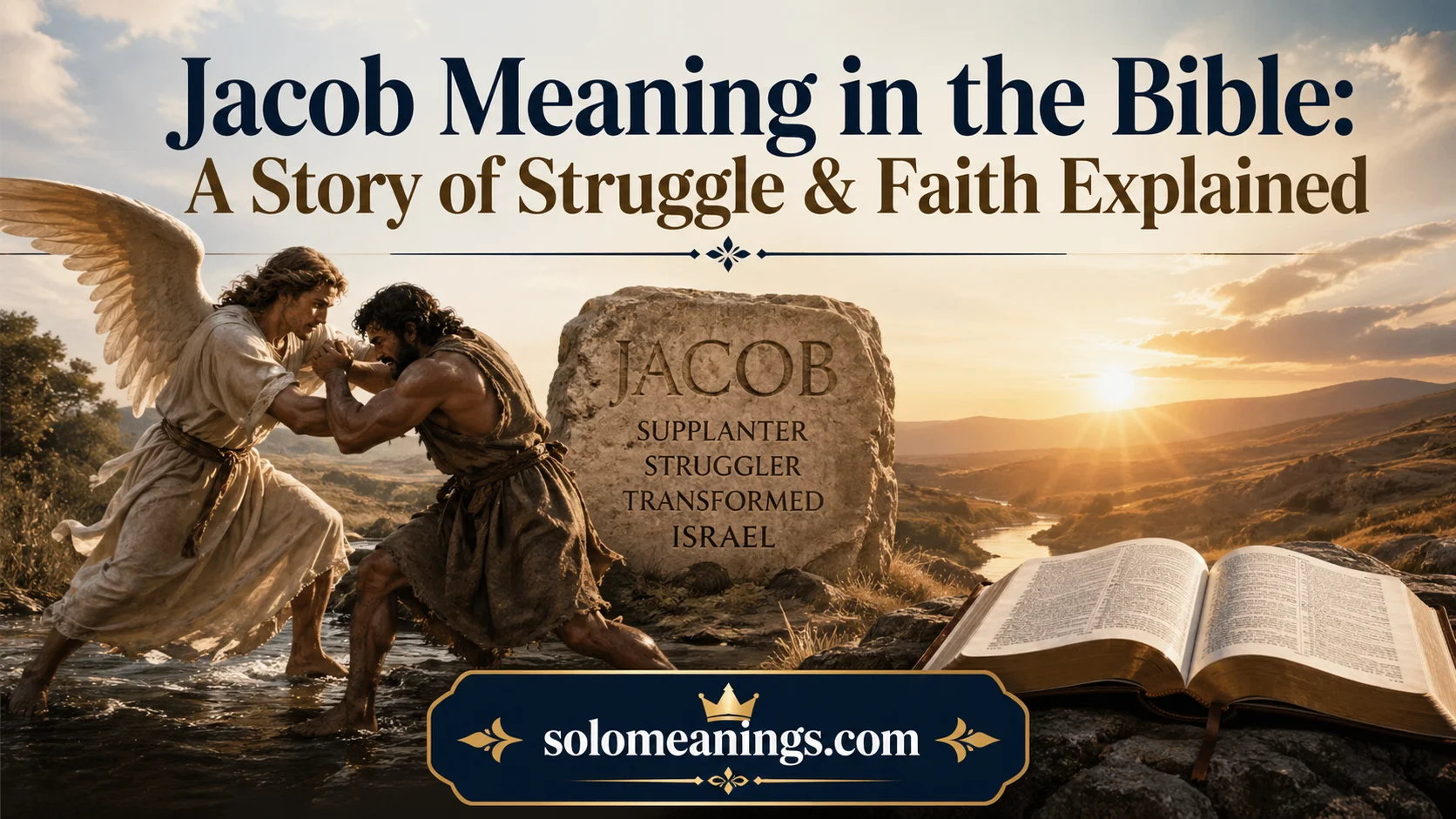
The Jacob Meaning in the Bible: A Story of Struggle & Faith is one of the most powerful narratives in the Book of Genesis. It tells the journey of a man who wrestled with challenges, identity, and even divine forces.
Jacob’s life is not simple or perfect. Instead, it reflects real human struggle, growth, and transformation. Because of this, his story still speaks deeply to people in the United States today.
Many readers connect with Jacob because his life shows that faith is not always smooth. It often comes through conflict, patience, and change.
Quick Answer
The Jacob Meaning in the Bible: A Story of Struggle & Faith symbolizes transformation through struggle, spiritual growth, and the journey toward divine purpose. In the USA, it is often seen as a story of perseverance and identity change, while in broader traditions it represents human struggle with destiny and God.
TL;DR
• Jacob represents struggle, growth, and transformation
• His story comes from the Book of Genesis
• He becomes Israel after wrestling with divine being
• In the USA, he symbolizes faith through hardship
• His journey reflects identity and personal change
Overview of Who Was Jacob in the Bible
Jacob is one of the central patriarchs in the Bible. He is the son of Isaac and grandson of Abraham, making him a key figure in the story of Israel’s origins.
His life is marked by conflict, family tension, and spiritual encounters. However, it is also a story of growth and promise.
• Son of Isaac and Rebekah
• Twin brother of Esau
• Father of twelve sons who form Israel’s tribes
• Known for his spiritual transformation
Jacob’s journey forms a foundation for understanding biblical identity and covenant themes.
Jacob Meaning at a Glance
Jacob’s name and symbolism carry layered meanings that evolved over time. In simple terms, his story reflects both human weakness and divine purpose.
Key symbolic meanings
• Struggle and perseverance through hardship
• Transformation of identity and character
• Spiritual wrestling with faith and destiny
• Growth through mistakes and redemption
Jacob is not seen as perfect. Instead, he represents real human development.
Historical and Biblical Origins of Jacob
Jacob first appears in the Book of Genesis in the Hebrew Bible. His story likely comes from ancient oral traditions passed down for generations.
He lived in a pastoral, tribal society where family inheritance shaped identity. Birthright and blessing carried deep cultural meaning.
Early context of his story
• Ancient Near Eastern tribal culture
• Strong focus on inheritance rights
• Oral storytelling traditions before written scripture
• Family blessing seen as divine authority
Jacob’s narrative blends history, theology, and symbolic storytelling.
Jacob’s Early Life: Struggle in the Womb and Birthright
Jacob’s struggle begins even before birth. According to Genesis, he and his twin brother Esau wrestled inside their mother’s womb.
This early conflict becomes a symbol of lifelong tension between the two brothers.
Key early themes
• Struggle for dominance before birth
• Younger brother gaining birthright
• Cultural reversal of expectations
• Early signs of conflict and destiny
Jacob later receives Esau’s birthright through a complex exchange. This moment sets the tone for his life story.
Also Read This: Biblical Meaning of Gianna: God’s Gracious Gift
Jacob and Esau: Conflict, Deception, and Consequences
One of the most famous parts of Jacob’s story is his conflict with Esau. Jacob receives his father Isaac’s blessing through deception, guided by his mother Rebekah.
This act brings long-term consequences, including family separation.
Major themes in this conflict
• Broken trust within family
• Struggle for identity and blessing
• Long-term consequences of choices
• Emotional pain and separation
Despite the conflict, reconciliation later becomes part of the story’s resolution.
Jacob’s Dream of the Ladder: Heaven and Earth Connection
One of Jacob’s most symbolic moments is his dream of a ladder reaching heaven. Angels move up and down, connecting earth and the divine.
This vision changes how Jacob understands his relationship with God.
Symbolic meanings of the ladder
• Connection between human and divine worlds
• Promise of protection and guidance
• Spiritual awakening during isolation
• Hope during uncertainty
This moment shows Jacob that he is part of a larger spiritual plan.
Wrestling with the Angel: Transformation and Identity Shift
Jacob’s most powerful transformation happens when he wrestles with a mysterious being at night. This struggle lasts until dawn.
Afterward, he receives a new name: Israel.
Key symbolic interpretations
• Inner struggle with identity and purpose
• Spiritual transformation through conflict
• Name change representing rebirth
• Acceptance of vulnerability and strength
This event marks Jacob’s shift from deceiver to spiritual ancestor.
Symbolism of Jacob in the USA
In the United States, Jacob’s story is widely taught in religious education and cultural discussions. It is often seen as a symbol of resilience and personal growth.
Common American interpretations
• Overcoming personal struggle through faith
• Second chances and redemption stories
• Identity transformation and self-discovery
• Spiritual perseverance in hardship
| Context | Meaning in the USA | Common Associations | Notes |
| Religion | Faith through struggle | Churches, sermons | Core biblical teaching |
| Psychology | Identity transformation | Therapy, self-growth | Symbol of inner conflict |
| Culture | Resilience narrative | Literature, media | Used in storytelling |
| Education | Moral lessons | Schools, study groups | Ethical reflection |
Jacob is often used as an example of how struggle can lead to growth.
Psychological Meaning: Struggle, Growth, and Inner Conflict
Jacob’s story is often viewed through a psychological lens. His experiences reflect human inner conflict and emotional development.
Psychological interpretations
• Conflict between ambition and ethics
• Inner struggle for identity and purpose
• Growth through failure and correction
• Integration of shadow and self
His wrestling match symbolizes internal battles people face in life.
Spiritual Interpretations Across Traditions
While Jacob is central in Judaism and Christianity, his story also appears in Islamic tradition, where he is known as Yaqub.
Across traditions, he is respected as a prophet or patriarch.
Shared spiritual themes
• Faith during hardship
• Patience through suffering
• Divine testing and growth
• Moral and spiritual responsibility
Different traditions emphasize different aspects, but struggle remains central.
Jacob in Modern Culture: Tattoos, Art, and Media
Jacob’s imagery appears in modern art, tattoos, and storytelling. People often use his story to represent transformation and endurance.
Modern uses today
• Tattoos of ladder or wrestling scenes
• Art representing spiritual struggle
• Books and films about identity change
• Social media reflections on personal growth
Jacob’s symbolism remains powerful because it feels personal and relatable.
Misunderstandings and Controversies Around Jacob’s Story
Jacob’s actions, especially deception, are sometimes misunderstood. Some see him as dishonest without context, while others see spiritual purpose.
Common debates
• Moral complexity of his deception
• Role of divine blessing vs human action
• Interpretation of his struggle
• Cultural differences in reading the text
His story is not meant to be simple. It reflects moral tension and growth.
Legacy of Jacob: Israel and Lasting Symbolism
Jacob’s name is changed to Israel, meaning “one who struggles with God.” This becomes the foundation of a nation’s identity.
His legacy continues across religious, cultural, and personal interpretations.
Lasting symbolic impact
• Founder of the twelve tribes of Israel
• Symbol of transformation and renewal
• Representation of faith through struggle
• Example of imperfect but chosen leadership
His story continues to inspire reflection on human growth and purpose.
FAQs
Why is Jacob important in the Bible?
Jacob is important because he becomes Israel’s father. His story explains the origins of the twelve tribes.
What does Jacob’s name mean?
Jacob traditionally means “supplanter” or “holder of the heel,” reflecting struggle at birth.
Why did Jacob wrestle with God or an angel?
It symbolizes spiritual struggle and transformation. It represents inner conflict and growth.
What is the meaning of Jacob’s ladder dream?
It symbolizes connection between heaven and earth, and divine guidance in life.
What lesson does Jacob’s story teach?
It teaches that struggle can lead to growth, change, and spiritual purpose.
How is Jacob viewed in modern culture?
He is often seen as a symbol of perseverance, identity change, and personal transformation.
Conclusion
The story behind the Jacob Meaning in the Bible: A Story of Struggle & Faith is ultimately about transformation. Jacob begins as a flawed, struggling figure, but he grows into a symbol of spiritual identity and resilience.
His journey reflects something deeply human: growth often comes through struggle. In both ancient tradition and modern reflection, Jacob remains a reminder that change is possible, even through conflict.
His legacy continues to shape how people understand faith, identity, and perseverance today.