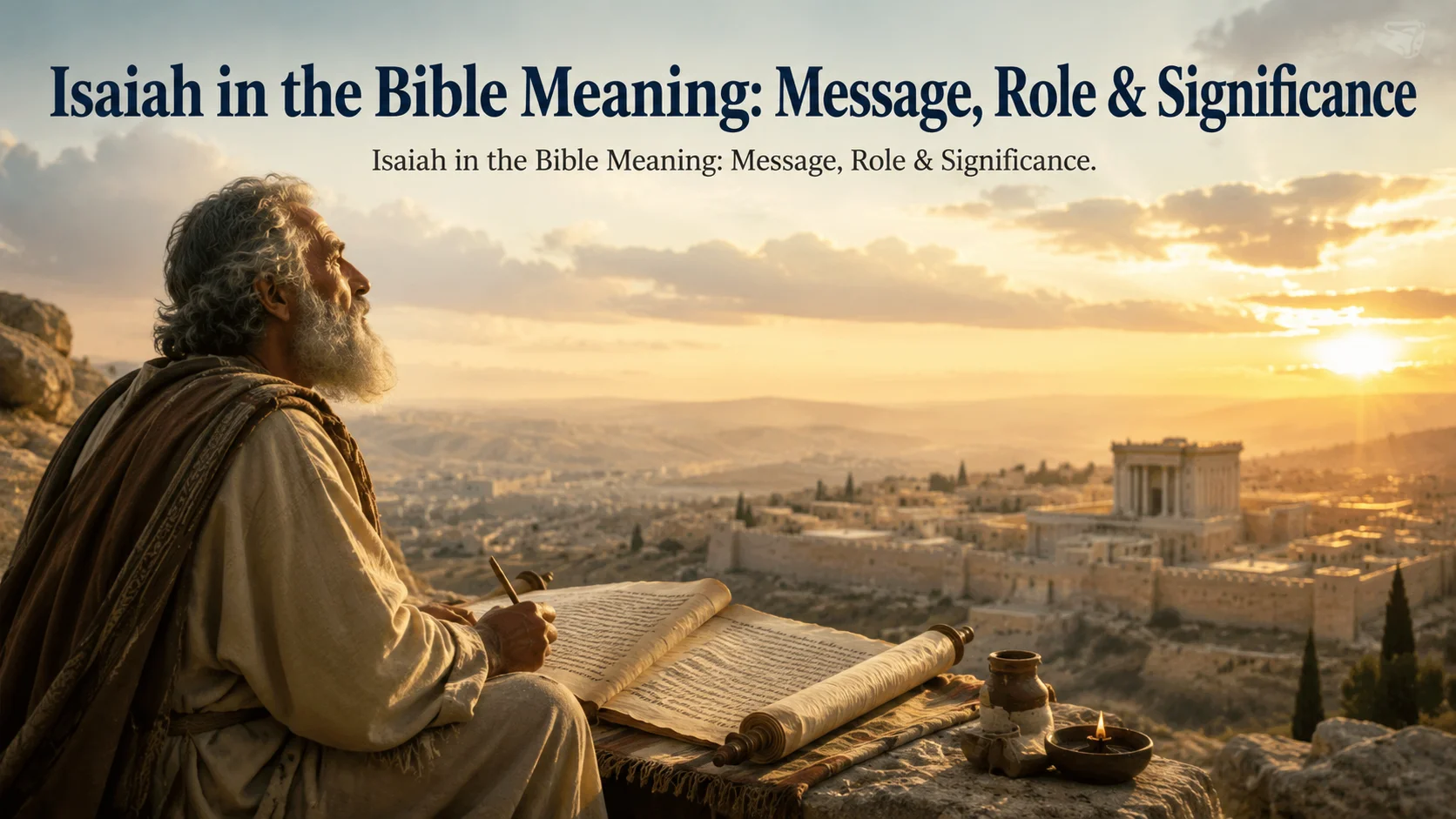
The name Isaiah holds a powerful, biblical, and spiritual meaning that has inspired believers for generations. In the Bible, Isaiah is one of the greatest prophets, chosen by God to deliver important messages of hope, warning, and redemption to the people of Israel. His name means “Yahweh is salvation,” highlighting the central theme of God’s saving power, faith, and divine mercy. The Book of Isaiah contains remarkable prophecies, many of which point toward the coming Messiah and God’s everlasting kingdom. Because of his unwavering obedience, courage, and commitment, Isaiah remains one of the most respected and influential figures in biblical history. Today, studying Isaiah’s meaning, role, and significance helps readers better understand God’s plan of salvation, justice, and hope for humanity.
Isaiah’s role in the Old Testament extended far beyond simply predicting future events. He served as a faithful prophet, teacher, and messenger who continually called people to repentance, righteousness, and renewed faith in God. During a time of political uncertainty, moral decline, and spiritual rebellion, Isaiah boldly proclaimed God’s truth, urging both kings and ordinary people to trust the Lord instead of worldly alliances. His writings beautifully combine judgment, compassion, restoration, and promise, revealing both the consequences of sin and the hope found through God’s forgiveness. Many of Isaiah’s prophecies later became foundational to Christian belief, especially those describing the life, sacrifice, and mission of the promised Messiah, making his message timeless and deeply meaningful.
The enduring significance of Isaiah continues to inspire Christians, Bible scholars, and faith communities around the world. His teachings encourage trust, perseverance, obedience, and unwavering hope, even during life’s greatest challenges and uncertainties. Through vivid visions, poetic language, and profound spiritual insights, Isaiah reminds readers that God remains faithful, just, merciful, and always ready to redeem those who sincerely seek Him. His message emphasizes that true salvation comes through God’s grace, repentance, and steadfast faith, rather than human strength alone. Whether exploring the meaning of the name Isaiah or studying his remarkable ministry, readers discover timeless biblical lessons about redemption, holiness, purpose, and God’s everlasting love for His people.
Quick Answer
Isaiah in the Bible Meaning: Message, Role, & Significance centers on God’s call to repentance, justice, faithfulness, and hope. In American Christianity, Isaiah symbolizes spiritual vision, moral courage, and the promise of redemption, while broader religious traditions view him as a major prophet who revealed divine guidance during a time of national crisis.
TL;DR
• Isaiah symbolizes prophecy, justice, and spiritual insight.
• His message combines warning with hope and restoration.
• He served during political and social turmoil.
• American Christians often quote Isaiah’s teachings.
• His prophecies influence faith, culture, and literature.
• Isaiah remains a symbol of moral courage today.
Overview of Isaiah in the Bible
Isaiah is one of the major prophets of the Old Testament. His name means “Yahweh is salvation,” immediately reflecting one of the central themes of his ministry.
Who Was Isaiah?
Isaiah lived in the Kingdom of Judah during the eighth century BCE. He served as a prophet during the reigns of several kings and witnessed major political changes.
Why Is Isaiah Important?
His writings form the Book of Isaiah, one of the longest and most influential books in Scripture.
• Called to deliver God’s messages.
• Warned against injustice and corruption.
• Encouraged faith during uncertainty.
• Proclaimed future restoration.
• Influenced later Jewish and Christian traditions.
Historical Background of Isaiah
To understand Isaiah’s meaning, it’s helpful to explore the historical setting in which he lived.
The World of Ancient Judah
Isaiah ministered during a period of military threats and political instability. The growing power of Assyria created fear throughout the region.
Leaders often sought political solutions to national problems. However, Isaiah repeatedly urged trust in God rather than military alliances.
Social Conditions
Isaiah criticized social inequality and exploitation. He believed true worship required ethical behavior and concern for others.
• Wealth disparities increased.
• Religious practices became routine.
• Political leaders faced corruption accusations.
• Foreign threats created anxiety.
• National identity faced challenges.
The Meaning of Isaiah’s Name
Names often carried symbolic significance in the ancient biblical world.
“Yahweh Is Salvation”
Isaiah’s name communicates a powerful theological message. It points to divine rescue rather than human strength.
This theme appears throughout his prophecies. Even when warning of judgment, Isaiah emphasized the possibility of renewal.
Symbolic Importance
The name itself became a summary of Isaiah’s mission.
• Hope during difficult times.
• Trust in divine guidance.
• Promise of restoration.
• Spiritual renewal.
• Deliverance through faith.
Isaiah’s Prophetic Calling
Isaiah’s calling is one of the most dramatic scenes in biblical literature.
The Vision in the Temple
According to the biblical account, Isaiah experienced a vision of God in the temple. This event shaped his entire ministry.
The vision emphasized holiness, responsibility, and service.
The Prophet’s Mission
Isaiah was tasked with delivering difficult truths. His role required courage because many listeners resisted his warnings.
• Speak truth despite opposition.
• Challenge moral failures.
• Encourage repentance.
• Offer hope for the future.
• Represent divine guidance.
Core Themes in Isaiah’s Message
Isaiah’s teachings cover many subjects, yet several themes appear repeatedly.
Justice and Righteousness
Isaiah believed society should reflect fairness and compassion. He condemned oppression and abuse of power.
Judgment and Accountability
His prophecies warned that actions have consequences. Nations and individuals were called to examine their behavior.
Hope and Restoration
Even after difficult warnings, Isaiah consistently pointed toward healing and renewal.
• Justice matters in daily life.
• Faith requires action.
• Pride leads to downfall.
• Hope remains possible.
• Restoration follows repentance.
Symbolism Found in Isaiah’s Writings
Isaiah frequently used vivid imagery and symbols to communicate spiritual truths.
Common Images and Symbols
His writings include mountains, vineyards, light, water, deserts, and roads.
These images made complex spiritual ideas easier to understand.
What These Symbols Represent
| Symbol | Meaning in the USA | Common Associations | Notes |
| Light | Hope and guidance | Faith, truth | Frequently quoted |
| Vineyard | Responsibility | Stewardship | Moral accountability |
| Water | Renewal | Spiritual refreshment | New beginnings |
| Mountain | Divine presence | Strength | Worship symbolism |
| Road or Path | Direction | Purpose | Life journey imagery |
Isaiah and the Promise of Hope
One reason Isaiah remains popular is his emphasis on hope.
Hope During Crisis
Isaiah spoke to people facing uncertainty. His message acknowledged fear while offering encouragement.
Future Restoration
Many passages describe peace, healing, and reconciliation.
• Renewal after hardship.
• Peace replacing conflict.
• Faith overcoming fear.
• Healing for communities.
• Confidence in the future.
Read More: Josiah Bible Meaning: King, Reformer & Servant of God (2026)
Isaiah’s Significance in Christianity
Isaiah occupies a unique place within Christian tradition.
Messianic Expectations
Many Christians view certain Isaiah passages as pointing toward the coming of Jesus.
Because of this connection, Isaiah is often called the “Gospel Prophet.”
Influence on Christian Worship
His words frequently appear in sermons, hymns, and holiday readings.
• Advent readings often include Isaiah.
• Christmas services quote Isaiah.
• Churches study Isaiah extensively.
• Worship music references his imagery.
• His themes inspire spiritual reflection.
What Isaiah Means in American Culture
Isaiah’s influence extends beyond church settings.
Public and Cultural Influence
American leaders, writers, and speakers have referenced Isaiah’s language for generations.
Passages about peace, justice, and hope often appear during national conversations.
Common Associations in the USA
Isaiah often symbolizes moral leadership and spiritual vision.
• Calls for social justice.
• Hope during national challenges.
• Ethical leadership ideals.
• Faith-based community action.
• Inspirational literary references.
Emotional and Psychological Symbolism
Beyond religion, Isaiah carries emotional significance.
What Isaiah Represents Emotionally
Many readers connect Isaiah with resilience and perseverance.
His writings acknowledge suffering without surrendering to despair.
Psychological Associations
The prophet often symbolizes inner transformation.
• Courage during uncertainty.
• Hope amid challenges.
• Personal growth.
• Moral conviction.
• Vision for change.
Spiritual Meaning of Isaiah
Isaiah’s spiritual message continues to resonate across traditions.
Relationship With God
A major theme is alignment with divine purposes. Isaiah encouraged humility, trust, and obedience.
Universal Spiritual Lessons
Even readers outside religious communities often appreciate Isaiah’s reflections on justice and hope.
• Pursuit of wisdom.
• Compassion for others.
• Responsibility and integrity.
• Trust during difficulties.
• Hope beyond setbacks.
Isaiah in Modern Media and Popular Culture
Ancient prophets still appear in modern conversations.
Digital and Social Media Use
Isaiah quotations are widely shared online. They often accompany inspirational messages and discussions about faith.
Personal Expression
Many people use Isaiah-related imagery in tattoos, artwork, and home décor.
• Scroll imagery symbolizes wisdom.
• Light imagery represents guidance.
• Scripture art appears in homes.
• Tattoos reflect faith commitments.
• Quotes inspire personal reflection.
Misunderstandings and Controversies
Like many influential figures, Isaiah’s writings have been interpreted in different ways.
Different Interpretations
Religious communities sometimes disagree about the meaning of specific passages.
These discussions have existed for centuries.
Avoiding Simplification
Isaiah’s message includes both warning and hope. Focusing on only one aspect can create misunderstandings.
• Not solely a prophet of judgment.
• Not only a messenger of comfort.
• Historical context matters.
• Interpretations vary among traditions.
• Complex passages require careful reading.
How Isaiah’s Meaning Has Evolved Over Time
Isaiah’s significance has developed across centuries.
Ancient Understanding
Early audiences primarily viewed Isaiah through the lens of national survival and covenant faithfulness.
Modern Understanding
Today, many readers focus on personal spirituality, social justice, and hope.
• Ancient focus on national challenges.
• Medieval focus on theology.
• Reformation-era biblical study.
• Modern emphasis on hope.
• Contemporary social applications.
FAQs
Who was Isaiah in the Bible?
Isaiah was a major prophet in the Old Testament. He delivered messages concerning justice, faithfulness, judgment, and hope.
What is the main message of Isaiah?
His central message is that people should turn toward God, practice justice, and trust in divine guidance. He also emphasized future restoration.
Why is Isaiah called a major prophet?
The term refers to the length and influence of his writings rather than his importance compared to other prophets.
What does Isaiah symbolize today?
Isaiah often symbolizes spiritual vision, courage, hope, and moral responsibility in both religious and cultural settings.
Why is Isaiah important to Christians?
Many Christians believe Isaiah contains prophecies connected to Jesus and the broader story of salvation.
What can modern readers learn from Isaiah?
Readers often find lessons about perseverance, justice, humility, and hope during difficult circumstances.
Conclusion
The enduring importance of Isaiah in the Bible Meaning: Message, Role, & Significance comes from its balance of truth and hope. Isaiah challenged people to confront injustice and spiritual complacency while also pointing toward restoration and renewal.His message has traveled across centuries because it speaks to universal human concerns. Questions about morality, leadership, suffering, and hope remain relevant today.Whether approached as a historical prophet, a spiritual teacher, or a cultural symbol, Isaiah continues to inspire reflection. His words remind readers that even during uncertainty, the possibility of renewal remains within reach.