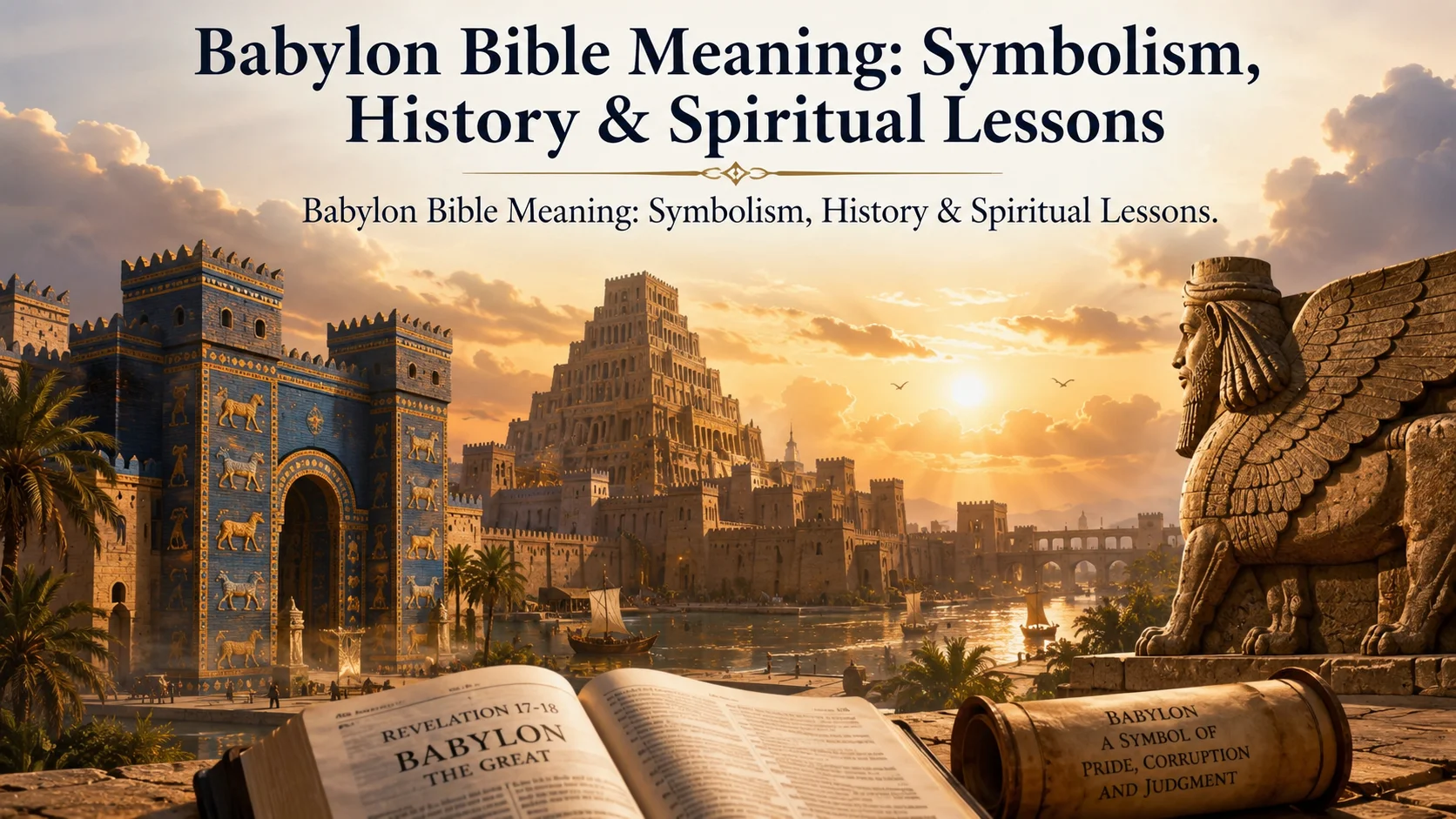
The Bible presents Babylon as one of the most powerful civilizations in ancient history, carrying deep spiritual symbolism beyond its physical existence. Throughout Scripture, Babylon represents both human achievement and spiritual rebellion against God’s authority. From the Tower of Babel to the Book of Revelation, its story reveals important biblical lessons for every generation. The Babylon Bible meaning combines historical events, prophetic messages, moral warnings, and divine judgment into one powerful narrative. Understanding Babylon’s symbolism helps readers recognize the ongoing struggle between faith, pride, obedience, and worldly influence.
Historically, Babylon was the magnificent capital city of the Babylonian Empire, famous for its wealth, architecture, and political power. It became closely connected with the Babylonian captivity, during which the people of Judah were taken into exile after Jerusalem was conquered. Important biblical figures like Daniel, Shadrach, Meshach, and Abednego demonstrated remarkable faith, courage, and obedience while living in Babylon. Their inspiring stories highlight God’s sovereignty, divine protection, faithfulness, and victory even in difficult circumstances. These historical accounts reveal that God’s purpose remains active despite earthly kingdoms, human power, and political oppression.
Beyond its historical significance, Babylon serves as a lasting spiritual symbol of temptation, idolatry, materialism, and rebellion throughout the Bible. In Revelation, Mystery Babylon represents a corrupt world system opposed to God’s kingdom and righteous truth. These powerful prophecies encourage believers to remain faithful, discerning, holy, and spiritually alert in every season of life. Studying the Babylon Bible meaning reveals timeless spiritual lessons about humility, repentance, obedience, and eternal hope. It reminds Christians that God’s justice, mercy, wisdom, and sovereign plan ultimately overcome every earthly empire.
Quick Answer
Babylon Bible Meaning symbolizes human pride, rebellion against God, worldly power, and spiritual corruption. In American Christian culture, Babylon often represents societies or systems that place wealth, power, and self-interest above moral and spiritual values. More broadly, it serves as a warning about the consequences of arrogance and the importance of remaining faithful to one’s beliefs.
TL;DR
• Babylon symbolizes pride, power, and spiritual rebellion.
• It was a real ancient city in Mesopotamia.
• The Bible uses Babylon both literally and symbolically.
• Americans often see it as a warning against corruption.
• Babylon’s meaning evolved from city to spiritual metaphor.
• Its lessons remain relevant in modern culture.
What Is Babylon in the Bible?
This section explains Babylon’s basic identity and why it appears so often in biblical writings. Understanding its original role helps readers grasp its deeper symbolism.
A Real Historical City
Babylon was one of the most powerful cities of the ancient world. Located in Mesopotamia, near modern-day Iraq, it became the center of a vast empire.
The city was famous for its walls, temples, wealth, and influence. Ancient writers described it as a place of extraordinary power and luxury.
A Symbol Beyond Geography
Over time, Babylon became more than a city.
The Bible transformed Babylon into a symbol representing:
• Human pride and self-glorification
• Political domination and oppression
• Spiritual unfaithfulness
• Excessive wealth and luxury
• Separation from divine guidance
The Historical Origins of Babylon
To understand Babylon’s symbolism, it’s important to know its historical roots. Its reputation was shaped by real events that deeply affected biblical communities.
The Babylonian Empire
Babylon reached its peak under Nebuchadnezzar II during the sixth century BCE.
The empire conquered kingdoms across the region and eventually captured Jerusalem. Many Israelites were taken into exile, creating one of the most significant events in biblical history.
The Babylonian Exile
The exile profoundly influenced Jewish identity.
For many biblical writers, Babylon became associated with:
• Loss and displacement
• Foreign domination
• Spiritual testing
• Cultural pressure
• Hope for eventual restoration
Because of these experiences, Babylon gained lasting symbolic importance.
Babylon and the Tower of Babel Connection
Many readers connect Babylon with the story of the Book of Genesis account of Babel. This connection strengthens Babylon’s symbolism of human ambition.
Human Pride Reaching Heaven
In the Babel story, people attempt to build a tower reaching the heavens.
The narrative emphasizes humanity’s desire for self-made greatness. Instead of humility, the builders seek fame and power.
Lasting Symbolism
The Babel story contributed several themes later associated with Babylon:
• Human arrogance
• Resistance to divine authority
• Desire for control
• Cultural confusion
• Misplaced trust in human achievement
Babylon as a Symbol of Pride
One of Babylon’s strongest biblical meanings is pride.
The Danger of Self-Exaltation
Biblical texts frequently portray Babylon as a civilization that glorified itself.
Its rulers often believed their power would last forever. This attitude became a symbol of excessive confidence and self-worship.
Why This Matters Today
Modern readers often interpret Babylon as a reminder that power can create false security.
The symbol encourages reflection on:
• Personal humility
• Ethical leadership
• Responsible success
• Awareness of limitations
• Respect for higher principles
Babylon as a Symbol of Worldly Power
Babylon frequently represents political and economic power.
The Image of Empire
Ancient Babylon controlled vast territories and influenced countless lives.
Because of this dominance, biblical writers used Babylon as a symbol of powerful systems that shape society.
Babylon’s Modern Associations
In American religious discussions, Babylon may symbolize:
• Excessive materialism
• Abuse of authority
• Cultural pressure
• Moral compromise
• Institutions driven solely by power
These interpretations vary among individuals and faith traditions.
Spiritual Meaning of Babylon
For many believers, Babylon carries a deeply spiritual message.
Separation From God
Babylon often symbolizes a mindset focused entirely on worldly concerns.
The image is not always about a specific place. Instead, it represents attitudes that distract people from spiritual values.
Spiritual Lessons
Common spiritual lessons include:
• Stay grounded in faith
• Resist unhealthy temptations
• Avoid idolizing wealth
• Practice humility
• Remember long-term values
Babylon in the Book of Revelation
Babylon takes on new significance in the final book of the New Testament.
Mystery Babylon
In the Book of Revelation, Babylon appears as “Babylon the Great.”
Rather than describing only the ancient city, the text uses Babylon symbolically to represent corruption, injustice, and opposition to God’s purposes.
Why It Remains Influential
The imagery is dramatic and memorable.
As a result, Babylon continues to inspire discussions about:
• Political power
• Economic systems
• Moral responsibility
• Social values
• Spiritual integrity
Read More: Zion Bible Meaning: Discovering Its Spiritual Message
Babylon Symbolism in America
Babylon’s meaning has developed unique significance within American culture.
Religious Interpretation
Many American Christians use Babylon as a metaphor for cultural challenges.
The symbol often appears in discussions about balancing faith with modern life.
Common American Associations
| Context | Meaning in the USA | Common Associations | Notes |
| Church teaching | Spiritual caution | Faithfulness | Often symbolic |
| Popular culture | Corruption or excess | Power and wealth | Frequently dramatized |
| Personal reflection | Moral choices | Self-examination | Individual interpretation |
| Social commentary | Cultural criticism | Materialism | Varies by viewpoint |
| Literature | Fallen greatness | Historical lessons | Widely used metaphor |
Cross-Cultural and Religious Perspectives
Babylon carries meaning beyond Christianity.
Jewish Perspectives
In Jewish tradition, Babylon is closely connected to exile and survival.
The experience shaped important aspects of religious identity and cultural memory.
Broader Spiritual Interpretations
Some spiritual traditions view Babylon as an archetype.
Common themes include:
• Attachment to worldly success
• Collective pride
• Cultural temptation
• Loss of purpose
• Need for transformation
Emotional and Psychological Symbolism
Symbols often affect people emotionally as much as intellectually.
What Babylon Represents Emotionally
Babylon can evoke strong feelings because it combines power with warning.
Readers may associate it with both attraction and danger.
Psychological Themes
• Ambition without balance
• Fear of moral decline
• Desire for security
• Temptation of success
• Search for deeper meaning
Because of these themes, Babylon remains psychologically powerful.
Babylon in Modern Culture
Although ancient, Babylon continues to appear throughout modern life.
Popular Media
Books, films, music, and television often use Babylon as shorthand for excess, corruption, or empire.
The symbol immediately communicates a larger idea about power and society.
Modern Uses
• Tattoo symbolism
• Social media discussions
• Religious teaching materials
• Art and design themes
• Literature and storytelling
Identity and Expression
Some people adopt Babylon imagery to explore themes of resistance, authority, or spiritual reflection.
Others use it simply because of its historical and cultural significance.
Misunderstandings and Controversies
Babylon’s symbolism is complex and sometimes debated.
Literal Versus Symbolic Interpretations
Not everyone interprets Babylon the same way.
Some readers focus on its historical reality. Others emphasize symbolic or prophetic meanings.
Common Misunderstandings
• Assuming every reference is political
• Ignoring historical context
• Treating symbolism as universally agreed upon
• Overlooking cultural differences
• Confusing metaphor with prediction
Understanding these distinctions helps create a more balanced view.
How Babylon’s Meaning Changed Over Time
Symbols evolve as societies change.
From City to Symbol
Originally, Babylon referred to a specific location and empire.
Over centuries, its meaning expanded into a broader metaphor for pride, corruption, and worldly influence.
Modern Revival
Today, Babylon continues to be reinterpreted.
Different communities emphasize different aspects:
• Historical lessons
• Spiritual warnings
• Cultural commentary
• Psychological symbolism
• Religious reflection
This flexibility helps explain Babylon’s enduring relevance.
Spiritual Lessons Readers Draw From Babylon
Babylon remains meaningful because its lessons feel timeless.
Key Takeaways
Many readers see Babylon as a reminder that power and success require wisdom.
The symbol encourages thoughtful reflection rather than fear.
Common Lessons
• Pride can lead to downfall
• Power should be used responsibly
• Wealth isn’t the highest value
• Character matters more than status
• Spiritual awareness promotes balance
FAQs
What does Babylon symbolize in the Bible?
Babylon commonly symbolizes pride, worldly power, corruption, and spiritual rebellion. It also serves as a warning about placing trust solely in human achievement.
Was Babylon a real place?
Yes. Babylon was a major city in ancient Mesopotamia and the center of a powerful empire. Its historical importance helped shape its symbolic meaning.
Why is Babylon important in Revelation?
Revelation uses Babylon as a symbolic image of corruption, injustice, and opposition to divine values. The image extends beyond the ancient city itself.
Is Babylon always portrayed negatively?
Not entirely. While many biblical references are critical, Babylon’s story also highlights resilience, faithfulness, and hope during difficult times.
What is the spiritual lesson of Babylon?
Many readers understand Babylon as a lesson about humility, moral responsibility, and maintaining spiritual priorities despite worldly pressures.
Why do people still talk about Babylon today?
Babylon remains relevant because its themes—power, wealth, pride, and ethics—continue to influence modern societies and personal choices.
Conclusion
Babylon is far more than an ancient city. Throughout biblical history, it became a powerful symbol of pride, empire, temptation, and the challenges of remaining faithful during difficult times.For modern Americans, the Babylon Bible Meaning continues to offer insight into the relationship between power and values. Its story encourages reflection on ambition, responsibility, and the choices that shape both individuals and societies.Whether viewed historically, spiritually, or culturally, Babylon remains one of the Bible’s most enduring symbols. Its lessons invite readers to consider what truly deserves their loyalty, trust, and attention in everyday life.