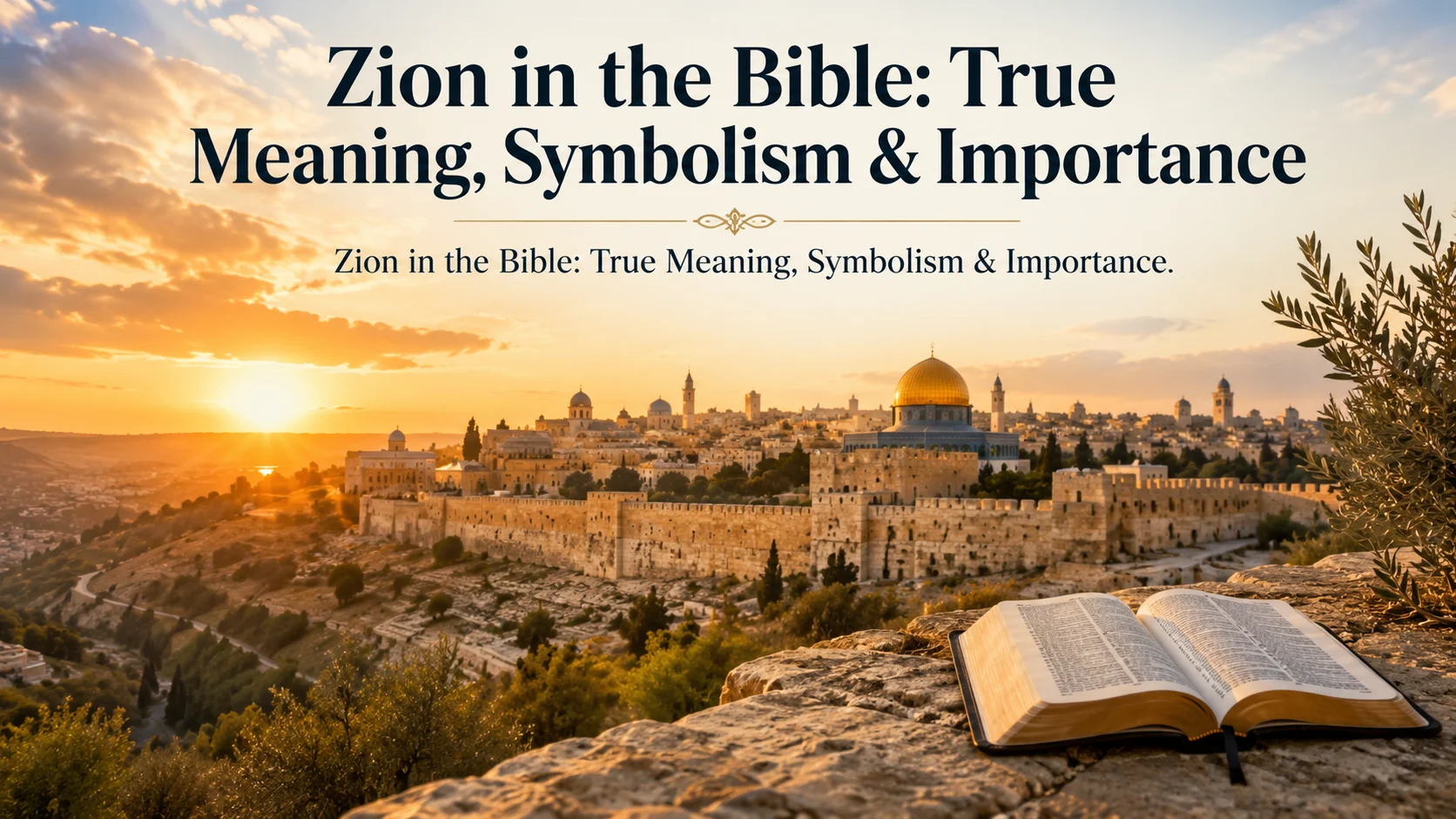
Zion in the Bible is one of the most powerful, meaningful, symbolic, and spiritually significant places mentioned throughout Scripture. In the Old Testament, Zion originally referred to the fortress captured by King David, later becoming the City of David and eventually representing Jerusalem itself. Over time, the meaning of Zion expanded beyond a physical location to symbolize God’s presence, His holy dwelling, divine protection, and the place where His people gather to worship. Throughout both the Old and New Testament, Zion carries a deep message of hope, faith, redemption, and God’s everlasting promises.
The Bible frequently describes Zion as the holy mountain chosen by God for His glory, kingdom, temple, and people. Many prophets, including Isaiah, Jeremiah, and Micah, spoke of Zion as a place where peace, justice, restoration, and salvation would one day flourish. These prophecies pointed not only to the future of Jerusalem but also to the coming of the Messiah and the establishment of God’s eternal kingdom. Because of this, Zion became a lasting symbol of spiritual victory, divine hope, covenant faithfulness, and the fulfillment of God’s promises.
For Christians today, Zion represents far more than an ancient city or historical landmark. It serves as a powerful reminder of God’s love, salvation, heavenly kingdom, and the eternal relationship between God and His people. The New Testament presents Zion as a picture of the heavenly Jerusalem, where believers are invited into God’s presence through Jesus Christ. Understanding the biblical meaning of Zion helps readers appreciate its historical importance, prophetic significance, spiritual symbolism, and its enduring message of faith, hope, and eternal redemption found throughout the Bible.
Quick Answer
Zion in the Bible: True Meaning, Symbolism & Importance centers on God’s dwelling place, spiritual hope, and covenant relationship with His people. In American religious culture, Zion often symbolizes faith, redemption, community, and the promise of a better future. More broadly, it represents a sacred home, spiritual belonging, and divine presence.
TL;DR
• Zion originally referred to a hill in Jerusalem.
• It became a symbol of God’s presence.
• Many Christians see Zion as spiritual hope.
• Americans often associate Zion with faith and renewal.
• Zion’s meaning expanded beyond geography over time.
• It remains important in worship, culture, and symbolism.
What Is Zion in the Bible?
Understanding Zion begins with its biblical definition. Although many people use the word symbolically today, it first described a specific location connected to ancient Jerusalem.
A Real Place
In the Hebrew Bible, Zion originally referred to a fortress captured by King David. Over time, the name became associated with Jerusalem itself and eventually the entire holy city.
More Than Geography
As biblical writings developed, Zion came to represent much more than land or buildings.
• God’s chosen dwelling place
• The center of worship and faith
• A symbol of divine protection
• The heart of spiritual identity
• Hope for future restoration
Because of this expansion, Zion became one of Scripture’s richest symbols.
Historical Origins of Zion
The history of Zion stretches back thousands of years. Understanding its development helps explain why it carries so much symbolic power.
Early Biblical References
The earliest references connect Zion to the City of David. After David established Jerusalem as Israel’s capital, Zion gained religious and political importance.
Growth of the Symbol
As Israel’s history unfolded, prophets and poets transformed Zion into a broader spiritual concept. During periods of exile and hardship, Zion represented hope and God’s future promises.
Key Historical Stages
• Fortress captured by David
• Political center of ancient Israel
• Site associated with the Temple
• Symbol during exile periods
• Spiritual image in later traditions
By the time later biblical texts were written, Zion often carried symbolic meaning alongside its physical location.
Why Zion Became a Powerful Symbol
Many biblical places are important, yet Zion occupies a unique position. Its symbolic strength comes from its connection to God’s presence.
God’s Dwelling Place
Biblical writers frequently describe Zion as the place where God chooses to dwell among His people. This idea transformed it from a city into a sacred symbol.
Hope During Difficult Times
When people experienced loss, exile, or uncertainty, Zion represented restoration and renewal.
• Divine protection during hardship
• Promise of future redemption
• Spiritual homecoming
• Connection with God’s covenant
• Confidence in ultimate justice
These themes still resonate with readers today.
Zion Symbolism at a Glance
Zion has accumulated several layers of meaning throughout history. The table below summarizes its most common symbolic associations.
| Context | Meaning in the USA | Common Associations | Notes |
| Biblical | God’s presence | Faith, worship | Most traditional meaning |
| Spiritual | Heavenly hope | Salvation, belonging | Common in churches |
| Cultural | Community identity | Unity, heritage | Often symbolic |
| Personal | Inner peace | Purpose, renewal | Popular in devotionals |
| Inspirational | Better future | Hope, perseverance | Used broadly today |
Zion and Jerusalem
Many readers wonder whether Zion and Jerusalem are identical. The answer depends on context.
Related but Not Always Identical
Initially, Zion referred to a specific area within Jerusalem. Later, biblical authors often used the names interchangeably.
Symbolic Expansion
Eventually, Zion could refer to:
• Jerusalem as a whole
• The people of God
• God’s kingdom
• Future restoration
• Spiritual community
This broad usage explains why Zion appears in many different contexts throughout Scripture.
Zion’s Spiritual Meaning
For many believers, Zion’s spiritual symbolism is its most important aspect.
A Place of Belonging
Humans naturally seek a place where they feel accepted and secure. Zion symbolizes that longing fulfilled through a relationship with God.
A Symbol of Hope
Many biblical passages portray Zion as the destination of restoration and peace.
• Spiritual refuge
• Divine closeness
• Future blessing
• Sacred identity
• Eternal hope
Because these themes are universal, Zion remains meaningful across generations.
Zion in American Religious Culture
In the United States, Zion has become deeply woven into religious language and symbolism.
Churches and Worship
Many churches include Zion in hymns, sermons, and names. The term often evokes spiritual aspiration and connection to biblical faith.
Influence on American Culture
American religious movements frequently used Zion as a symbol of a faithful community or ideal society.
Common Associations in the USA
• Religious devotion
• Community unity
• Spiritual freedom
• Moral purpose
• Hope for renewal
These meanings continue to appear in contemporary worship and religious discussions.
Read More: Job in the Bible Meaning: Faith, Suffering & God’s Purpose
Cross-Cultural and Religious Interpretations
Although Zion originates in the Bible, its influence extends beyond a single tradition.
Judaism
Within Judaism, Zion remains closely connected to Jerusalem, covenant identity, and spiritual heritage.
Christianity
Many Christians view Zion as both a historical place and a symbol of God’s kingdom.
Broader Spiritual Meanings
Across traditions, Zion may symbolize:
• Sacred space
• Spiritual longing
• Divine connection
• Restoration and healing
• Ultimate fulfillment
While interpretations vary, themes of hope and belonging appear consistently.
Emotional and Psychological Symbolism of Zion
Symbols endure because they speak to human emotions. Zion is no exception.
Why People Connect With Zion
Psychologically, Zion represents the desire for security, meaning, and home.
Common Emotional Associations
• Comfort during uncertainty
• Sense of purpose
• Inner peace
• Hope for the future
• Feeling spiritually grounded
These emotional connections help explain Zion’s lasting appeal.
The Archetype of Home
Many scholars view Zion as an archetypal image of the ideal home. It represents not merely a location but a state of harmony and belonging.
Zion in Modern Media and Popular Culture
Ancient symbols often find new life in contemporary settings. Zion continues to appear in modern culture.
Music and Literature
Many songs, books, and poems reference Zion as a symbol of hope, freedom, or spiritual aspiration.
Social Media and Personal Identity
People frequently use Zion-related imagery to express faith and personal values.
Modern Symbolic Uses
• Inspirational artwork
• Religious apparel
• Home décor themes
• Faith-based social media content
• Personal reflections and journals
These modern uses show how ancient symbolism remains relevant.
Zion in Tattoos and Personal Expression
Religious symbols often become personal statements. Zion is increasingly used in tattoos and artistic designs.
Why People Choose Zion
For many individuals, Zion symbolizes a spiritual journey, resilience, or connection to faith.
Common Tattoo Themes
• Jerusalem skyline imagery
• Mountain symbolism
• Biblical verses mentioning Zion
• City-on-a-hill designs
• Sacred pathway motifs
Such designs typically focus on hope, identity, and spiritual purpose.
Misunderstandings and Controversies
Like many historic symbols, Zion has accumulated multiple interpretations.
Common Misunderstandings
One misconception is that Zion always refers to the exact same location. Biblical usage actually varies depending on context.
Another misunderstanding assumes Zion is only geographic. In many passages, it functions primarily as a spiritual symbol.
Areas of Debate
• Historical versus symbolic interpretations
• Religious versus political meanings
• Literal versus spiritual readings
• Ancient versus modern applications
Understanding these distinctions helps readers appreciate the symbol’s complexity.
How the Meaning of Zion Has Changed Over Time
Symbols evolve as cultures and communities reinterpret them.
Ancient Meaning
Initially, Zion referred to a physical stronghold and city.
Biblical Development
Prophets expanded Zion into a symbol of divine presence and future restoration.
Modern Understanding
Today, many people understand Zion as a symbol of:
• Faith and devotion
• Spiritual community
• Hope and renewal
• Sacred identity
• Ultimate belonging
This evolution reflects the symbol’s remarkable adaptability.
Why Zion Still Matters Today
Even in a modern world, Zion continues to resonate.
Enduring Relevance
People still search for meaning, belonging, and hope. Zion speaks directly to those universal desires.
Lessons for Modern Readers
• Community matters deeply
• Hope can survive hardship
• Faith shapes identity
• Sacred places inspire people
• Symbols connect past and present
These themes help explain why Zion remains important across generations.
FAQs
What does Zion symbolize in the Bible?
Zion primarily symbolizes God’s presence, divine protection, and spiritual belonging. It also represents hope, restoration, and covenant relationship.
Is Zion a real place or a symbol?
It is both. Zion originally referred to a real location in Jerusalem, but biblical writers later used it as a powerful spiritual symbol.
Why is Zion important to Christians?
Many Christians see Zion as representing God’s kingdom, spiritual community, and future hope. It often symbolizes redemption and eternal peace.
Does Zion always mean Jerusalem?
Not always. Some passages refer directly to Jerusalem, while others use Zion symbolically to describe God’s people or kingdom.
What is the spiritual meaning of Zion today?
Today, Zion often symbolizes spiritual home, divine connection, faith, and the longing for a better future.
Why does Zion appear in modern culture?
Its themes of hope, belonging, and renewal remain universally meaningful. As a result, Zion appears in music, literature, art, and personal expressions of faith.
Conclusion
The story of Zion is the story of a symbol that grew far beyond its original location. What began as a hill and fortress in ancient Jerusalem became one of the Bible’s most profound images of God’s presence, hope, restoration, and belonging.Today, Zion in the Bible: True Meaning, Symbolism & Importance continues to inspire people across the United States and around the world. Whether viewed historically, spiritually, or culturally, Zion remains a powerful reminder of humanity’s enduring search for faith, community, and a place to call home.