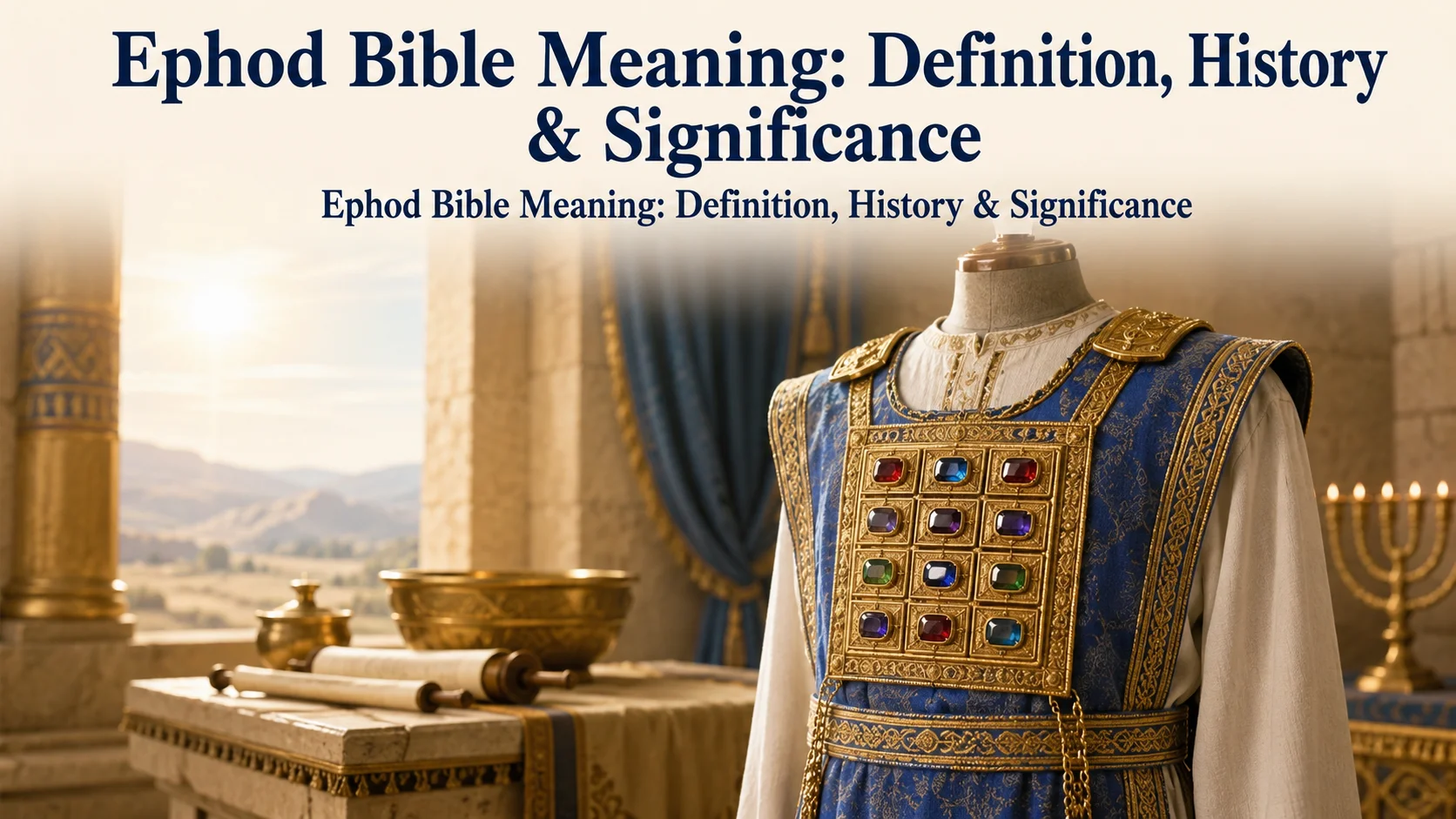
The Ephod is one of the most fascinating, symbolic, and sacred garments mentioned throughout the Bible, carrying deep spiritual meaning and historical importance. It was primarily worn by the High Priest of Israel during religious ceremonies and represented God’s presence, divine authority, and holy service. Understanding the Ephod Bible Meaning helps readers appreciate the rich traditions of the Old Testament and the important role this garment played in biblical worship. Even today, the ephod remains a powerful symbol of faith, obedience, leadership, and a close relationship with God. By exploring its history and purpose, believers can gain valuable insights into the spiritual lessons hidden within Scripture.
Throughout the Old Testament, the Ephod appears in several important biblical accounts, often connected with priests, worship, and seeking God’s guidance. The garment was carefully crafted using gold, blue, purple, scarlet yarn, and fine linen, reflecting both beauty and holiness. It also supported the breastpiece of judgment, which contained the mysterious Urim and Thummim used to discern God’s will. These remarkable details reveal that the ephod was much more than a piece of clothing—it represented responsibility, spiritual authority, and the sacred duty of serving the Lord. Its design continues to inspire Bible students interested in biblical history and symbolism.
In this guide, we will explore the complete Ephod Bible Meaning, including its definition, historical background, biblical references, and lasting spiritual significance. You’ll discover who wore the Ephod, why it was created, and how it influenced Israelite worship throughout the Scriptures. We will also examine its connection to priesthood, God’s covenant, and the lessons it offers for modern Christians seeking deeper faith. Whether you are studying the Bible, preparing a sermon, or simply curious about ancient biblical traditions, this article provides clear explanations and meaningful insights. By the end, you’ll have a richer understanding of why the ephod remains one of the Bible’s most meaningful and symbolic sacred garments.
Quick Answer
The Ephod Bible Meaning: Definition, History, Purpose & Significance centers on priestly authority, divine guidance, and service to God. In biblical tradition, the ephod symbolized a sacred connection between God’s presence and the spiritual leadership of Israel. Today, it is often understood as a symbol of responsibility, worship, and faithful service.
TL;DR
• The ephod was a sacred priestly garment.
• It symbolized authority and divine guidance.
• The High Priest wore a specially designed ephod.
• It played a role in seeking God’s direction.
• Its meaning evolved throughout biblical history.
• Today, it represents spiritual service and leadership.
What Is an Ephod?
Understanding the ephod begins with its basic definition. The Bible describes it as a special garment associated primarily with Israel’s priests.
Biblical Definition
The ephod was a sleeveless garment worn over other priestly clothing. It was often secured by a woven waistband and made from costly materials.
In the case of the High Priest, the ephod was crafted with remarkable detail. Gold thread, blue yarn, purple yarn, scarlet yarn, and fine linen were woven together to create a garment reflecting holiness and honor.
How It Appeared
• Sleeveless priestly outer garment
• Made from fine woven materials
• Included decorative shoulder pieces
• Connected to the breastplate of judgment
• Featured precious stones in some versions
• Associated with sacred temple service
Historical Origins of the Ephod
The ephod emerged within the religious system of ancient Israel. Its roots are tied to the priesthood established during Israel’s wilderness journey.
The Wilderness Period
According to the Book of Exodus, God instructed Moses regarding priestly garments. These garments were designed to distinguish priests from ordinary worshippers.
The ephod became one of several sacred garments intended for worship and ceremonial duties.
Ancient Near Eastern Context
Many ancient cultures used specialized religious clothing. Priests, rulers, and temple officials often wore distinctive garments that signaled authority and sacred responsibility.
However, the Israelite ephod differed because it was connected to covenant worship rather than royal status alone.
Early Symbolic Function
• Marked sacred service
• Identified priestly office
• Distinguished worship leaders
• Reflected obedience to divine commands
• Demonstrated reverence for holy duties
The Ephod of the High Priest
Not all ephods were identical. The most famous version belonged to Israel’s High Priest.
A Sacred Garment
The High Priest’s ephod carried unique significance. It was worn during major religious ceremonies and represented the spiritual leadership of the nation.
Two engraved onyx stones rested on its shoulders. These stones contained the names of Israel’s tribes, symbolizing the priest carrying the people before God.
The Breastplate Connection
Attached to the ephod was the breastplate containing twelve precious stones. Each stone represented one tribe of Israel.
This design emphasized remembrance, unity, and covenant identity.
| Feature | Meaning | Association | Importance |
| Onyx Stones | Representation of tribes | Responsibility | National unity |
| Gold Thread | Glory and holiness | Sacred worship | Divine honor |
| Breastplate | Judgment and guidance | Leadership | Spiritual discernment |
| Fine Linen | Purity | Holiness | Sacred service |
| Shoulder Pieces | Bearing burdens | Intercession | Priestly duty |
What Did the Ephod Symbolize?
The ephod carried multiple layers of meaning. Its symbolism extended beyond appearance.
Spiritual Leadership
The garment identified those entrusted with sacred responsibilities.
Leaders wearing the ephod served as representatives of the people before God.
Divine Authority
The ephod symbolized authority granted through divine appointment rather than personal ambition.
Because of this, it represented accountability alongside privilege.
Key Symbolic Meanings
• Spiritual responsibility
• Divine guidance
• Intercession for others
• Holiness and purity
• Covenant relationship
• Sacred authority
• Faithful service
The Ephod and Divine Guidance
One of the most intriguing aspects of the ephod involves its connection to seeking God’s direction.
Urim and Thummim
Biblical texts associate the ephod with the mysterious Urim and Thummim. These sacred objects were used to discern God’s will in specific situations.
While scholars debate exactly how they functioned, they clearly symbolized divine guidance.
Seeking Direction
Several biblical leaders consulted priests wearing the ephod before making important decisions.
This association strengthened the garment’s role as a symbol of wisdom and spiritual discernment.
Why This Matters Today
Many modern readers see the ephod as representing thoughtful decision-making rooted in faith and moral responsibility.
Read More: Firmament in the Bible Meaning: Heaven, Sky & Creation
Ephod References Throughout the Bible
The ephod appears in multiple biblical narratives.
Aaron and the Priesthood
The earliest references involve Aaron and his descendants serving as priests.
These passages emphasize sacred worship and obedience.
Samuel’s Ephod
The prophet Samuel wore a linen ephod as a child while serving in the sanctuary.
This reference highlights dedication and service from an early age.
David and the Ephod
King David occasionally consulted priests who carried the ephod.
These stories reinforce its connection to divine guidance.
Major Biblical Associations
• Aaron’s priesthood
• Tabernacle worship
• Samuel’s service
• David’s leadership
• Sacred ceremonies
• National spiritual identity
When the Ephod Was Misused
Not every biblical reference presents the ephod positively.
Gideon’s Ephod
After a military victory, Gideon created a golden ephod. The Bible later suggests it became a spiritual stumbling block for many people.
A Lesson About Symbols
This account demonstrates that sacred symbols can lose their intended meaning when people focus on the object itself rather than the values it represents.
The story remains relevant because it highlights the difference between meaningful symbolism and misplaced devotion.
Spiritual Meaning of the Ephod
Many readers seek deeper spiritual lessons from the ephod.
Carrying Responsibility
The shoulder stones remind believers of the importance of caring for others.
Leadership often involves carrying burdens rather than seeking status.
Seeking Wisdom
The ephod’s connection to divine guidance encourages thoughtful reflection before major decisions.
Spiritual Themes
• Faithful stewardship
• Humble leadership
• Prayerful discernment
• Service over status
• Commitment to community
• Reverence for God
Ephod Symbolism in American Christianity
Although the ephod belongs to ancient Israel, its symbolism remains meaningful in the United States.
Bible Study and Teaching
American churches frequently discuss the ephod when exploring Old Testament worship.
It often serves as a teaching tool for understanding priestly ministry.
Modern Interpretations
Many Christians view the ephod symbolically rather than literally.
The focus tends to be on spiritual responsibility, prayer, and service.
Common American Associations
• Faithful leadership
• Spiritual accountability
• Biblical heritage
• Service-oriented ministry
• Guidance through prayer
• Commitment to community
Emotional and Psychological Associations
Symbols often affect people emotionally as well as intellectually.
Feelings Connected to the Ephod
The ephod can evoke thoughts of duty, purpose, and responsibility.
Its detailed craftsmanship also inspires admiration and respect.
Psychological Symbolism
From a symbolic perspective, the ephod represents carrying important responsibilities while remaining connected to higher principles.
Many people identify with this idea regardless of religious background.
Common Emotional Themes
• Trust
• Responsibility
• Wisdom
• Protection
• Dedication
• Integrity
• Purpose
The Ephod in Modern Culture
The ephod appears occasionally in contemporary culture, especially within religious settings.
Educational Use
Bible teachers often use illustrations of the ephod to explain ancient worship practices.
Religious Art and Media
Artists, filmmakers, and authors sometimes depict the ephod when portraying biblical stories.
Modern Symbolic Uses
• Religious artwork
• Church educational materials
• Biblical documentaries
• Historical reenactments
• Faith-based discussions
• Symbolic jewelry inspiration
How the Meaning of the Ephod Changed Over Time
The understanding of the ephod has evolved across centuries.
Ancient Israel
Originally, the ephod functioned as an active component of priestly ministry.
It carried practical and ceremonial importance.
Later Interpretations
Over time, many readers focused more on its symbolic lessons than its ritual function.
Today, the ephod is often studied as a historical and spiritual symbol.
Evolution of Meaning
• Practical priestly garment
• Sacred worship symbol
• Tool associated with guidance
• Historical artifact
• Spiritual teaching symbol
• Representation of faithful service
Cross-Cultural and Spiritual Perspectives
Although the ephod belongs specifically to biblical tradition, its themes appear in many cultures.
Universal Symbolic Ideas
Many societies have used ceremonial garments to represent sacred responsibility and leadership.
This broader pattern helps explain why the ephod remains meaningful today.
Shared Themes Across Traditions
• Service to a higher purpose
• Community leadership
• Sacred responsibility
• Wisdom and discernment
• Moral accountability
While interpretations differ, these themes resonate across many spiritual traditions.
FAQs
What was the purpose of the ephod in the Bible?
The ephod primarily identified priests and supported sacred worship. It also became associated with seeking divine guidance and carrying spiritual responsibility.
Was the ephod only worn by the High Priest?
No. The High Priest wore the most elaborate ephod, but simpler versions appear in references involving other priests and even Samuel.
What were the ephod’s colors?
The High Priest’s ephod included gold, blue, purple, scarlet, and fine linen. These materials reflected holiness, beauty, and sacred service.
Why was the ephod important?
It symbolized leadership, worship, and God’s covenant relationship with Israel. It also served as a visible sign of priestly authority.
What is the spiritual meaning of the ephod today?
Many people see it as a symbol of faithful service, wise leadership, and spiritual responsibility. Its lessons often focus on humility and devotion.
Did the ephod have supernatural powers?
The Bible associates the ephod with divine guidance, especially through the Urim and Thummim. However, the garment itself was not presented as magical; its significance came from its sacred role.
Conclusion
The Ephod Bible Meaning: Definition, History, Purpose & Significance reveals far more than the story of an ancient garment. Throughout biblical history, the ephod symbolized sacred service, spiritual authority, guidance, and covenant responsibility.
Its meaning evolved from a practical priestly garment into a lasting symbol of leadership and devotion. For modern readers, the ephod offers a reminder that true authority is linked to service, wisdom, and accountability.