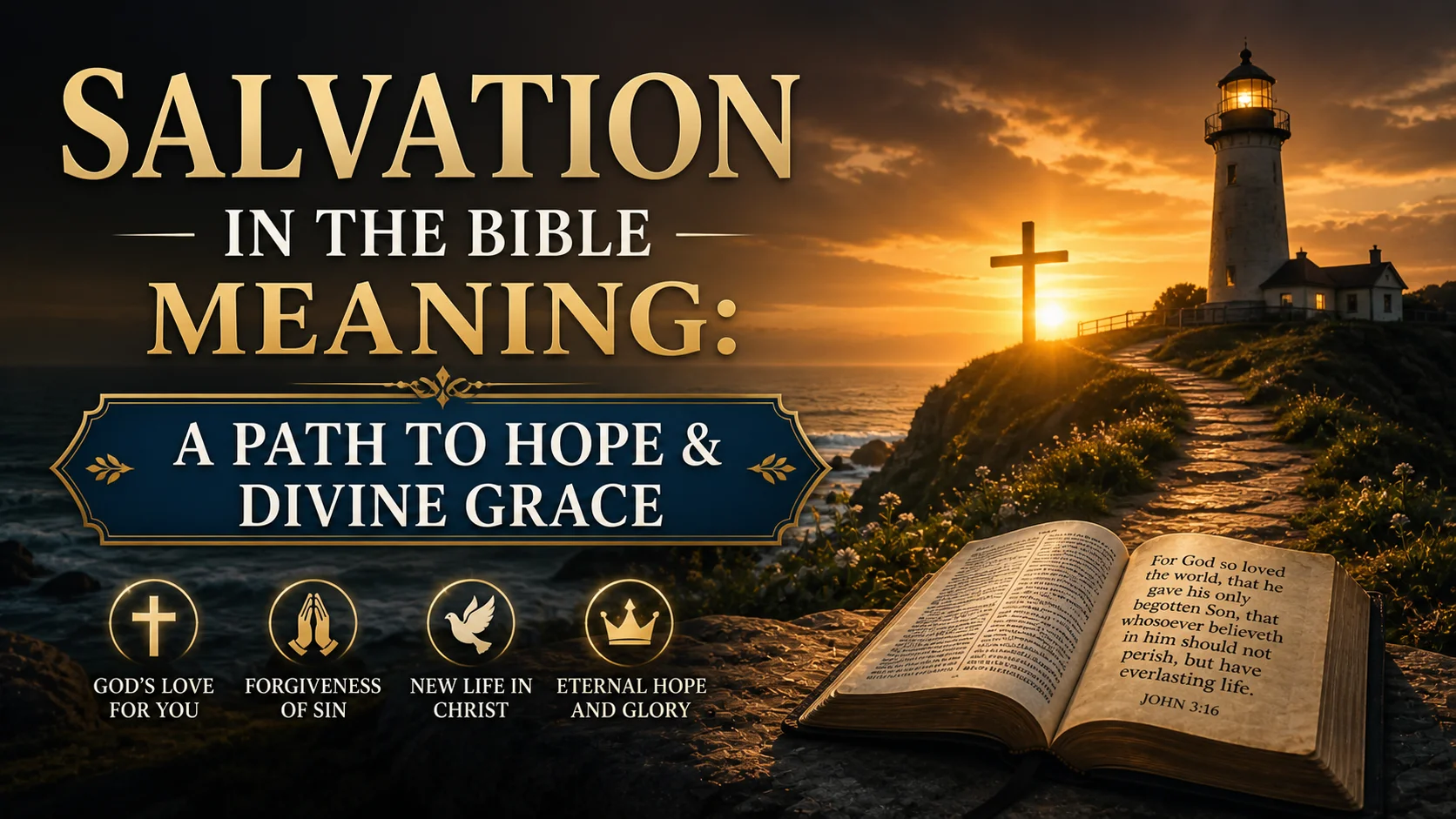
Salvation is one of the most loved and searched spiritual ideas in Christianity. When people ask about Salvation in the Bible Meaning: A Path to Hope & Divine Grace, they are usually looking for more than a definition. They want to know what it means for fear, guilt, purpose, and eternal life.
In the United States, salvation is deeply tied to church life, gospel music, revival preaching, and personal testimony. However, it is also a broader symbol. Many Americans see salvation as the moment darkness turns into light.
At its heart, salvation is about rescue. Yet in the Bible, this rescue is not only from danger. It is rescue from sin, separation, and spiritual death. Because of that, it has remained one of the strongest symbols of hope in modern faith.
Quick Answer
Salvation in the Bible Meaning: A Path to Hope & Divine Grace symbolizes God’s rescue of humanity through mercy, forgiveness, and restored relationship with Him. In the USA, it is often understood as being “saved,” finding peace in Christ, and receiving eternal hope beyond this life.
TL;DR
• Salvation means spiritual rescue and renewal.
• It centers on grace, not human perfection.
• American Christianity often links it with personal testimony.
• Biblically, it includes forgiveness, healing, and eternal life.
• The idea evolved from physical rescue to soul redemption.
• Today, it still symbolizes hope during hardship.
What Is Salvation in the Bible?
Salvation sounds like a church word, but its Bible meaning is vivid and practical. The original biblical languages use words that mean deliverance, rescue, safety, and being made whole. So salvation is not just a future heaven ticket. It is a complete spiritual saving act.
Salvation Means Rescue
In many Bible passages, salvation is pictured like someone being pulled from deep water. A trapped person cannot save himself. Instead, help comes from outside.
This matters because the Bible teaches that human effort alone cannot erase sin.
• Rescue from spiritual danger
• Forgiveness of moral failure
• Freedom from inner bondage
• Peace after guilt
• Hope beyond death
Salvation Means Restoration
Also, salvation is not only escaping punishment. It is being brought back into right relationship with God. That gives the term warmth, not just warning.
A saved life in Scripture becomes a restored life.
Historical Roots of Salvation in Scripture
To understand its symbolism, we need to see where the idea began. Salvation did not suddenly appear in the New Testament. It grew through centuries of Hebrew faith history.
Ancient Hebrew Foundations
In the Old Testament, salvation often meant military rescue, national deliverance, or survival from enemies. Israel cried to God during oppression, and God “saved” them.
For example, the crossing of the Red Sea became one of the first great salvation images. People were trapped. God opened a path.
So early salvation meant:
• Escape from slavery
• Victory over enemies
• Protection in famine
• Deliverance from judgment
Shift Toward Spiritual Redemption
Later prophets expanded the meaning. They began speaking about salvation of the heart, not just the body. Sin became the deeper enemy.
By the time of Jesus, many Jews expected a savior. Some wanted political freedom. Instead, Jesus presented salvation as freedom for the soul.
Why Salvation Is Called Divine Grace
One of the strongest biblical truths is that salvation is linked with grace. Grace means undeserved favor. In simple words, it is kindness you did not earn.
Grace Changes the Whole Meaning
Without grace, salvation would be a reward. With grace, it becomes a gift.
That is why Christian teaching says people are saved by faith through God’s mercy. This changed the spiritual imagination of millions because it replaced fear-based religion with hope-based trust.
• Grace removes the pressure of perfection
• Grace offers forgiveness after failure
• Grace welcomes the broken person
• Grace creates gratitude instead of pride
The Symbol of an Open Door
In American sermons, salvation is often compared to an open door. God offers entry, but people must choose whether to walk through.
That image remains powerful because it blends invitation with freedom.
Salvation Through Jesus Christ
For Christians, salvation becomes fully clear in the life, death, and resurrection of Jesus. He is presented as the bridge between sinful humanity and a holy God.
The Cross as the Main Salvation Symbol
The cross was once a Roman execution tool. Yet Christianity transformed it into a rescue sign. Today, in America, the cross on churches, necklaces, and tattoos often silently points to salvation.
It means suffering led to redemption.
Why Jesus Is Called Savior
The title Savior means one who delivers others from what they cannot defeat alone.
According to biblical belief, Jesus saves from:
• Sin’s penalty
• Spiritual separation
• Fear of death
• Eternal judgment
• Meaningless living
Because of this, salvation is personal, not abstract.
Also Read This: Jesus Meaning in Bible: Spiritual Message Today
Salvation Meaning in American Christian Culture
The United States gave salvation a very emotional and public expression. Revival tents, altar calls, gospel songs, and “born again” testimonies made the idea part of national religious language.
The Phrase “Getting Saved”
Many Americans do not say “I understood salvation theology.” They say, “I got saved.” That phrase shows how practical the belief became.
It usually means a life-changing moment of surrender, repentance, and faith.
Salvation in Everyday American Context
| Context | Meaning in the USA | Common Associations | Notes |
| Church Altar Call | Personal decision for Christ | Tears, prayer, surrender | Very common in evangelical spaces |
| Gospel Music | Deliverance and joy | Freedom, praise, testimony | Often emotional and hopeful |
| Prison Ministries | New beginning | Redemption, second chances | Salvation tied to life reform |
| Family Testimonies | Moral turning point | Sobriety, healing, peace | Seen as personal transformation |
| Christian Tattoos | Public faith symbol | Cross, dove, scripture | Identity statement |
This American lens makes salvation feel intimate and visible.
Spiritual Meaning of Salvation Beyond Christianity
Although salvation is strongly Christian, many cultures have similar rescue themes. Humans everywhere long for cleansing, freedom, and spiritual safety.
Shared Spiritual Patterns
Ancient religions often included purification rituals. Some used water. Others used fire, fasting, or confession.
The repeating message was clear: people sensed they needed renewal.
Important Difference
However, biblical salvation is distinct because it centers on grace from God rather than self-earned enlightenment alone.
That difference is why Christians treat salvation as received mercy, not just spiritual progress.
Emotional and Psychological Meaning of Salvation
Salvation survives because it touches deep human emotions. It answers feelings many people hide.
It Speaks to Guilt
People carry shame, regrets, and private failures. Salvation offers release from the idea that the past defines everything.
That creates emotional relief.
It Speaks to Fear
Also, salvation addresses fear of death, punishment, and purposelessness. Knowing one is spiritually secure gives inner calm.
Psychologically, salvation often symbolizes:
• Fresh start
• Clean conscience
• Belonging
• Safety
• Future hope
• Inner peace
This is why many testimonies sound deeply emotional.
Signs and Symbols Connected to Salvation
Salvation is invisible, yet faith communities use physical symbols to represent it. These visuals help people remember a spiritual promise.
Common Christian Salvation Symbols
• Cross — sacrifice and rescue
• White robe — cleansing and purity
• Lamb — innocence and atonement
• Water — washing and rebirth
• Light — truth after darkness
• Open tomb — victory over death
These images appear across American churches, Easter events, wall art, and social media devotionals.
Why Symbols Matter
People remember pictures faster than doctrines. So symbols turned salvation from a theological idea into something visual and emotional.
Salvation in Modern Tattoos, Decor, and Social Media
Today, salvation language is no longer limited to Sunday sermons. It appears in jewelry, Instagram captions, home signs, and faith apparel.
Tattoos and Personal Identity
Many believers choose salvation tattoos to mark a turning point. Popular designs include:
• Cross with “Saved by Grace”
• Empty tomb outlines
• Scripture verses on redemption
• Chains breaking apart
These are identity markers, not just decoration.
Digital Faith Culture
On social media, salvation often appears through short phrases like “redeemed,” “rescued,” or “grace found me.” Younger Americans use these terms as emotional shorthand for survival and faith.
So the ancient doctrine keeps adapting to new platforms.
Common Misunderstandings About Salvation
Salvation is loved, but it is also misunderstood. Some reduce it to a one-time prayer. Others treat it like a religious club badge.
Misunderstanding One: Salvation Means Easy Life
The Bible never promises a trouble-free life after salvation. Instead, it promises spiritual companionship through trouble.
Misunderstanding Two: Salvation Can Be Earned
Many people think good deeds buy acceptance. Biblical teaching says good works matter, but they flow from salvation rather than purchase it.
Modern Controversies
Sometimes salvation language has been used to pressure, shame, or divide people. That has caused some younger Americans to react against harsh preaching styles.
Still, many churches now emphasize healing, compassion, and invitation over fear.
How the Meaning of Salvation Has Shifted Over Time
Salvation has never stayed frozen. Its emphasis changed with each era.
Earlier Focus: Judgment and Hell
Older preaching often centered on escaping eternal punishment. This made salvation sound urgent and dramatic.
Modern Focus: Healing and Hope
Today, many pastors also describe salvation as restoration, mental peace, and divine belonging. The message has softened in tone while keeping the same biblical root.
So the symbol moved:
• From fear to comfort
• From warning to welcome
• From doctrine to relationship
• From ritual to lived identity
That shift explains why the topic still feels current.
Why Salvation Still Matters in Daily Life
Even in a fast digital age, salvation remains meaningful because people still ask old questions. Can I be forgiven? Can life start over? Is there hope after failure?
Salvation speaks directly into those questions.
It Offers More Than Religion
For many Americans, salvation is not merely church membership. It is the belief that no life is too damaged for grace.
That message still carries emotional force in addiction recovery, grief, prison outreach, and family restoration stories.
FAQs
What does salvation symbolize in the Bible?
It symbolizes rescue, forgiveness, and restored connection with God. It also points to eternal life through divine mercy.
Is salvation only about going to heaven?
No. Heaven is part of it, but biblical salvation also includes peace, healing, and spiritual renewal now.
Why do Christians say “saved by grace”?
They mean salvation is received as God’s gift, not earned by flawless behavior. Grace is central to the whole message.
What is the main symbol of salvation?
The cross is the strongest symbol because it represents sacrifice leading to redemption. Water and light are also common.
How is salvation viewed in America today?
It is often seen as a personal turning point. Many connect it with testimony, emotional healing, and finding purpose.
Can salvation have psychological meaning too?
Yes. It often represents release from guilt, fear, and hopelessness. Many people experience it as deep inner peace.
Conclusion
The idea behind Salvation in the Bible Meaning: A Path to Hope & Divine Grace is far richer than a single church phrase. It carries ancient rescue stories, the message of divine grace, and the promise of spiritual restoration.
In American faith culture, salvation still stands as one of the strongest symbols of second chances. It tells people that failure is not always final and darkness is not the end.
That may be why this biblical theme still speaks so loudly today: every human heart, in one way or another, is still searching for a way home.