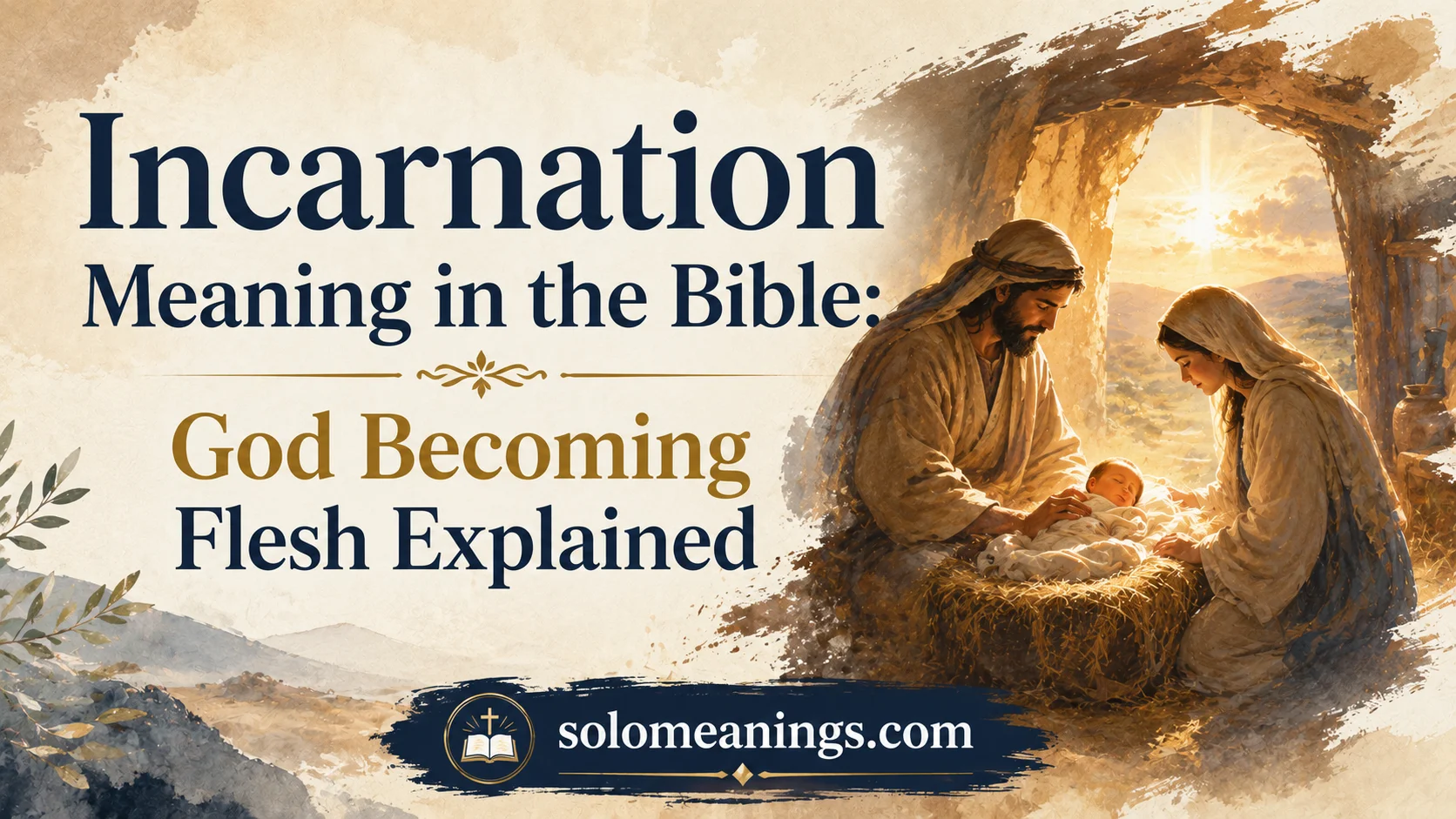
The Incarnation Meaning in the Bible | God Becoming Flesh is one of the most powerful ideas in Christianity. It describes the belief that God took human form in the person of Jesus Christ. This concept shapes how millions understand faith, purpose, and the relationship between the divine and human life.
Across the United States, this idea is central to Christian theology, church teaching, and holiday traditions like Christmas. However, it is not just a religious doctrine. It also carries deep symbolic meaning about love, humility, sacrifice, and connection between heaven and earth.
To understand the Incarnation fully, we need to explore its biblical roots, historical development, and modern interpretation in American culture today.
Quick Answer
The Incarnation Meaning in the Bible refers to God becoming human in Jesus Christ. In the USA, it symbolizes divine love entering human life, bringing salvation, hope, and closeness between God and people
TL;DR
• God becomes human in the form of Jesus Christ
• Core Christian belief about divine love and salvation
• Strong foundation in the New Testament
• Celebrated in USA through Christmas and church teachings
• Symbol of humility, connection, and sacrifice
• Still central in modern Christian identity
What Is the Incarnation in Christianity?
This section explains the basic idea behind the Incarnation and why it matters in Christian belief. It helps readers understand how Christians interpret God entering human history in a physical form.
Divine Becoming Human
In Christian belief, the Incarnation means God chose to become fully human while remaining fully divine. Jesus is seen as both God and man in one person. This belief is central to Christian identity in the USA and worldwide.
• God enters human history directly
• Jesus represents divine presence in human form
• Humanity and divinity united in one being
• Seen as a mystery of faith, not fully explainable
Why It Matters
The Incarnation is not just a theological idea. It shapes how believers understand love, sacrifice, and salvation. It suggests that God understands human struggles from within.
Biblical Foundations of the Incarnation
This section explores where the idea comes from in the Bible. It focuses mainly on the New Testament, especially the Gospel of John.
Key Biblical Passages
One of the most famous verses is John 1:14, which says the “Word became flesh.” This phrase is central to the Incarnation belief.
• “The Word became flesh” (John 1:14)
• Jesus as the image of the invisible God
• Birth narratives in Matthew and Luke
• Teachings about divine presence in Christ
Meaning of “The Word”
In the Bible, “Word” refers to divine wisdom or Logos. This idea connects God’s eternal nature with human reality through Jesus.
Historical Origins of Incarnation Belief
This section looks at how the idea developed in early Christianity.
Early Church Teachings
Early Christians spent centuries discussing how Jesus could be both God and human. These debates shaped Christian doctrine.
• Early councils defined Christ’s nature
• Nicene Creed affirmed divine-human unity
• Church leaders clarified theological meanings
• Strong focus on preserving biblical teaching
Formation of Doctrine
By the 4th century, the Incarnation became a formal belief in Christian theology. It helped unify different Christian communities.
Ancient and Philosophical Influences
This section explores ideas before Christianity that influenced thinking about divine-human connection.
Greek Philosophical Ideas
Greek philosophy introduced the concept of Logos, meaning divine reason or order. Early Christian thinkers connected this idea to Jesus.
Symbolic Connections
In ancient thought, divine beings sometimes took human form in myths. Christianity redefined this idea as a single historical event.
Symbolism of Incarnation in the USA
This section focuses on how Americans understand and express the Incarnation today.
Cultural Meaning in America
In the USA, the Incarnation is closely tied to Christmas and Christian identity. It represents hope, renewal, and divine love entering everyday life.
Key Symbolic Themes
• Light entering darkness
• Hope during hardship
• God’s closeness to humanity
• Spiritual renewal and forgiveness
• Humility and sacrifice
Cross-Cultural and Spiritual Interpretations
This section compares how other traditions view divine-human connections.
Different Religious Views
Other religions express similar ideas in different ways, though not identical.
• Hinduism: divine avatars appear on earth
• Islam: God is transcendent, not incarnate
• Buddhism: enlightened beings guide humanity
• Ancient mythologies: gods interact with humans
Respectful Distinction
Christian Incarnation is unique because it teaches one historical divine-human person rather than repeated manifestations.
Emotional and Psychological Meaning
This section explains how the Incarnation affects human emotions and thinking.
Feelings of Connection
Many believers feel comfort knowing God understands human struggle.
• Sense of being understood spiritually
• Emotional comfort in suffering
• Hope during personal hardship
• Feeling of divine companionship
Psychological Symbolism
The idea reflects deep human desire for connection between the sacred and everyday life.
Incarnation in American Culture and Tradition
This section shows how the concept appears in daily life and culture in the USA.
Religious and Cultural Expression
The Incarnation is widely expressed through Christmas traditions, church services, and art.
Common Expressions
| Context | Meaning in the USA | Common Associations | Notes |
| Christmas | God entering the world | Nativity scenes, gifts | Most visible form |
| Church sermons | Salvation message | Hope, forgiveness | Core teaching |
| Religious art | Divine-human unity | Paintings, icons | Symbolic imagery |
| Music | Joy and worship | Christmas hymns | Seasonal expression |
Modern Usage and Popular Representation
This section explains how the idea appears in modern media and daily life.
Contemporary Expression
Today, the Incarnation is often referenced in sermons, books, and Christian media.
• Religious films and documentaries
• Christmas music and storytelling
• Online sermons and devotionals
• Christian artwork and illustrations
Everyday Meaning
Many believers use the idea to express compassion and humility in daily life.
Misunderstandings and Controversies
This section addresses confusion and theological debates.
Common Misunderstandings
Some people think Incarnation means God stopped being divine, which is not correct in Christian belief.
• Misbelief: Jesus is only human
• Misbelief: God changed into a human permanently
• Confusion about Trinity relationship
• Simplified interpretations in media
Theological Debates
Christian groups have debated how to fully explain the mystery of divine and human nature together.
Also Read This: Circumcised in the Bible Meaning: Obedience, Faith & Renewal
How the Meaning Has Changed Over Time
This section explains how interpretation evolved.
Historical Shifts
Over centuries, the meaning remained stable but its expression changed.
• Early focus on doctrine and debate
• Medieval focus on mystery and devotion
• Modern focus on personal relationship
• Today: cultural and emotional understanding
FAQs About Incarnation Meaning in the Bible
What does Incarnation mean in simple words?
It means God became human in the form of Jesus Christ. It shows God entering human life to bring salvation and love.
Why is the Incarnation important in Christianity?
It shows that God understands human suffering. It also forms the foundation of Christian beliefs about salvation.
Where in the Bible is the Incarnation mentioned?
It is most clearly found in the Gospel of John, especially John 1:14, and in the birth stories of Jesus.
Is the Incarnation accepted by all religions?
No. It is a core Christian belief. Other religions have different views about God and divine presence.
What does Incarnation symbolize spiritually?
It symbolizes divine love, humility, connection, and the idea that God is close to humanity.
How is the Incarnation celebrated today?
It is mainly celebrated during Christmas through church services, music, and nativity traditions.
Conclusion
The Incarnation Meaning in the Bible | God Becoming Flesh remains one of the most profound ideas in Christian thought. It describes the belief that God entered human history in Jesus Christ, bridging the gap between heaven and earth.
In the United States today, this concept continues to shape faith, culture, and personal spirituality. It represents love, humility, and the belief that the divine is not distant but deeply connected to human life.
Understanding the Incarnation helps readers see why this idea has lasted for centuries and continues to inspire meaning in modern life.