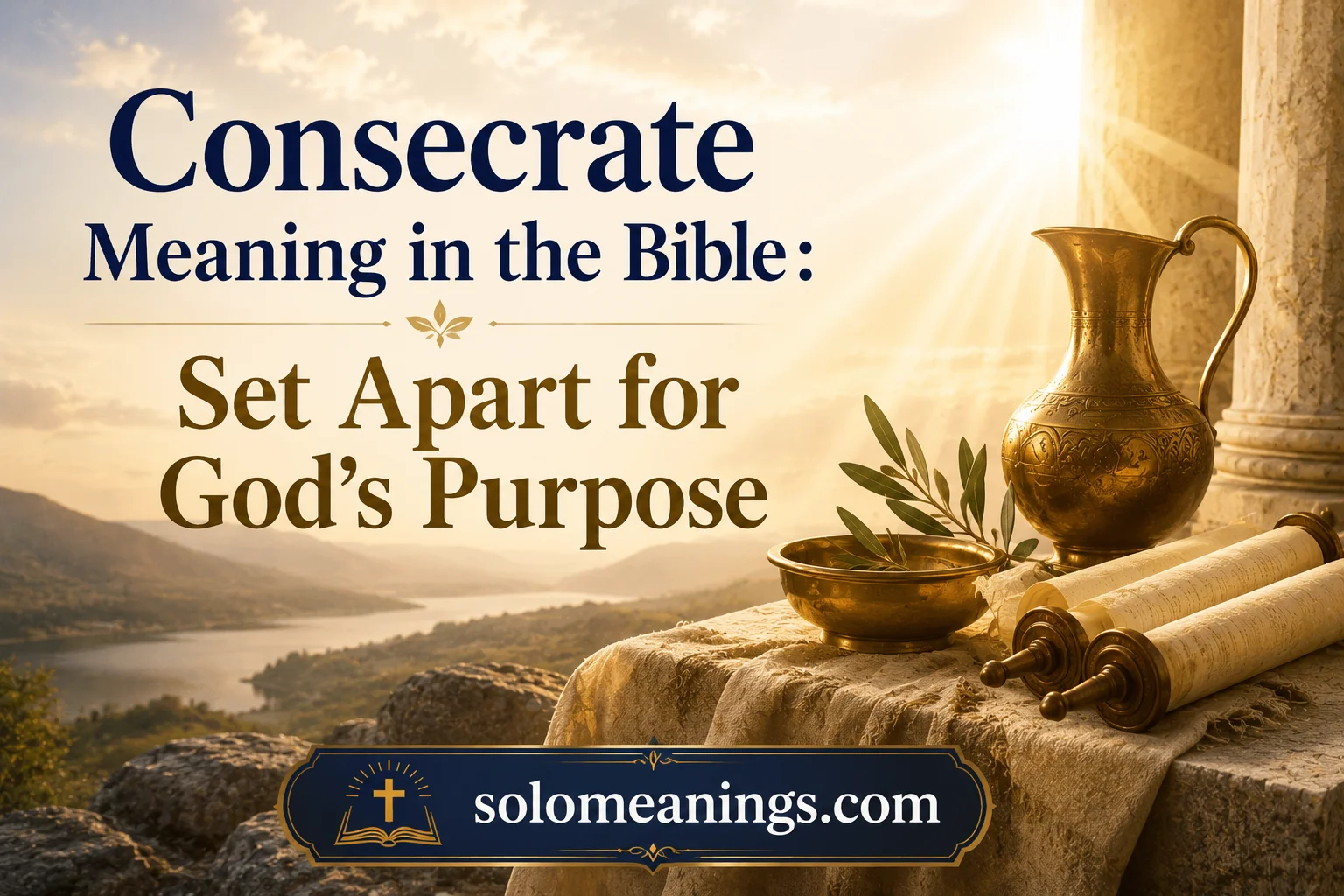
The phrase Consecrate Meaning in the Bible: Set Apart for God’s Purpose carries deep spiritual meaning for many Americans today. In the Bible, to consecrate means to dedicate a person, object, place, or life fully to God. The idea appears throughout both the Old and New Testaments and connects closely with holiness, purity, worship, and devotion.
Today, people often hear the word “consecrate” in churches, prayers, weddings, baptisms, and religious ceremonies. However, the concept also reaches beyond formal religion. Many Americans see consecration as a symbol of living with purpose, moral focus, and spiritual identity.
The meaning has also changed over time. Ancient Hebrew rituals once centered on priests, temples, sacrifices, and sacred oil. Modern believers, in contrast, often connect consecration with personal faith and daily living. Because of this shift, the symbol remains powerful in both religious and cultural conversations.
Quick Answer
Consecrate Meaning in the Bible: Set Apart for God’s Purpose symbolizes dedication to God, spiritual purity, and holy service. In the United States, it often represents living intentionally for faith, morality, and divine calling, while broader spiritual traditions connect it with cleansing, commitment, and sacred identity.
TL;DR
• Consecrate means dedicating something completely to God.
• The Bible links consecration with holiness and worship.
• Ancient rituals used oil, sacrifices, and sacred ceremonies.
• Americans often connect consecration with purposeful living.
• The meaning evolved from temple rituals to personal spirituality.
• Today, it appears in worship, prayer, tattoos, and faith culture.
What Does Consecrate Mean in the Bible?
The Biblical Definition
In the Bible, consecration means being “set apart” for a holy purpose. The word appears in connection with priests, altars, temples, sacrifices, and even entire nations. God called certain people and objects sacred because they served divine purposes.
In the Old Testament, consecration often involved rituals. Priests washed themselves, wore sacred clothing, and received holy oil. These acts symbolized purity and obedience before entering God’s presence.
The New Testament expanded the meaning. Instead of focusing only on rituals, consecration became more personal and spiritual. Believers were encouraged to dedicate their hearts, actions, and lives to God.
Key Ideas Linked to Consecration
• Holiness and purity before God
• Dedication to a sacred purpose
• Separation from ordinary use
• Spiritual commitment and obedience
• Service, worship, and devotion
• Inner transformation and renewal
Historical Origins of Consecration
Ancient Hebrew Roots
The idea of consecration began in ancient Hebrew culture thousands of years ago. In the book of Exodus, God instructed Moses to consecrate priests and sacred objects for worship in the Tabernacle.
Oil played an important symbolic role. Anointing oil represented God’s blessing and authority. Priests, kings, and prophets often received oil during consecration ceremonies.
Animals and offerings were also part of the process. Sacrifices symbolized surrender and cleansing before God. These rituals reflected the belief that holy things required spiritual preparation.
Pre-Christian Sacred Traditions
Consecration themes existed before Christianity as well. Ancient civilizations in Egypt, Mesopotamia, Greece, and Rome dedicated temples, statues, and leaders to divine powers.
However, biblical consecration differed in one major way. The Hebrew tradition emphasized moral holiness alongside ritual action. Consecration was not simply magical or ceremonial. It involved obedience and covenant relationship with God.
How the Meaning Changed Over Time
Over centuries, consecration shifted from temple-centered rituals to personal spirituality. Early Christians believed Jesus fulfilled many Old Testament ceremonial laws. Because of this, inner devotion became more important than physical rituals alone.
Today, many churches still practice forms of consecration. Yet modern believers often interpret it emotionally and symbolically rather than ceremonially.
Consecration Symbolism in the United States
Why Americans Connect With the Idea
In the United States, consecration often symbolizes living with purpose and spiritual identity. Many Americans admire the idea of dedicating oneself to something meaningful.
Religious communities commonly use the word during:
• Baptisms and confirmations
• Church dedications
• Marriage ceremonies
• Missionary services
• Prayer gatherings
• Ordination of pastors
The idea also appears in broader culture. Athletes, musicians, military members, and activists sometimes describe their work as a “calling.” While not always religious, the language echoes consecration themes.
Consecration and American Christian Culture
American Christianity strongly shaped modern understanding of consecration. Revival movements in the 1800s and 1900s emphasized personal holiness and spiritual surrender.
Many evangelical churches taught believers to “consecrate your life to God.” This phrase encouraged moral discipline, prayer, and commitment to faith.
Today, social media often presents consecration through inspirational quotes, worship music, and faith-centered lifestyle content. Younger audiences especially connect it with authenticity and spiritual focus.
Symbols Commonly Connected to Consecration
Sacred Objects and Ritual Imagery
Consecration often appears through visual symbols. These images help believers express holiness and dedication.
| Symbol | Meaning in the USA | Common Associations | Notes |
| Anointing Oil | God’s blessing and calling | Prayer, healing, ordination | Common in churches |
| White Clothing | Purity and holiness | Baptism, weddings | Symbolizes cleansing |
| Altars | Sacrifice and worship | Prayer spaces | Emotional surrender |
| Fire | God’s presence | Revival meetings | Spiritual passion |
| Water | Cleansing and renewal | Baptism | Inner transformation |
Why These Symbols Matter
Americans often respond strongly to visible spiritual symbols. They create emotional connection and shared identity within religious communities.
Because visual culture dominates modern media, consecration symbols now appear in artwork, tattoos, church branding, and online worship content.
Also Read This: Wilderness Meaning in the Bible: God in Solitude
Spiritual Meaning of Consecration
Holiness and Divine Purpose
Spiritually, consecration represents alignment with something greater than oneself. Many believers see it as surrendering personal desires to God’s will.
This symbolism connects with ideas like:
• Spiritual discipline
• Purity of heart
• Divine calling
• Obedience and trust
• Inner renewal
• Sacred responsibility
Consecration also symbolizes transformation. A person moves from ordinary living toward intentional spiritual growth.
Prayer and Inner Dedication
Many Christians today practice consecration privately through prayer, fasting, and meditation. These acts reflect a desire to become spiritually focused.
Unlike ancient rituals, modern practices often emphasize emotional sincerity over ceremony. However, the core meaning remains similar: becoming spiritually devoted and set apart.
Consecration in Different Christian Traditions
Catholic Understanding
In Catholic tradition, consecration carries sacramental meaning. Churches, altars, bread, wine, and even individuals may be consecrated through formal ceremonies.
The Eucharist especially holds deep importance. Catholics believe consecration transforms bread and wine into the body and blood of Christ.
Protestant Perspectives
Many Protestant churches focus more on personal dedication. Consecration often means giving one’s life fully to God through prayer, worship, and moral living.
Holiness churches sometimes teach entire consecration as a spiritual milestone connected with sanctification.
Orthodox Christian Symbolism
Eastern Orthodox Christianity emphasizes mystery, sacred beauty, and divine presence. Consecration rituals often include incense, icons, candles, and chants.
The symbolism feels deeply ancient and ceremonial, connecting modern worshippers to early Christianity.
Emotional and Psychological Associations
What Consecration Feels Like
Consecration often creates feelings of peace, seriousness, hope, and spiritual clarity. Many people associate it with emotional renewal.
Psychologically, it may symbolize:
• Purpose and direction
• Identity and belonging
• Moral responsibility
• Emotional cleansing
• Spiritual confidence
• Commitment during life transitions
Because humans naturally seek meaning, consecration can feel comforting during uncertain times.
The Power of Being “Set Apart”
People often want their lives to matter. Consecration answers that emotional desire by suggesting sacred purpose.
In American culture especially, individuality and calling hold strong emotional value. Therefore, consecration language resonates beyond church settings.
Modern Uses of Consecration Symbolism
Tattoos and Personal Identity
Religious tattoos connected to consecration have become increasingly common in the United States. Many people choose crosses, doves, flames, Bible verses, or olive branches.
These tattoos usually symbolize:
• Commitment to faith
• Spiritual rebirth
• Personal transformation
• Strength through hardship
• Divine guidance
Social Media and Digital Faith Culture
Consecration themes appear widely online. Influencers and faith communities often discuss spiritual discipline, fasting, and devotion.
Popular modern expressions include:
• “Living set apart”
• “Chosen by God”
• “Walking in purpose”
• “Spirit-led life”
• “Dedicated to God’s plan”
Because digital culture values identity expression, consecration language remains highly visible.
Home Decor and Lifestyle Trends
Faith-inspired home decor also uses consecration symbolism. Scripture art, candles, prayer journals, and crosses create spaces associated with peace and sacred living.
Many Americans use these items not only religiously but emotionally as reminders of hope and calm.
Consecration and Sacred Spaces
Why Places Become Holy
In the Bible, temples, altars, and gathering places were consecrated before worship. This practice symbolized respect for divine presence.
Today, churches still dedicate buildings through special ceremonies. Homes, schools, and even cemeteries may also be consecrated.
Emotional Importance of Sacred Places
Sacred spaces often create emotional comfort. People connect them with memory, community, and spiritual reflection.
Consecrated spaces may symbolize:
• Safety and peace
• Connection with God
• Community identity
• Reverence and reflection
• Spiritual renewal
Misunderstandings and Controversies
Common Misunderstandings
Some people think consecration only applies to priests or religious leaders. However, many Christian traditions teach that all believers can live consecrated lives.
Others confuse consecration with perfection. In reality, biblical teachings usually describe it as ongoing spiritual dedication rather than flawless behavior.
Misuse and Extreme Interpretations
At times, religious groups have used consecration language manipulatively. Leaders may pressure followers into extreme obedience or isolation.
Because of this history, some Americans view the term cautiously. Modern discussions increasingly emphasize healthy spirituality and personal freedom instead of control.
Cultural Tension Around Holiness Language
In secular spaces, words like “holy” or “set apart” may feel outdated or exclusive. Yet others find them meaningful and grounding.
The meaning often depends on personal experience, culture, and religious background.
How Consecration Has Changed Over Time
From Ritual to Personal Spirituality
Ancient consecration focused heavily on priests, sacrifices, and temples. Modern believers, however, usually emphasize personal faith and daily conduct.
This shift reflects larger changes in religion and culture. Individual spirituality now plays a stronger role in American life.
Revival of Ancient Practices
Interestingly, some younger Christians are rediscovering ancient rituals like fasting, anointing oil, and contemplative prayer.
Because modern life feels fast and distracting, ancient consecration practices sometimes offer emotional stability and deeper reflection.
The Future of Consecration Symbolism
Consecration will likely continue evolving. Future generations may express the concept through digital communities, creative art, wellness culture, and hybrid spiritual traditions.
Still, the core idea remains surprisingly stable: dedicating oneself to something sacred and meaningful.
Consecration in Popular Culture
Music, Films, and Literature
Faith-centered music often uses consecration themes. Lyrics about surrender, calling, and devotion remain popular across gospel and worship genres.
Movies and novels also portray consecrated characters as morally driven or spiritually transformed. These stories often explore sacrifice, identity, and purpose.
Modern Cultural Associations
Today, consecration sometimes overlaps with wellness language and self-improvement culture. Although meanings differ, both focus on intentional living and transformation.
Modern audiences may connect consecration with:
• Purpose-driven identity
• Mindful living
• Discipline and focus
• Spiritual wellness
• Authentic self-expression
FAQs
What does consecrate mean in simple biblical terms?
In simple terms, consecrate means dedicating something completely to God. It involves setting a person, object, or place apart for a holy purpose.
Is consecration only for priests?
No. While priests were often consecrated in the Bible, many Christians believe all believers can live consecrated lives through faith and devotion.
What symbols represent consecration?
Common symbols include oil, white clothing, altars, fire, water, and light. These symbols usually represent holiness, cleansing, and divine purpose.
Why is consecration important in Christianity?
Consecration symbolizes commitment to God and spiritual transformation. It reminds believers to live intentionally and faithfully.
How do people practice consecration today?
People may pray, fast, worship, volunteer, or dedicate personal goals to God. Many also use consecration language during important life events.
Is consecration the same as holiness?
They are closely connected but not identical. Consecration means being set apart, while holiness refers more broadly to sacred purity and divine character.
Conclusion
The phrase Consecrate Meaning in the Bible: Set Apart for God’s Purpose continues to carry powerful symbolism across religion, culture, and personal identity. From ancient Hebrew rituals to modern American spirituality, consecration has always centered on dedication, holiness, and meaningful purpose.
Today, the idea reaches beyond formal worship. People connect consecration with intentional living, emotional renewal, and spiritual belonging. Whether expressed through prayer, art, tattoos, or sacred spaces, the symbol still speaks to a timeless human desire: to live a life that matters.
As culture changes, the meaning of consecration keeps evolving. Yet its central message remains deeply recognizable — setting apart something valuable for a higher purpose.