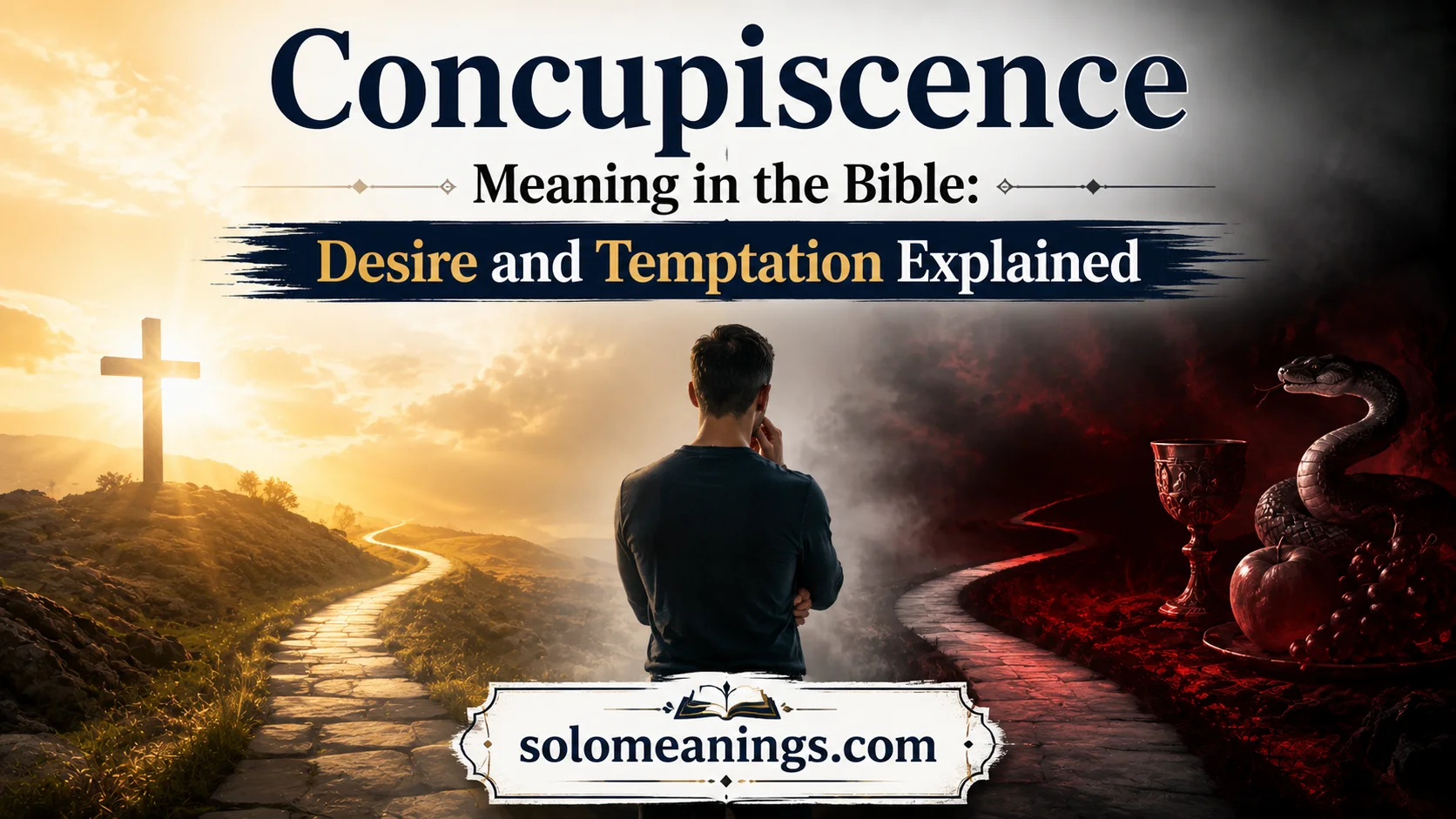
The Concupiscence Meaning in the Bible: Desire & Temptation refers to the deep inner pull of human desire that can lead toward either good or sin. It is not just about physical temptation but also emotional and spiritual longing that shapes human behavior. In biblical tradition, concupiscence is often linked to the struggle between flesh and spirit.
In the United States today, this concept is often discussed in religious teaching, psychology, and moral philosophy. Many people see it as the inner conflict between what we want and what we believe is right. However, its roots go back thousands of years into early Christian theology and biblical interpretation.
Understanding concupiscence helps explain why desire is seen as both natural and potentially dangerous in spiritual life.
Quick Answer
Concupiscence in the Bible refers to strong human desire that can lead to temptation and sin if not guided by spiritual discipline. In the USA today, it is understood as the internal struggle between moral values and personal impulses.
TL;DR
• Concupiscence means intense inner desire
• It can lead toward temptation or sin
• Rooted in early Christian theology
• Linked to human struggle between spirit and flesh
• Still used in religious and moral discussions today
What Is Concupiscence in the Bible?
Concupiscence in the Bible describes the inner movement of desire within humans. It is often associated with temptation, especially when desires conflict with spiritual teachings.
It does not always mean sin itself but rather the tendency toward sin. This makes it a condition of human nature rather than a single action.
• Inner desire toward pleasure or fulfillment
• Can lead toward moral struggle
• Not always sinful in itself
• Part of human emotional and spiritual life
Etymology and Historical Origins of Concupiscence
The word concupiscence comes from the Latin concupiscentia, meaning “strong desire” or “longing.” Early Christian thinkers adopted this term to describe the human condition after the fall of humanity.
In ancient philosophy, desire was seen as a powerful force that needed control. Early theologians built on this idea to explain moral weakness and temptation.
• Latin origin: concupiscentia meaning intense desire
• Used in early Christian theology
• Linked to human fallibility and moral struggle
• Influenced by Greek philosophical ideas of desire
Concupiscence in the Old Testament Context
Although the exact term is not used in early Hebrew texts, similar ideas appear through descriptions of human desire and inclination toward sin.
The concept is closely related to the idea of the “inclination of the heart” in Hebrew tradition.
• Human desire described as inner inclination
• Often linked to moral choices and obedience
• Appears in stories of temptation and failure
• Shows early awareness of inner conflict
Concupiscence in the New Testament Teachings
In the New Testament, concupiscence is more directly associated with temptation and the struggle between flesh and spirit. Apostle Paul often describes this internal conflict.
Romans chapter 7 is especially important, as it explains the battle between what a person wants to do and what they actually do.
• Conflict between flesh and spirit
• Desire leading to temptation and sin
• Human weakness acknowledged in spiritual life
• Emphasis on grace and redemption
Theological Meaning in Christianity
In Christian theology, concupiscence is seen as a condition of human nature affected by original sin. It is not always considered sinful action but a tendency toward sin.
Different Christian traditions interpret it in slightly different ways.
• Seen as human inclination toward sin
• Not identical to sin itself
• Requires spiritual discipline and grace
• Central to moral teachings in Christianity
Catholic View of Concupiscence
In Catholic theology, concupiscence is the internal tendency toward sin that remains after baptism. It is not considered sin unless acted upon.
It is seen as something that must be managed through prayer, discipline, and sacraments.
• Remains after baptism but not sin itself
• Requires moral discipline
• Managed through faith practices
• Part of human spiritual struggle
Protestant Interpretation of Concupiscence
In many Protestant traditions, concupiscence is understood as the sinful nature of humanity. It emphasizes human dependence on grace for salvation.
Some traditions view it more strictly as part of original sin, while others see it as ongoing temptation.
• Human nature inclined toward sin
• Emphasis on grace and salvation
• Varies among denominations
• Focus on inner spiritual renewal
Concupiscence and Human Psychology
Modern psychology often interprets concupiscence as natural human desire and impulse control. While not religious in language, the idea overlaps with internal conflict.
It reflects the struggle between immediate desire and long-term values.
• Desire vs self-control conflict
• Emotional and behavioral impulses
• Important in decision-making
• Linked to discipline and awareness
Concupiscence in the USA: Modern Understanding
In the United States, concupiscence is mostly discussed in religious education, theology classes, and moral discussions. It is often used to explain temptation in everyday life.
It is also referenced in conversations about ethics, behavior, and personal responsibility.
• Used in Christian teaching and sermons
• Discussed in moral philosophy
• Related to self-control and values
• Applied to modern ethical decisions
Emotional and Spiritual Meaning of Concupiscence
Emotionally, concupiscence represents inner tension and struggle. Spiritually, it reflects the need for guidance, discipline, and moral clarity.
It is often associated with guilt, awareness, and growth.
• Inner conflict between desire and values
• Emotional struggle and awareness
• Opportunity for spiritual growth
• Encourages reflection and discipline
Table: Concupiscence Across Perspectives
| Perspective | Meaning of Concupiscence | Focus Area | Interpretation |
| Biblical | Inner desire toward temptation | Spiritual struggle | Moral awareness |
| Catholic | Inclination to sin | Human nature | Managed, not sinful |
| Protestant | Fallen human nature | Salvation | Requires grace |
| Psychological | Impulse vs control | Behavior | Self-regulation |
| Modern USA | Moral struggle | Ethics | Personal responsibility |
Misunderstandings About Concupiscence
Many people misunderstand concupiscence as meaning all desire is sinful. However, this is not accurate in biblical or theological context.
Desire itself is natural, but it becomes problematic when it leads away from moral or spiritual values.
• Not all desire is sinful
• Refers to tendency, not action
• Misinterpreted as moral failure
• Context matters in interpretation
Concupiscence and Temptation in Daily Life
In daily life, concupiscence is often reflected in moments of temptation and decision-making. It appears when people feel pulled between right and wrong choices.
It is not limited to religious settings but applies to everyday behavior.
• Temptation in personal decisions
• Conflict between values and impulses
• Relevant in relationships and ethics
• Encourages self-awareness
Historical Development of the Concept
Over time, concupiscence evolved from philosophical ideas about desire into a structured theological concept. Early Church Fathers played a key role in shaping its meaning.
During medieval times, it became central to discussions about sin, morality, and human nature.
• Rooted in ancient philosophy
• Developed by early Christian thinkers
• Expanded during medieval theology
• Still relevant in modern religious thought
Modern Cultural Interpretations
Today, concupiscence is sometimes used outside religious settings to describe strong desire or craving. It appears in discussions about behavior, addiction, and motivation.
While less common in everyday speech, it still carries philosophical weight.
• Used in academic and theological contexts
• Sometimes linked to psychology of desire
• Applied to addiction and habits
• Represents inner human struggle
FAQs About Concupiscence in the Bible
What does concupiscence mean in simple terms?
It means strong inner desire that can lead to temptation or moral struggle.
Is concupiscence considered sin?
Most Christian teachings say it is not sin itself but a tendency toward sin.
Where does concupiscence appear in the Bible?
It is most closely linked to teachings in the New Testament, especially Paul’s letters.
What is the difference between desire and concupiscence?
Desire is natural, while concupiscence refers to desire that can lead toward temptation.
Why is concupiscence important in Christianity?
It explains human weakness and the need for spiritual guidance and grace.
Can concupiscence be controlled?
Yes, through discipline, moral awareness, and spiritual practices.
Conclusion
The Concupiscence Meaning in the Bible: Desire & Temptation reveals a deep understanding of human nature and inner struggle. It shows that desire is a natural part of life but must be guided with wisdom and spiritual awareness.
From ancient theology to modern interpretation in the USA, concupiscence remains a powerful concept for understanding moral choices and personal growth. It reminds readers that the human heart is always in motion between desire and discipline, shaping the path of spiritual life.