Discover the Western conifer seed bug spiritual meaning, including adaptation, resilience, protection, change, and what an encounter may symbolize.
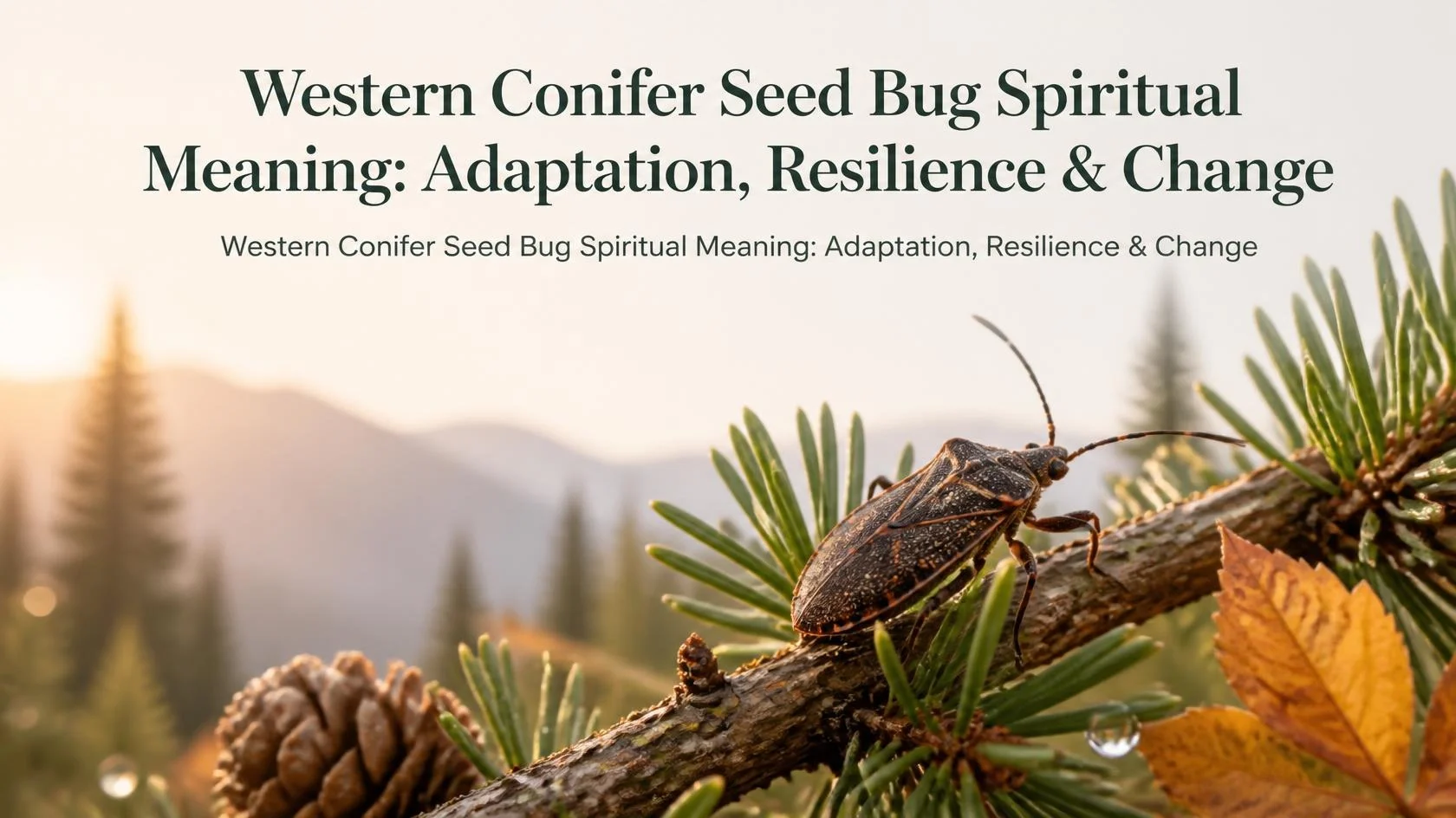
Western conifer seed bug resting on a pine cone among green conifer needles. A small forest insect can inspire reflections on resilience, adaptation, and change. The Western Conifer Seed Bug Spiritual Meaning centers on ideas such as adaptation, resilience, protection, patience, and quiet transformation. This unusual brown insect may appear ordinary, yet its behavior can inspire meaningful personal reflections.
In the United States, people often notice these bugs when they enter homes during fall. They seek protected places as temperatures drop, which can naturally create a symbolic connection with shelter, preparation, and changing seasons. However, it’s important to separate established biology from spiritual interpretation. There’s no ancient religious tradition that officially assigns a spiritual meaning to this particular species. Instead, modern symbolic interpretations draw from the insect’s behavior, appearance, life cycle, and relationship with conifer trees.
Quick Answer
The Western Conifer Seed Bug Spiritual Meaning is commonly interpreted as adaptability, resilience, protection, patience, and quiet personal change. In a U.S. setting, seeing one may serve as a personal reminder to prepare for change and find stability during uncertain periods.
TL;DR
- The bug commonly symbolizes adaptation and resilience.
- Its fall behavior can represent preparation and protection.
- Its connection with pine trees suggests endurance and groundedness.
- Spiritual interpretations are modern rather than ancient traditions.
- An encounter can encourage patience during personal transitions.
- Its meaning depends heavily on personal context.
What Is a Western Conifer Seed Bug?
Before interpreting symbolism, it helps to understand the actual insect. The Western conifer seed bug is scientifically known as Leptoglossus occidentalis, a leaf-footed bug native to western North America.
Adults are generally brown or reddish-brown. They have long antennae, a narrow body, and distinctive leaf-like expansions on their hind legs. A pale zigzag or diamond-like pattern can also appear across the wings.
The species was formally described in 1910. Therefore, its spiritual interpretations shouldn’t be presented as an ancient belief system.
A Small Insect With Distinctive Traits
The insect feeds mainly on developing conifer seeds and cones. Its hosts include pines, Douglas-firs, spruces, and other conifers.
During colder months, adults seek protected places. They may enter buildings through small openings and remain sheltered until conditions improve.
That behavior creates several natural metaphors:
• Seeking shelter can suggest protection and self-preservation.
• Surviving seasonal changes can represent resilience.
• Moving between environments can symbolize adaptability.
• Feeding among conifers can suggest connection with nature.
• Quiet winter survival can represent patience and endurance.
Why People Notice Them
Western conifer seed bugs are especially noticeable in homes during fall. They aren’t normally interested in people and don’t reproduce indoors.
Instead, they are looking for a protected place to overwinter. This seasonal behavior helps explain why some people associate an indoor encounter with preparation, transition, and finding safety.
Western Conifer Seed Bug Spiritual Meaning and Symbolism
The strongest modern interpretations come from the insect’s observable behavior. Rather than claiming that the bug carries one universal message, it’s more useful to view its symbolism as a set of possible themes.
Adaptability
Adaptability is perhaps the clearest symbolic association. The species has expanded from its native western range into much of eastern North America.
Symbolically, that movement can represent the ability to adjust when circumstances change. It reminds you that growth sometimes requires entering unfamiliar territory.
Resilience
The bug survives seasonal changes and uses sheltered environments during cold periods. Symbolically, this can represent endurance.
Its message can be especially meaningful when life feels difficult. Instead of demanding constant strength, the symbolism suggests surviving one season at a time.
Protection
When temperatures fall, adults seek protected spaces. This behavior naturally connects with the symbolic idea of creating boundaries.
In personal terms, that might mean protecting your time, energy, relationships, or sense of peace.
Patience
The insect’s seasonal rhythm also lends itself to patience. Nature doesn’t rush every stage of survival.
Similarly, some changes require preparation before visible progress appears. The bug can therefore become a reminder that quiet periods aren’t necessarily wasted periods.
What Does a Western Conifer Seed Bug Mean Spiritually?
The meaning depends on why the insect appeared and what you were experiencing at that moment. A person dealing with major change might interpret the encounter differently from someone thinking about home, family, or personal boundaries.
A Possible Message of Change
An unexpected encounter can be viewed symbolically as an invitation to notice transition.
The insect’s movement between outdoor and sheltered environments mirrors a basic life pattern. Sometimes you explore, and sometimes you retreat to recover.
A Possible Message of Protection
If you repeatedly notice these insects around your home, protection may become the most relevant metaphor.
The symbolism doesn’t necessarily mean danger exists. Instead, it can encourage you to consider where you feel secure and where you need stronger boundaries.
A Possible Message of Persistence
The bug’s survival strategy can also suggest persistence without aggression.
Its symbolic lesson isn’t about overpowering obstacles. Instead, it can represent finding practical ways to continue.
Western Conifer Seed Bug Symbolism in the USA
The American context adds an important layer to this symbolism. The insect is native to North America and has gradually expanded its range across the United States.
For many Americans, the most memorable encounter happens around the home. Fall weather can bring these insects indoors as they seek shelter from colder conditions.
The Meaning of Home
Because these bugs sometimes appear inside houses, their symbolism can connect with the idea of home.
Home traditionally represents shelter, familiarity, family, and personal space. Therefore, an unexpected insect visitor can prompt reflection on what those ideas mean personally.
The Meaning of Autumn
The timing also matters. Fall represents a visible transition between seasons.
Leaves change, temperatures decline, and animals prepare for winter. Consequently, a fall encounter can symbolize letting go, preparing ahead, and accepting natural cycles.
American Symbolic Associations
| Context | Possible Meaning in the USA | Common Association | Important Note |
| Home encounter | Protection and boundaries | Shelter | Usually a seasonal behavior |
| Fall appearance | Transition and preparation | Changing seasons | Symbolic interpretation is personal |
| Pine or conifer | Endurance and grounding | Evergreen nature | Based on broader tree symbolism |
| Moving between places | Adaptability | Change | Reflects observed behavior |
| Winter shelter | Patience and survival | Rest and preservation | Not an established religious doctrine |
What Does the Western Conifer Seed Bug Symbolize in Nature?
Nature symbolism often begins with observation. People notice how an animal behaves, then connect those traits with human experiences.
The Western conifer seed bug offers several obvious natural themes. It lives among conifers, feeds on developing seeds, changes through developmental stages, and seeks shelter when conditions become unfavorable.
Connection With Conifer Trees
Conifers remain visually striking throughout winter. Their evergreen nature has often made them useful symbols of endurance and continuity.
The bug’s close relationship with these trees therefore adds another layer to modern interpretation. It can suggest staying grounded while circumstances change.
However, this connection should not be confused with a specific spiritual teaching about the insect.
The Seed as a Symbol
Seeds often represent possibility because they contain the potential for future growth.
The Western conifer seed bug feeds on developing conifer seeds. Symbolically, that can create an interesting tension between preservation and consumption.
Rather than forcing a positive interpretation, you can use it as a reflection. What are you protecting, and what are you using to sustain yourself?
Western Conifer Seed Bug Spiritual Meaning in Different Cultures
There is no widely established ancient spiritual tradition devoted specifically to Leptoglossus occidentalis. This distinction matters because many websites present modern interpretations as though they were universal ancient beliefs.
Broader Insect Symbolism
Across human cultures, insects have often appeared in stories, art, folklore, and spiritual traditions. Their small size, unusual life cycles, and seasonal behavior make them natural symbols.
However, meanings vary greatly. One culture may associate an insect with transformation, while another may see the same creature as a nuisance or warning.
Broader Tree Symbolism
Conifers also carry different meanings across cultures and periods. Evergreen plants can suggest endurance because they remain green when many other plants become dormant.
For a modern reader, the strongest connection is therefore not a specific historical doctrine. Instead, it is the broader human habit of finding meaning in nature.
Emotional and Psychological Meaning of the Bug
Symbolism can influence how people interpret an unexpected encounter. Seeing a strange insect may create curiosity, discomfort, surprise, or even fascination.
Those emotions can become part of the personal meaning.
When the Encounter Feels Positive
Someone going through a major transition might see the bug as an encouraging reminder. Its ability to adjust and seek shelter can mirror the person’s own need to adapt.
The symbolism may therefore support feelings of patience and determination.
When the Encounter Feels Uncomfortable
Not everyone enjoys finding insects indoors. A Western conifer seed bug can produce an unpleasant smell when disturbed, and its sudden flight may startle people.
That reaction doesn’t make the encounter spiritually negative. Sometimes the most useful interpretation is simply noticing your response and asking why it affected you.
Possible Personal Associations
• Feeling capable of adapting to unfamiliar circumstances.
• Recognizing when rest and protection are necessary.
• Accepting that change happens in natural cycles.
• Staying grounded while circumstances shift around you.
• Becoming more patient with slow personal progress.
• Paying attention to boundaries within your private life.
Read More: Candle Wick Mushroom Spiritual Meaning: Signs, Symbolism & Growth
What Does It Mean When a Western Conifer Seed Bug Enters Your House?
A Western conifer seed bug entering your house has a straightforward biological explanation. In colder seasons, adults seek protected places for overwintering.
Still, some people prefer to explore a personal symbolic meaning alongside the natural explanation.
Symbolic Meaning of an Indoor Encounter
An indoor encounter can represent the need for shelter or stability. It may encourage you to think about whether your home feels peaceful and secure.
Alternatively, it can symbolize a period when you need to step back from external pressures.
Don’t Assume It Predicts Something
There is no scientific evidence that a Western conifer seed bug predicts future events. Spiritual symbolism works differently from scientific prediction.
You can treat the encounter as a prompt for reflection without assuming it guarantees a particular outcome.
Western Conifer Seed Bug Meaning in Dreams
Dream symbolism is highly personal. The same insect can represent different ideas depending on the dreamer’s emotions and circumstances.
If the bug appears in a dream, consider the setting first. A bug outside in a forest creates a different impression from dozens of bugs entering a bedroom.
Common Symbolic Possibilities
A Western conifer seed bug in a dream might suggest:
• Adapting to an unfamiliar situation.
• Protecting something important from outside pressure.
• Feeling uncomfortable with an unexpected change.
• Preparing for a quieter period in life.
• Noticing something small that deserves attention.
• Moving between independence and the need for shelter.
The emotional tone matters more than any fixed dream dictionary. Ask yourself how you felt during and after the dream.
Western Conifer Seed Bug Symbolism in Tattoos and Art
Insects have become popular subjects for tattoos, illustrations, jewelry, and nature-inspired artwork. A Western conifer seed bug is less common than butterflies, moths, bees, or beetles.
That rarity can make it appealing to someone who wants a highly personal symbol.
Tattoo Meanings
A tattoo inspired by this insect could represent adaptation, endurance, nature, or personal transformation.
Adding pine needles, cones, mountains, or evergreen branches can strengthen the connection with wilderness and groundedness.
However, the meaning ultimately belongs to the person wearing the design.
Home Decor and Artwork
Nature-inspired artwork often uses insects to create a connection with the natural world. A conifer seed bug can fit rustic, woodland, botanical, or forest-themed designs.
Its muted brown coloring also works naturally with earthy visual palettes.
Western Conifer Seed Bug and Personal Transformation
Transformation doesn’t always look dramatic. Sometimes it involves small adjustments that gradually change your direction.
The Western conifer seed bug offers a useful metaphor for this quieter form of change.
Growth Through Adaptation
The species passes through several developmental stages before becoming an adult. Like many insects, this life cycle can encourage reflection on gradual development.
You don’t need to change everything at once. Sometimes progress means adjusting one habit, boundary, or decision.
Quiet Transformation
The insect isn’t a classic symbol of dramatic rebirth like the butterfly. Its symbolism feels subtler.
That makes it particularly useful for people experiencing changes that aren’t obvious to others.
Misunderstandings About Western Conifer Seed Bug Symbolism
Several misconceptions can arise when biological facts and spiritual interpretations become mixed.
It Isn’t an Ancient Spiritual Symbol
The species was scientifically described in 1910. Claims that ancient civilizations specifically assigned spiritual meanings to this exact insect should therefore be treated cautiously.
Broader insect and evergreen symbolism is much older.
It Isn’t Automatically a Bad Omen
Finding one indoors doesn’t mean something negative is coming. The insect normally enters buildings because it is seeking shelter.
Therefore, an encounter can be interpreted personally without treating it as a supernatural warning.
It Isn’t the Same as a Stink Bug
Western conifer seed bugs can produce a noticeable odor when disturbed. However, they belong to the leaf-footed bug family rather than the stink bug family.
That distinction matters when identifying the insect.
How Western Conifer Seed Bug Meaning Has Changed Over Time
The species itself has experienced a major geographic change. Native to western North America, it began expanding eastward during the 20th century and is now found across much of the United States.
This changing distribution gives the insect an especially interesting modern metaphor.
From Forest Insect to Household Visitor
Historically, people encountered the species primarily within its natural habitat. Today, many homeowners know it because the insects sometimes enter buildings.
As a result, its symbolic associations can shift toward home, boundaries, seasonal change, and protection.
From Pest to Reflection
Biologically, the insect can be a nuisance. Yet symbolic thinking often looks beyond whether an animal is attractive or useful.
A small unwanted visitor can still encourage reflection about nature, patience, and adaptation.
How to Interpret a Western Conifer Seed Bug Encounter
If you want to explore the encounter spiritually, start with your own circumstances. Avoid searching for one universal answer.
Instead, consider what was happening when you noticed the insect.
Ask Yourself These Questions
• What major change am I currently experiencing?
• Where in my life do I need greater protection?
• Am I resisting a change that requires adaptation?
• Do I need rest before taking my next step?
• What part of my life needs stronger boundaries?
• What can nature teach me about patience?
These questions turn symbolism into reflection rather than prediction.
Look at the Context
A bug appearing beside a pine tree has a different context from one appearing inside your bedroom.
Likewise, seeing one once is different from repeatedly noticing them during a period of personal change. Context doesn’t prove a supernatural message, but it can shape personal meaning.
FAQs
Is the Western conifer seed bug a good spiritual sign?
Many modern interpretations view it positively. Adaptability, resilience, protection, and patience are common themes. However, there is no universal spiritual tradition declaring the insect to be a good or bad sign.
What does it mean when a Western conifer seed bug enters your home?
Biologically, it usually means the adult is seeking shelter from colder conditions. Symbolically, some people interpret the encounter as a reminder of protection, boundaries, and creating a safe environment.
Does the Western conifer seed bug symbolize transformation?
It can symbolize gradual transformation in modern spiritual interpretations. Its developmental stages and seasonal behavior provide natural metaphors for personal growth and adjustment.
Is seeing a Western conifer seed bug a warning?
There is no scientific evidence that seeing one predicts an event or warning. If you use spiritual symbolism, it may be more helpful to treat the encounter as an opportunity for reflection.
What does the bug symbolize in dreams?
Dream meanings vary according to the person’s emotions and circumstances. The insect may represent adaptation, discomfort, protection, personal boundaries, or a subtle change that needs attention.
Is the Western conifer seed bug connected to ancient religion?
There is no well-established ancient religious tradition specifically centered on this species. Modern interpretations are better understood as personal symbolism influenced by broader insect, tree, seasonal, and nature imagery.
Conclusion
The Western Conifer Seed Bug Spiritual Meaning is best understood through themes of adaptation, resilience, protection, patience, and quiet transformation. Its seasonal search for shelter and close relationship with conifer trees provide natural images for these ideas.
At the same time, the insect doesn’t have one fixed spiritual message. If you encounter one, you can appreciate the biological explanation while using the moment for personal reflection. Sometimes a small creature can remind you that adapting, resting, and protecting what matters are all meaningful parts of moving forward.