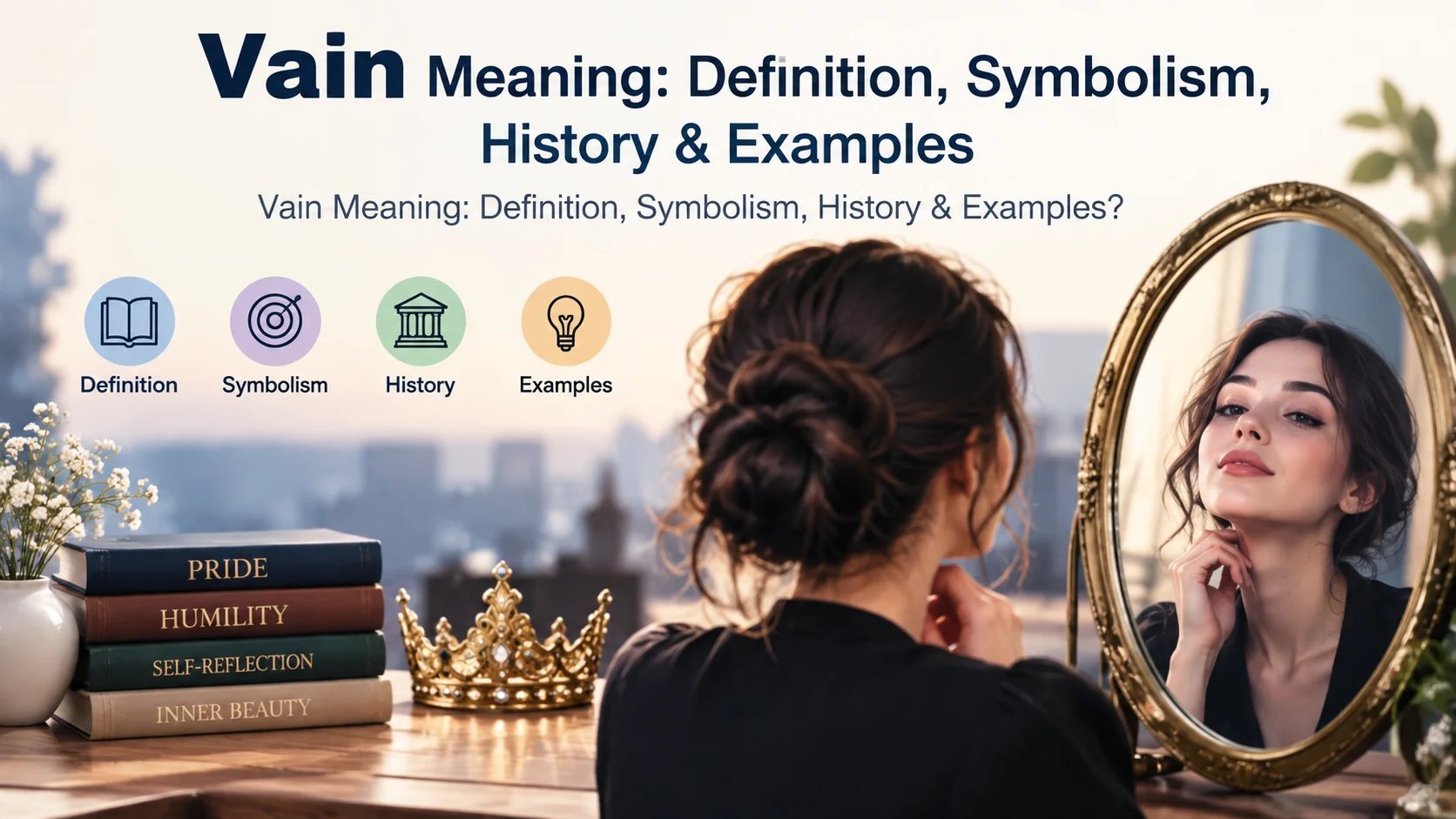
Learn the meaning of vain, including pride, futility, biblical symbolism, emotional associations, and how Americans use the word today.
The vain meaning can seem confusing because the word has more than one important sense. In everyday American English, it often describes someone who cares too much about their appearance, abilities, or achievements. However, it can also describe an unsuccessful effort, hope, or attempt. Understanding the context is important because the meaning can change depending on how the word is used. This makes “vain” an interesting word with both personal and practical meanings.
The word has an older and deeper history, too. Its roots connect ideas of emptiness, illusion, and things that fail to produce lasting value. Over time, “vain” developed several related meanings that are still common in modern English. The older sense appears strongly in religious writing, especially biblical discussions of vanity and human life. These historical meanings help explain why the word can refer to both pride and futility today.
In modern usage, knowing the different meanings of vain can make your English clearer and more precise. You may see it describing a self-centered person, an unsuccessful attempt, or something considered empty and without lasting purpose. The word also appears in the common expression “in vain,” which means an action was unsuccessful or produced no desired result. In this guide, we will explore the definition, symbolism, history, and examples of “vain” to make its meaning easy to understand.
Quick Answer
The vain meaning in the USA usually points to excessive pride in appearance or achievements, or to something unsuccessful or useless. More broadly, the word can suggest emptiness, fleeting value, or an effort that produces no desired result.
TL;DR
- Vain can mean overly proud of appearance or accomplishments.
- “In vain” means without success or without the desired result.
- The word comes from Latin roots connected with emptiness and illusion.
- Biblical uses often emphasize futility, worthlessness, or things that don’t last.
- American usage today commonly focuses on pride, appearance, and failed efforts.
What Does Vain Mean?
The simplest definition depends on how the word appears in a sentence. Modern dictionaries recognize both a personal meaning and a result-based meaning. Vain as Excessive Pride
When you call someone vain, you usually mean they’re overly concerned about themselves. This concern often involves physical appearance, clothing, popularity, intelligence, or accomplishments.
For example:
- She’s vain about her appearance.
- He’s too vain to admit he made a mistake.
- The actor seemed vain about his success.
Here, “vain” is close to conceited, self-important, or egotistical.
However, being confident doesn’t automatically make someone vain. Confidence can involve a healthy belief in your abilities. Vanity suggests that admiration, appearance, or recognition has become too important.
Vain as Unsuccessful
The second major meaning appears in expressions such as “a vain attempt” or “a vain hope.”
For example:
They made a vain attempt to repair the old machine.
This means the attempt failed to achieve its purpose.
Likewise, “She waited in vain” means she waited but didn’t get the result she wanted.
What Does “In Vain” Mean?
“In vain” is one of the most common expressions involving the word. It generally means without success, without the desired result, or to no useful end. (Cambridge Dictionary)
Common Examples
You might hear:
- We searched in vain for the missing keys.
- He tried in vain to change her mind.
- Their efforts weren’t in vain.
- The rescue team worked so nobody would die in vain.
Notice something important here. “In vain” doesn’t necessarily mean the person was foolish or proud.
Instead, it focuses on the result of an action.
Someone can work extremely hard and still work in vain if the effort doesn’t accomplish its intended goal.
Where Did the Word Vain Come From?
The history of “vain” helps explain why its modern meanings seem different. The English word developed through Middle English and Anglo-French from the Latin vānus.
Latin Roots
The Latin vānus carried ideas related to something empty, lacking substance, or illusory. It could also describe empty pride.
That connection is important because the modern meanings still share a common idea.
Something vain can be empty of useful substance, or a person can be too impressed with an empty image of themselves.
The word entered English during the Middle English period. Merriam-Webster dates its first known English use to the 14th century.
From Emptiness to Pride
Over time, the word developed several related meanings.
It could describe something:
- Empty or lacking substance.
- Futile or unsuccessful.
- Groundless or foolish.
- Excessively proud.
- Worthless or without lasting value.
These meanings didn’t develop randomly. They grew around the shared idea of something that looks important but lacks the substance or result expected from it.
What Is the Biblical Meaning of Vain?
The biblical use of “vain” is especially important because older English Bible translations use the word frequently. However, its meaning isn’t always identical to the modern idea of someone who loves looking in the mirror.
Vain as Empty or Fleeting
In biblical language, “vain” can describe something empty, temporary, useless, false, or without lasting value. The Bible Encyclopedia connects several biblical uses with ideas such as breath, emptiness, futility, falsehood, and worthlessness.
This is particularly clear in Ecclesiastes.
The Hebrew word hebel can literally suggest breath, vapor, or something fleeting. In Ecclesiastes, it is often translated as
“Vanity of Vanities”
Ecclesiastes opens and closes with the famous idea that everything is vanity.
The point isn’t simply that people are obsessed with their looks. Instead, the passage explores how temporary human achievements, possessions, pleasure, and earthly efforts can be.
This creates a deeper symbolic meaning:
What appears permanent may actually be temporary.
That idea has influenced Western literature, religious thought, and visual art for centuries.
What Does Vain Symbolize?
Although “vain” is primarily a word rather than a physical symbol, it can carry strong symbolic ideas. These meanings often appear through images such as mirrors, fading flowers, clocks, skulls, and temporary beauty.
The Mirror
A mirror commonly represents self-image and self-awareness. When connected with vanity, however, it can suggest excessive self-focus.
The famous American artwork All Is Vanity by Charles Allan Gilbert uses reflection to connect beauty with mortality. The Metropolitan Museum of Art discusses this image alongside the broader tradition of vanitas and memento mori imagery.
The Vanitas Tradition
In European art, vanitas imagery often reminded viewers that worldly success doesn’t last forever.
Common objects included:
- Mirrors representing appearance and self-regard.
- Skulls representing mortality.
- Hourglasses representing passing time.
- Fading flowers representing temporary beauty.
- Books and valuables representing knowledge or wealth.
These images aren’t identical to the modern definition of “vain.” Instead, they explore the larger concept of vanity as temporary worldly value.
How Is Vain Understood in the United States?
In the USA, the word has two especially common everyday meanings. One focuses on personality, while the other focuses on unsuccessful actions.
Appearance and Self-Image
American culture places strong attention on appearance, fashion, celebrity, fitness, and personal presentation. Because of that, calling someone “vain” often relates to how much attention they give their appearance.
| Context | Meaning in the USA | Common Association | Notes |
| Appearance | Excessively concerned with looks | Mirrors, fashion, beauty | Usually describes a person |
| Achievements | Too proud of success | Fame, awards, status | Can overlap with conceit |
| “In vain” | Without success | Failed effort | Focuses on the result |
| Religion | Empty, improper, or disrespectful use | Sacred language | Meaning depends on context |
| Literature | Temporary or worthless value | Mortality, illusion | Often has an older tone |
Social Expectations
The word can also reflect American ideas about humility.
Someone who constantly talks about their accomplishments may be called vain. Yet, cultural standards can vary.
For example, confidence may be praised in a job interview. The same behavior could seem vain if it becomes constant bragging.
Therefore, context matters more than appearance alone.
Read More: What Does LMS Mean in Text? 2026 Guide
What Is the Difference Between Vain and Proud?
Vain and proud overlap, but they aren’t exact synonyms. Pride can describe satisfaction in something you’ve done, while vanity suggests excessive concern with how you appear to others.
Pride Can Be Positive
You might say:
I’m proud of the work I completed.
That statement doesn’t necessarily suggest arrogance.
However:
He’s vain about his accomplishments.
suggests that he places excessive importance on them.
Merriam-Webster also notes this distinction, explaining that vanity and pride are related but not identical concepts.
A Simple Way to Remember
Think of the difference this way:
Pride: “I did something valuable.”
Vanity: “I need other people to see how valuable I am.”
That isn’t a perfect rule for every situation, but it makes the distinction easier.
What Are the Emotional Associations of Vain?
The word “vain” can trigger different emotional reactions depending on its meaning.
When It Describes a Person
When someone is called vain, listeners may associate the word with:
- Self-importance.
- Insecurity hidden behind confidence.
- Excessive concern about appearance.
- Desire for admiration.
- Competitive behavior.
- Fear of losing status.
However, calling someone vain is usually a criticism. It suggests that self-focus has gone too far.
When It Describes an Effort
“In vain” creates a different emotional feeling.
It can suggest disappointment, frustration, sadness, or wasted effort.
For example, someone may search in vain for a lost family photograph. The phrase emphasizes the unsuccessful result rather than the person’s character.
How Does Vain Appear in Modern Culture?
Today, “vain” remains useful because modern life creates many situations involving appearance, achievement, and public attention.
Social Media
Social media has made personal presentation highly visible. People share photographs, achievements, outfits, vacations, fitness progress, and lifestyle moments.
Because of this, “vain” sometimes appears when people criticize excessive self-presentation.
However, posting a photograph doesn’t automatically mean someone is vain. Sharing an image can also express creativity, memory, humor, identity, or connection.
Fashion and Beauty
The word frequently appears in conversations about grooming and personal appearance.
Still, caring about clothing or beauty isn’t inherently negative. The criticism begins when appearance becomes an excessive source of self-worth or social comparison.
Tattoos and Art
The concept of vanity can also inspire tattoos and artwork.
A mirror, rose, clock, skull, or fading flower may represent temporary beauty or the passage of time.
Such imagery can mean different things to different people. One person may see it as a reminder to stay humble, while another may see it as an appreciation of life’s temporary nature.
What Does Vain Mean in “Take the Name of the Lord in Vain”?
This phrase has a particularly strong religious meaning in American English.
“Take the name of the Lord in vain” is traditionally understood as using God’s name improperly, falsely, or disrespectfully. The expression comes from biblical language and has remained familiar through religious teaching and older English translations.
Why This Meaning Differs
Here, “vain” doesn’t simply mean “proud.”
Instead, it carries an older sense connected with something empty, improper, false, or lacking proper purpose.
That distinction explains why modern readers sometimes misunderstand the phrase.
The expression isn’t simply saying that someone is being physically vain. Its meaning depends on the older sense of the word.
Are Vain and Vanity the Same?
They’re closely related, but they have different grammatical roles.
Vain is usually an adjective.
Vanity is usually a noun describing the quality or condition of being vain.
For example:
She is vain about her appearance.
Her vanity affects how she behaves.
Vanity can also mean something empty, worthless, or without lasting value. Modern dictionaries recognize both the personal and broader meanings.
Interestingly, “vanity” can also refer to a dressing table or bathroom cabinet in American English. That everyday object connects naturally with the older association between vanity and personal appearance.
What Are Common Misunderstandings About Vain?
Because the word has several meanings, confusion is common.
Mistake One: Thinking It Always Means Conceited
A “vain attempt” doesn’t describe a conceited attempt.
It describes an attempt that failed or produced no desired result.
Mistake Two: Thinking Confidence Equals Vanity
Someone can be confident without being vain.
Vanity usually suggests excessive self-focus or an inflated concern with appearance or achievements.
Mistake Three: Assuming Biblical Vain Always Means Proud
Older biblical uses can refer to emptiness, futility, falsehood, worthlessness, or things that don’t last.
So the surrounding sentence is essential.
How Has the Meaning of Vain Changed Over Time?
The word has kept its older meanings while developing a strong modern association with self-image.
Earlier Sense
Historically, the word was closely connected with ideas such as emptiness, futility, illusion, and lack of substance.
These ideas remain visible in religious and literary writing.
Modern Sense
Today, Americans commonly use “vain” in two ways:
- Excessively proud of appearance or achievements.
- Unsuccessful, useless, or producing no desired result.
The first meaning is especially common when describing people. The second appears frequently in expressions such as “in vain.”
Why Both Meanings Survived
Both meanings share a basic concept.
Something can be called vain when its appearance or effort doesn’t match its real substance or result.
That connection helps explain why a vain person and a vain attempt can share the same word.
FAQs
Does vain mean arrogant?
It can, but “vain” specifically suggests excessive concern with appearance or achievements. Arrogance is broader and can involve believing you’re better than other people.
What does “in vain” mean?
“In vain” means without success or without achieving the desired result. For example, “I tried in vain” means the attempt didn’t work.
What is the biblical meaning of vain?
Biblical uses can describe something empty, futile, false, worthless, or temporary. The exact meaning depends on the original language and context.
Is being vain the same as being confident?
No. Confidence can involve a healthy belief in yourself, while vanity usually suggests excessive self-focus or concern about admiration.
What does vanity symbolize?
Vanity can symbolize temporary beauty, pride, worldly success, self-importance, or the fleeting nature of life. In art, mirrors, skulls, clocks, and fading flowers can communicate these ideas.
Is “vain” always negative?
Not always. “Vain” is usually critical when describing a person, but “in vain” mainly describes an unsuccessful outcome. The emotional meaning therefore depends on context.
Conclusion
The vain meaning reaches beyond simple pride. In modern American English, it commonly describes excessive concern with appearance or achievements, while “in vain” describes an unsuccessful effort. Historically, the word carries deeper ideas of emptiness, illusion, futility, and temporary value. Those older meanings remain visible in religious language, literature, and symbolic art. Understanding the context makes the word much easier to recognize. Whether it describes a person, an unsuccessful attempt, or the fleeting nature of worldly things, “vain” often asks you to look beyond appearances and consider what truly has lasting value.












1 thought on “Vain Meaning: Definition, Symbolism, History & Examples”