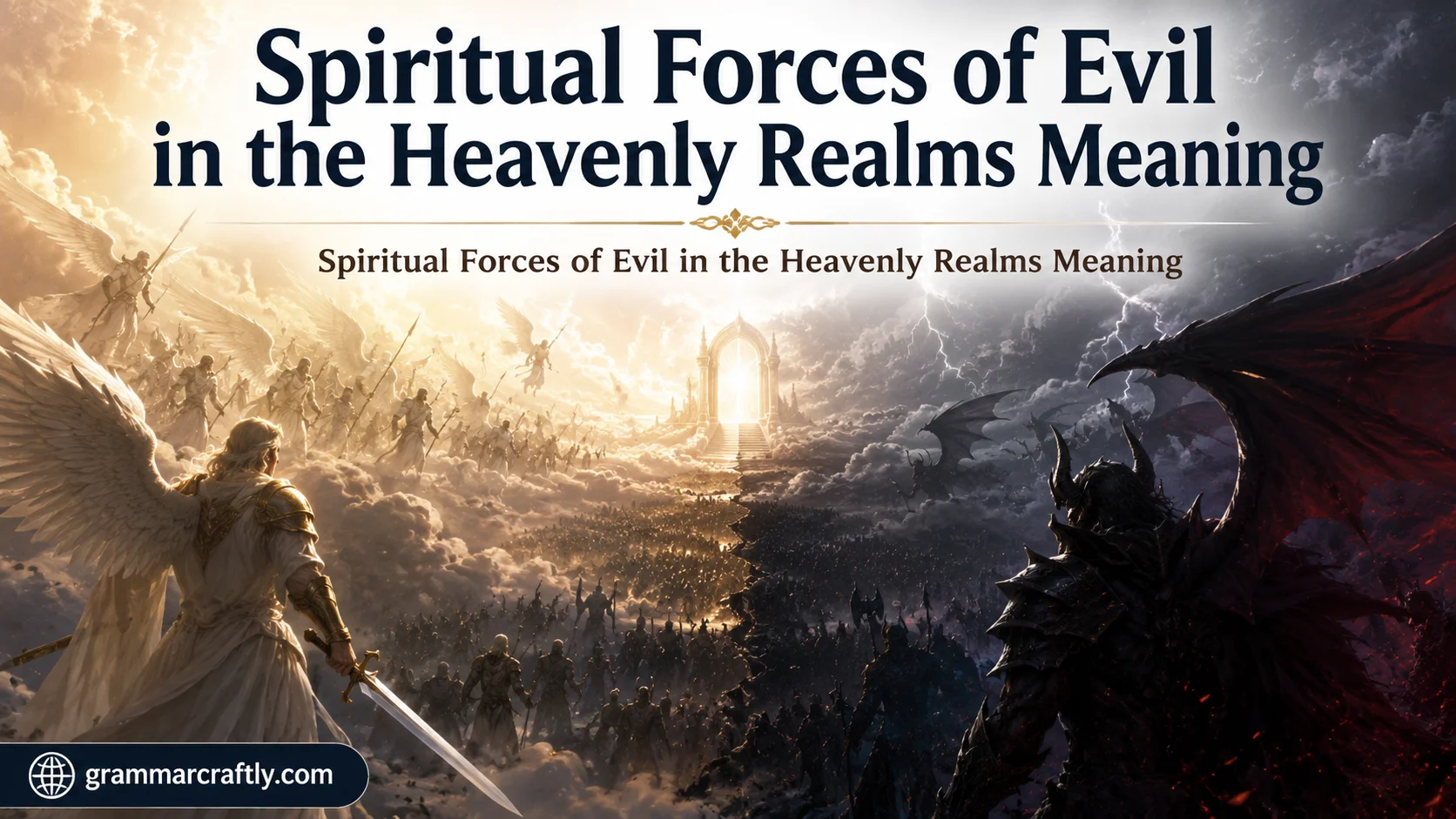
Discover the spiritual forces of evil in the heavenly realms meaning, its biblical roots, symbolism, and modern understanding in American culture.
In the United States, this concept is often discussed in Christian communities, religious studies, books, films, and personal reflections about good, evil, and spiritual struggles. It continues to attract attention among people who want to understand the biblical meaning of spiritual conflict. Many Christians connect the phrase with experiences involving temptation, faith, prayer, and personal challenges.
Beyond traditional Christian discussions, the idea has also been explored through broader cultural beliefs about invisible forces and human experiences. Different people may understand spiritual warfare, evil, darkness, and unseen powers in different ways. These interpretations can be influenced by religious traditions, culture, literature, and personal experiences.
Understanding this phrase requires looking at its biblical roots, historical development, and modern interpretations. It is not simply about frightening images of evil or mysterious supernatural forces. Instead, the concept encourages deeper reflection on temptation, conflict, faith, spiritual strength, and personal transformation, while emphasizing the importance of understanding the original biblical context and message.
Quick Answer
Spiritual Forces of Evil in the Heavenly Realms Meaning describes the belief that unseen spiritual powers can influence human life and represent opposition to goodness, faith, and righteousness. In the USA, it is mainly understood through Christian teachings about spiritual struggle, while similar ideas appear in many cultures.
TL;DR
• Refers to unseen spiritual powers described in biblical teachings.
• Comes mainly from Ephesians 6:12 in the New Testament.
• Represents moral, spiritual, and unseen struggles.
• Influences American Christian discussions about faith.
• Appears in modern media, art, and personal symbolism.
What Are Spiritual Forces of Evil in the Heavenly Realms?
This concept describes a spiritual battle between good and evil that exists beyond ordinary human sight. For many Christians, it represents the idea that human struggles can involve deeper spiritual dimensions.
However, interpretations vary among denominations and individuals. Some view these forces as literal spiritual beings, while others understand them as symbolic representations of temptation, injustice, and moral challenges.
Biblical Description and Symbolism
The phrase comes from the Bible, particularly Ephesians 6:12, which describes a struggle not only against human opponents but against spiritual powers.
The imagery creates a picture of an invisible battlefield. Instead of physical weapons, the passage emphasizes spiritual qualities such as truth, faith, righteousness, and perseverance.
• Darkness symbolizes separation from goodness.
• Heavenly realms represent the spiritual dimension.
• Evil forces represent opposition to divine purposes.
• Spiritual armor represents faith-based protection.
Core Meanings Today
Today, people often connect this phrase with several ideas:
• The struggle between good and evil.
• Inner battles involving choices and character.
• The search for spiritual strength.
For many Americans, the phrase is a reminder that personal challenges may involve emotional, ethical, and spiritual questions.
Historical Origins of Spiritual Battle Symbolism
The idea of unseen spiritual conflict existed long before modern religious discussions. Many ancient societies developed stories about battles between forces representing order and chaos.
These themes appeared in ancient myths, religious traditions, and philosophical writings. Over time, Jewish and Christian traditions developed their own understandings of spiritual beings, evil, and divine authority.
Ancient Roots of Good Versus Evil
Ancient cultures often used symbolic battles to explain life’s difficulties. Light and darkness became common images representing opposing forces.
For example, many ancient traditions connected light with knowledge, creation, and life. Darkness often represented mystery, danger, or disorder.
Development in Jewish and Christian Thought
Within Jewish traditions, ideas about angels, demons, and spiritual beings developed through centuries of religious reflection.
Later, Christianity expanded these themes by connecting spiritual conflict with humanity’s relationship with God, sin, and redemption.
Biblical Meaning and the Role of Ephesians 6:12
The phrase became widely recognized because of its connection to Paul’s Letter to the Ephesians. The passage describes a struggle involving rulers, authorities, and spiritual forces.
The imagery does not focus on physical warfare. Instead, it presents spiritual readiness as a way to face challenges.
The Symbolism of Spiritual Armor
The surrounding passage uses symbolic objects to represent spiritual values.
| Symbolic Element | Meaning in the USA | Common Associations | Notes |
| Belt of Truth | Honesty and integrity | Moral strength | Represents commitment to truth |
| Shield of Faith | Trust and protection | Religious devotion | Used in Christian teaching |
| Sword of the Spirit | Divine guidance | Wisdom and scripture | Represents spiritual knowledge |
| Armor of God | Preparedness | Inner resilience | Symbolizes spiritual defense |
Why the Image Remains Powerful
The battle metaphor continues because it connects with everyday human experiences. People often face fears, doubts, conflicts, and decisions that feel larger than themselves.
Therefore, the imagery remains meaningful even when interpreted symbolically rather than literally.
Spiritual Forces of Evil in American Religious Culture
In the United States, this concept has a strong connection with Christian teachings and personal faith practices. It appears in sermons, Bible studies, religious artwork, and discussions about morality.
However, Americans interpret the phrase differently depending on their traditions and beliefs.
Christian Communities and Modern Understanding
Many Christian groups view spiritual forces of evil as real spiritual beings that oppose God’s purposes. Others emphasize the symbolic meaning of resisting harmful actions and negative influences.
• Discussed in churches and religious education.
• Appears in Christian books and artwork.
• Used during conversations about faith struggles.
• Connected with prayer and spiritual growth.
Influence on American Media
American movies, novels, and television often explore invisible battles between good and evil. These stories frequently borrow religious imagery, even when they are not directly based on scripture.
Because of this, the symbolism has become part of wider American storytelling.
Cross-Cultural and Spiritual Meanings of Invisible Evil Forces
Although this phrase comes from Christian scripture, the idea of unseen forces exists across many cultures. Different traditions explain these forces in unique ways.
Some traditions describe spiritual beings, while others focus on balance, energy, morality, or human behavior.
Similar Themes Around the World
Many cultures share symbolic ideas about:
• Conflict between light and darkness.
• Protection from harmful influences.
• The importance of moral choices.
• Spiritual growth through challenges.
However, each tradition has its own beliefs and practices. Similar symbols do not always carry identical meanings.
Read More: Spiritual Meaning of Car Trouble: Symbolism, Lessons, and Life Reflections
Emotional and Psychological Associations
People often connect spiritual conflict symbolism with personal struggles. The imagery can represent fears, doubts, habits, or difficult choices.
From a psychological perspective, symbols of battles help people describe internal experiences. They provide a language for discussing challenges that are difficult to see.
Feelings Connected With the Symbol
The phrase may evoke emotions such as:
• Courage during difficult moments.
• Hope during uncertainty.
• Awareness of personal weaknesses.
• Desire for moral improvement.
Identity and Personal Meaning
For many believers, the concept reflects a commitment to faith and personal discipline. For others, it represents the universal struggle between positive and negative influences.
Modern Uses in Tattoos, Art, and Popular Culture
Today, spiritual battle imagery appears in tattoos, artwork, clothing designs, and online discussions. People often use these images to express beliefs, struggles, or personal journeys.
The symbolism may include angels, demons, armor, swords, wings, light, and shadows.
Tattoo and Design Symbolism
Common meanings include:
• Overcoming personal battles.
• Protecting spiritual values.
• Remembering faith experiences.
• Representing transformation.
Social Media and Digital Culture
Online platforms have increased discussions about spiritual topics. People share quotes, artwork, and personal reflections connected with spiritual warfare.
However, meanings can change depending on the community using the imagery.
Controversies and Misunderstandings
Spiritual symbolism can sometimes be misunderstood because people interpret religious ideas through different personal viewpoints.
Some debates focus on whether spiritual forces should be understood literally or symbolically.
Different Interpretations
Some people believe these forces are actual spiritual beings. Others see them as symbolic language describing human struggles.
Both interpretations exist within broader conversations about religion and spirituality.
Misuse of Spiritual Imagery
Throughout history, symbols connected with good and evil have sometimes been used in harmful ways. Therefore, context matters when interpreting these images.
A symbol’s meaning often depends on the intention, setting, and community using it.
How the Meaning Has Changed Over Time
The meaning of spiritual battle imagery has evolved across centuries. Earlier interpretations often focused strongly on supernatural conflict.
Today, many people also connect it with personal growth, ethics, and emotional struggles.
Historical Shifts
Over time:
• Religious art emphasized cosmic battles.
• Literature explored moral conflicts.
• Modern culture uses personal interpretations.
• Digital communities create new meanings.
Modern Perspective
Today’s readers often approach these symbols with curiosity. They may explore them through faith, history, art, or personal reflection.
Why Spiritual Forces of Evil Remain Meaningful Today
This concept continues to interest people because it addresses timeless questions. Many people wonder why suffering exists and how individuals overcome darkness.
In American culture, these questions appear in religion, literature, entertainment, and personal conversations.
Continuing Symbolic Importance
The phrase remains relevant because it represents:
• The search for goodness.
• The challenge of making ethical choices.
• The hope of overcoming difficulties.
• The importance of inner strength.
FAQs
What does spiritual warfare mean in Christianity?
Spiritual warfare refers to the belief that people face unseen spiritual struggles involving good and evil. Many Christians connect it with resisting temptation and growing in faith.
Are spiritual forces of evil considered literal beings?
Some Christian traditions understand them as real spiritual beings. Others interpret them as symbolic descriptions of moral and personal struggles.
Where does the phrase spiritual forces of evil in the heavenly realms come from?
The phrase comes from Ephesians 6:12 in the New Testament. It describes a struggle involving spiritual powers beyond ordinary human conflicts.
What does the armor of God symbolize?
The armor of God symbolizes spiritual qualities such as truth, faith, righteousness, and readiness. It is often used as a teaching image in Christianity.
Why is the concept popular in American culture?
The idea connects with themes of personal struggle, morality, faith, and overcoming challenges. These themes appear widely in American religious and popular culture.
Conclusion
The phrase Spiritual Forces of Evil in the Heavenly Realms Meaning represents a powerful symbol of unseen conflict, moral challenges, and spiritual awareness. Its roots come from biblical teachings, but its themes connect with broader human experiences.
Across American culture, this symbolism continues to appear in faith discussions, art, personal expression, and storytelling. Whether understood literally or symbolically, it encourages reflection on choices, values, and the ongoing search for goodness.Understanding these symbols helps people explore how history, spirituality, and culture shape the meanings we attach to unseen forces.