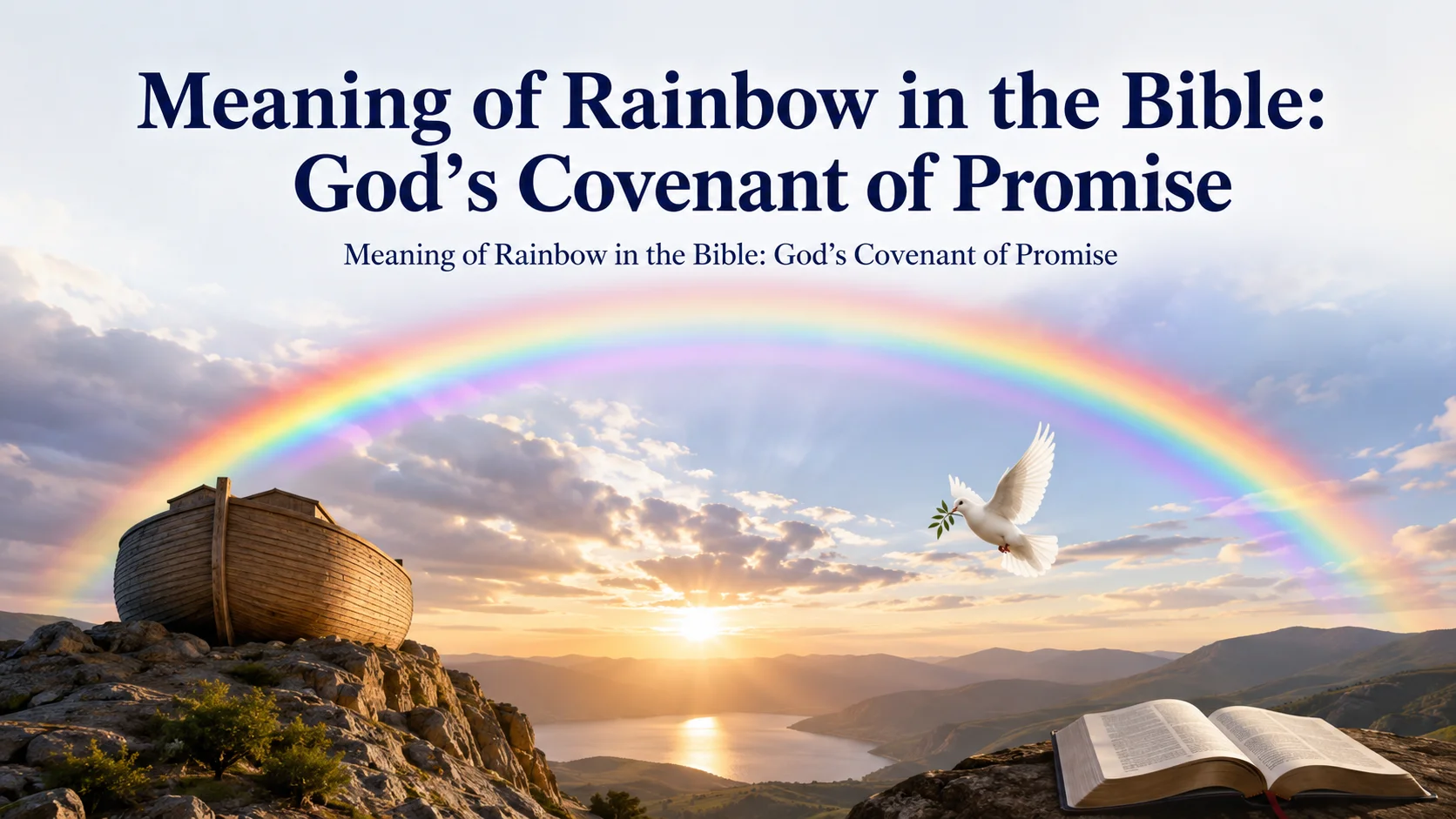
The rainbow is one of the most beautiful and meaningful symbols found in the Bible, representing God’s promise, faithfulness, and everlasting covenant with humanity. After the great flood in the days of Noah, God placed the rainbow in the sky as a visible sign that He would never again destroy all life on earth with a flood. This powerful biblical symbol reminds believers that God always keeps His word and remains true to His promises. Throughout Scripture, the rainbow reflects God’s mercy, grace, and enduring love for His creation. For Christians today, it serves as a constant reminder of divine hope and heavenly assurance.
In the Bible, the rainbow is more than a natural phenomenon; it is a sacred sign of God’s relationship with humanity. The covenant established in Genesis demonstrates God’s desire to protect and preserve His creation, even after mankind’s failures and sins. Whenever the rainbow appears, it symbolizes God’s compassion, patience, and commitment to His people. This colorful display across the heavens points to a God who is both just and merciful, offering opportunities for repentance and restoration. As a result, the rainbow continues to inspire believers to trust in God’s faithfulness during every season of life.
The spiritual meaning of the rainbow extends beyond Noah’s story and appears in visions of God’s glory and majesty throughout Scripture. In prophetic passages, the rainbow is associated with God’s throne, emphasizing His supreme authority, eternal kingdom, and divine presence. These references reveal that the rainbow is not merely a reminder of a past covenant but also a symbol of future hope and redemption. For believers, it encourages unwavering faith, confidence in God’s plans, and trust in His perfect timing. Ultimately, the rainbow stands as a timeless testament to God’s love, promise, and unchanging faithfulness toward all generations.
Quick Answer
The Meaning of Rainbow in the Bible: God’s Covenant of Promise centers on God’s promise to humanity after the flood in Genesis. In the USA, it’s widely understood as a symbol of hope, divine faithfulness, and renewal, while broader spiritual traditions also connect it to peace and transformation.
TL;DR
• Represents God’s covenant after Noah’s flood
• Symbolizes mercy, hope, and renewal
• Appears after storms as reassurance
• Widely recognized in American spiritual culture
• Carries emotional themes of peace and trust
• Its meaning has expanded in modern society
What Is the Rainbow in the Bible?
The rainbow is more than a weather event in scripture. It appears as a sacred sign of divine communication and promise.
For American readers, this matters because biblical imagery still shapes many cultural ideas about hope and reassurance.
The Biblical Appearance
In Genesis 9:13, God places the rainbow in the sky after the flood.
This moment follows Noah’s survival of a world-changing event. The rainbow becomes a visible reminder that destruction would not come again in the same way.
Physical Description
The rainbow appears as:
• Seven visible color bands
• A curved arc across the sky
• A sign following rain or storms
• Light breaking through darkness
Its natural beauty supports its spiritual message.
The Story of Noah and God’s Covenant
To understand the symbol, we must begin with Noah’s story.
This account remains central to Christian teaching in America and shapes how many interpret the rainbow today.
The Flood Narrative
According to Genesis, humanity had become deeply corrupt.
God sent a flood but preserved Noah, his family, and living creatures through the ark.
After the waters receded, a new beginning emerged.
The Covenant Promise
God declared the rainbow as a covenant sign.
This promise included:
• Mercy after judgment
• Preservation of life
• Divine faithfulness
• A lasting reminder for future generations
The rainbow marked restoration.
Read More: Heresy Meaning in the Bible : Truth, Error & Faith Explained (2026)
Ancient Roots of Rainbow Symbolism
Long before biblical writings, rainbows held symbolic value.
Ancient cultures often saw them as bridges between heaven and earth.
Early Civilizations
Many ancient peoples viewed rainbows as sacred pathways.
Examples include:
• Mesopotamian divine signs
• Greek heavenly messengers
• Norse cosmic bridges
• Indigenous weather omens
These meanings often linked rainbows to divine presence.
Biblical Distinction
The Bible gives the rainbow a unique role.
Instead of mystery alone, it becomes a direct symbol of covenant.
That shift shaped later Western interpretations.
Why the Rainbow Symbolizes Promise
The rainbow’s symbolism grows from its timing and appearance.
It comes after storms, making it a natural picture of relief.
A Sign After Darkness
Storms often represent hardship in scripture.
The rainbow appears afterward, signaling:
• Endurance through struggle
• Hope after fear
• Peace after chaos
• Renewal after destruction
This pattern resonates deeply.
Psychological Meaning
People often feel calm when seeing a rainbow.
It evokes:
• Relief
• Wonder
• Safety
• Emotional reset
Because of this, its symbolism feels immediate.
Meaning of the Rainbow in American Christianity
In the USA, biblical symbolism remains deeply woven into culture.
The rainbow often appears in sermons, devotionals, and Christian art.
A Message of Faithfulness
American churches frequently teach the rainbow as proof that God keeps promises.
It often symbolizes:
• Trust in uncertain times
• Assurance during hardship
• Divine remembrance
• Grace over judgment
Cultural Familiarity
Even outside religious settings, many Americans connect rainbows with hope.
This broad recognition keeps the biblical meaning alive.
Biblical Meanings at a Glance
The rainbow carries layered meaning.
The table below shows how it’s often understood.
| Context | Meaning in the USA | Common Associations | Notes |
| Genesis Covenant | Divine promise | Faithfulness, mercy | Primary biblical meaning |
| Prayer and Worship | Spiritual reassurance | Peace, trust | Common in churches |
| Family Devotionals | Teaching tool | God’s love | Often shared with children |
| Personal Reflection | Emotional healing | Renewal | Used during difficult seasons |
| Christian Art | Sacred beauty | Heaven and hope | Popular visual symbol |
Spiritual Meaning Beyond Christianity
The rainbow also carries meaning in other traditions.
These interpretations often focus on connection and transformation.
Jewish Understanding
Jewish tradition also views the rainbow as covenantal.
It serves as a reminder of divine mercy.
Broader Spiritual Views
Other traditions connect rainbows to:
• Enlightenment
• Unity
• Transformation
• Connection between worlds
These meanings differ but often emphasize harmony.
Emotional and Psychological Associations
Symbols affect how people feel.
The rainbow is one of the strongest emotional symbols.
Why It Feels Comforting
Rainbows appear unexpectedly.
That surprise can create emotional uplift.
It suggests beauty can emerge after struggle.
Emotional Themes
People often associate it with:
• Hopefulness
• Calmness
• Wonder
• Emotional healing
This explains its lasting appeal.
Modern Uses of Rainbow Symbolism
Today, rainbow imagery appears everywhere.
Its meaning continues to evolve in American culture.
Popular Uses
The rainbow appears in:
• Home decor
• Tattoos
• Social media graphics
• Greeting cards
• Inspirational art
Each use draws on its emotional power.
Tattoos and Personal Identity
Many choose rainbow tattoos to express:
• Survival after hardship
• Faith in renewal
• Spiritual trust
• Personal transformation
These meanings often reflect the biblical pattern.
Misunderstandings and Changing Meanings
Modern symbolism is rarely fixed.
The rainbow has taken on multiple meanings.
Why Meanings Shift
Symbols evolve with culture.
Different groups adapt them for new purposes.
This is common throughout history.
Staying Grounded in Context
When interpreting the rainbow, context matters.
Its biblical meaning remains:
• Covenant
• Mercy
• Promise
• Divine remembrance
Modern uses may differ, but the original scriptural meaning stays clear.
The Rainbow in Christian Art and Worship
Visual symbolism helps faith feel tangible.
The rainbow has long appeared in Christian creative expression.
Artistic Representation
It often appears in:
• Church stained glass
• Bible illustrations
• Worship banners
• Children’s ministry materials
These uses reinforce hope.
Liturgical Meaning
In worship, it reminds believers of God’s faithfulness across generations.
Its message remains timeless.
Why the Rainbow Still Matters Today
Ancient symbols survive because they still speak to people.
The rainbow remains meaningful because storms remain part of life.
A Universal Reminder
Its message still speaks to modern struggles.
It reminds people:
• Hard seasons end
• Renewal is possible
• Promises endure
• Hope can return
That message feels deeply human.
Frequently Asked Questions
What does the rainbow symbolize in the Bible?
It symbolizes God’s covenant after the flood. It represents mercy, faithfulness, and a promise of preservation.
Why did God choose a rainbow?
Its appearance after storms makes it a powerful visual sign of peace after judgment.
Is the rainbow only a Christian symbol?
No. Many cultures recognize rainbow symbolism. However, its biblical meaning specifically connects to God’s covenant with Noah.
Does the rainbow still represent God’s promise today?
For many believers, yes. It remains a reminder of divine faithfulness and reassurance.
What does seeing a rainbow mean spiritually?
Many people view it as encouragement or hope. Interpretations vary, but it often inspires reflection.
Why has rainbow symbolism changed over time?
Cultural symbols naturally evolve. Different communities assign new meanings while older meanings remain.
Conclusion
The Meaning of Rainbow in the Bible: God’s Covenant of Promise continues to resonate because it speaks to something universal. It reminds people that even after life’s darkest storms, renewal can appear.Its biblical roots point to mercy, faithfulness, and restoration. Yet its modern presence shows how timeless symbols adapt while keeping their original heart.The next time you see a rainbow, it may be worth pausing to reflect on its enduring message: promise often appears just after the storm has passed.