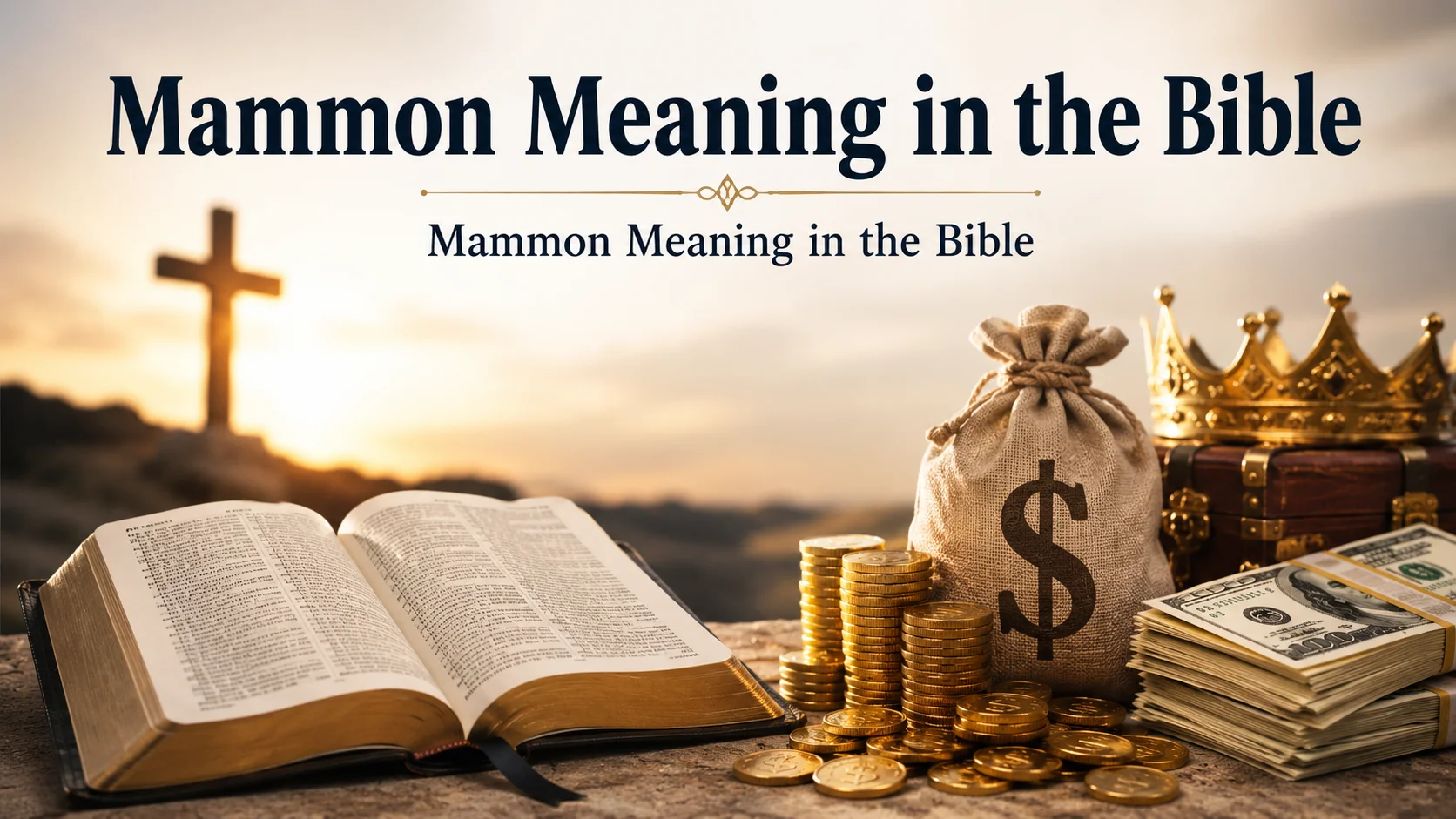
Mammon meaning in the Bible represents wealth, greed, and materialism in spiritual teachings. The word Mammon is used to describe riches that can control human behavior and desires. In the scriptures, Mammon is often seen as a false power opposing God’s truth and righteousness. It symbolizes how money can become a spiritual distraction from a faithful Christian life. The Bible warns believers not to serve both God and Mammon at the same time. This concept teaches that material wealth should never replace faith, love, and obedience.
In the Bible, Mammon represents a powerful symbol of earthly riches and sinful attachment. It highlights the struggle between spiritual values and material desires in human life. Jesus clearly taught that wealth can become a master if not controlled by faith. Mammon is not just money, but a system of worldly temptation and greed. Believers are warned to choose God’s kingdom over temporary riches and comfort. The teaching of Mammon encourages humility, trust, and reliance on divine provision.
The concept of Mammon teaches believers to stay away from greed, corruption, and pride. It reminds Christians that spiritual wealth is more valuable than earthly possessions and riches. Jesus emphasized that a person cannot serve both God and Mammon together. This warning helps believers focus on eternal life rather than temporary financial success. True faith requires letting go of material obsession and trusting in God’s plan. Ultimately, Mammon teaches a deep lesson about loyalty, worship, and spiritual priorities.
Quick Answer
Mammon Meaning in the Bible: Money, Power, or False God symbolizes wealth when it becomes an object of trust, devotion, or control. In American culture, it often represents the spiritual danger of letting money replace moral or spiritual values.
TL;DR
• Mammon symbolizes wealth and material attachment
• It warns against greed and misplaced trust
• Jesus used it as a spiritual contrast
• In America, it reflects consumer culture concerns
• It represents both power and temptation
• Its meaning has evolved over centuries
What Is Mammon in the Bible?
Mammon is one of the Bible’s most striking symbols because it turns wealth into something personal and powerful. For many American readers, it raises questions about money’s role in everyday life.
The Literal Meaning
The word “Mammon” comes from an Aramaic term meaning riches or material wealth. It appears in the New Testament, especially in teachings of Jesus.
Rather than describing money itself as evil, it describes trust placed in wealth.
How It Appears in Scripture
Mammon appears most famously in Matthew 6:24.
Jesus says no one can serve both God and Mammon.
This language gives Mammon almost human qualities, presenting it as a competing master.
Key Biblical Associations
• Wealth as a source of dependence
• Rival loyalty to spiritual devotion
• Material temptation
• False security
• Earthly power
The Historical Origins of Mammon
To understand Mammon, it helps to trace its roots. The symbol developed across cultures before becoming widely known in Christian teaching.
Ancient Linguistic Roots
The Aramaic word māmōnā meant property, possessions, or that which people trust.
Its earliest use was practical, not negative.
However, over time, spiritual writers gave it symbolic meaning.
Early Christian Interpretation
Church leaders in the first centuries began treating Mammon as more than money.
It became a symbol of greed’s spiritual danger.
Some medieval texts even personified Mammon as a demonic force.
Medieval Development
During the Middle Ages, Mammon became linked with moral warnings about excess wealth.
Art often showed Mammon as a figure tempting humans.
This gave the concept a dramatic visual form.
Why Jesus Spoke About Mammon
Jesus used Mammon as a teaching tool. His audience understood wealth’s power in daily life.
This made the warning practical and immediate.
The Contrast Between Masters
Jesus presented a clear choice.
A person could serve spiritual truth or serve wealth.
The message was about loyalty.
Why This Matters Today
Modern Americans face similar choices.
Financial success is often celebrated.
However, Scripture asks whether money serves people or rules them.
The Core Lesson
• Wealth itself is neutral
• Attachment creates spiritual risk
• Trust matters more than possession
• Priorities shape character
Mammon as a Symbol of False Worship
One reason Mammon remains powerful is its connection to idolatry.
It symbolizes devotion misplaced toward material gain.
What Makes It a False God?
A false god takes the place of ultimate trust.
When people look to money for meaning, safety, or identity, Mammon becomes symbolic worship.
Symbolic Characteristics
| Context | Meaning in the USA | Common Associations | Notes |
| Career obsession | Success at all costs | Burnout, ambition | Often culturally praised |
| Consumer culture | Identity through possessions | Luxury, status | Common in advertising |
| Financial fear | Trust in savings alone | Anxiety, control | Reflects insecurity |
| Wealth display | Social approval | Prestige, power | Often tied to image |
| Spiritual teaching | Warning against greed | Reflection, balance | Common in churches |
Why This Resonates
Americans often connect achievement with worth.
This makes Mammon’s warning especially relevant.
Mammon Meaning in American Culture
The symbolism of Mammon has shifted into modern life.
Today, it often appears as a cultural critique.
Consumerism and Excess
Mammon is often used to criticize materialism.
It points to overconsumption and endless wanting.
Popular Media References
Books, sermons, and films use Mammon as shorthand for greed.
It often symbolizes corruption.
Social Commentary
• Wealth without purpose
• Status chasing
• Material identity
• Financial obsession
• Hollow success
Psychological Meaning of Mammon
Mammon also carries emotional and psychological symbolism.
It reflects how people relate to security and control.
The Need for Safety
Money often symbolizes protection.
This can become unhealthy dependence.
Fear and Scarcity
Mammon connects to fear of not having enough.
This fear can shape choices.
Emotional Associations
• Anxiety
• Control
• Desire
• Competition
• Restlessness
Read More: Art Meaning in the Bible : Reflection of Divine Creativity in Scripture
Cross-Cultural and Spiritual Interpretations
Although rooted in Christianity, Mammon reflects broader themes.
Many traditions warn about attachment to material wealth.
Eastern Perspectives
Some Eastern traditions emphasize detachment from possessions.
The lesson is balance rather than rejection.
Jewish Context
Jewish teachings often stress ethical stewardship.
Wealth is viewed as responsibility.
Universal Symbolism
Across cultures, excessive attachment to riches often symbolizes spiritual imbalance.
Mammon in Modern Symbolism
Mammon has moved beyond religious texts.
It now appears in modern identity and expression.
Tattoos
Some use Mammon imagery to symbolize rebellion against greed.
Others use it ironically.
Social Media
Mammon often appears in discussions about hustle culture.
It symbolizes the tension between ambition and ethics.
Home Decor and Art
Dark, dramatic artwork may use Mammon imagery to explore temptation.
Misunderstandings About Mammon
Many people misunderstand the term.
This creates confusion.
It Does Not Mean Money Is Evil
The Bible does not condemn wealth itself.
It warns against worshiping wealth.
It Is Not Always a Literal Demon
Some traditions personified Mammon.
However, many biblical scholars see it as symbolic language.
Common Confusions
• Equating success with sin
• Assuming poverty is automatically virtuous
• Treating Mammon only as mythology
How Mammon’s Meaning Has Shifted Over Time
Mammon’s symbolism has changed through history.
Its modern meaning reflects cultural concerns.
Ancient Meaning
Originally, it simply meant wealth.
Christian Transformation
It became a moral warning.
Modern Revival
Today it often critiques capitalism and consumer culture.
Spiritual Lessons From Mammon
Mammon invites reflection.
Its symbolism asks hard questions.
Questions It Raises
• What controls your choices?
• Where do you place trust?
• Does wealth serve purpose?
Practical Reflection
The lesson is not rejecting money.
It is keeping it in proper perspective.
Mammon in Literature and Popular Culture
Writers often use Mammon to symbolize corruption.
This keeps the symbol alive.
Literary Symbolism
Classic works portray Mammon as greed personified.
Modern Usage
It appears in social criticism and cultural commentary.
This broadens its reach.
FAQs
Is Mammon a demon in the Bible?
The Bible does not clearly identify Mammon as a demon. It is usually understood as symbolic language for wealth as a competing master.
Why did Jesus mention Mammon?
Jesus used Mammon to show how money can compete with spiritual loyalty.
Is having money sinful?
No. The concern is attachment and misplaced trust.
What does Mammon symbolize today?
It often symbolizes greed, consumerism, and excessive devotion to wealth.
Why is Mammon relevant in America?
Because modern culture often emphasizes financial success, Mammon’s warning feels timely.
Can Mammon have positive meaning?
Not usually. It is primarily a cautionary symbol about imbalance.
Conclusion
Mammon Meaning in the Bible: Money, Power, or False God points to one of Scripture’s most enduring warnings. It reminds readers that wealth can become more than a tool if it takes control of loyalty, trust, and identity.In the United States, this symbolism feels especially relevant. Modern life often celebrates financial gain, yet Mammon asks whether success has become a master.Its deeper message is about balance. Money can support life, but it should never define it. Reflecting on Mammon invites people to think carefully about what truly holds value.