The Bible presents eunuchs as individuals whose lives carried unique purpose, identity, and spiritual significance beyond their physical condition. Throughout Scripture, they appear in the courts of powerful kings, serving with remarkable trust, loyalty, and responsibility. While many people today associate the term only with history, the biblical meaning of eunuchs reveals much deeper lessons about faith, service, and God’s plan. Their stories remind readers that God values the heart, obedience, and character rather than outward circumstances. Understanding the Eunuchs Bible Meaning helps believers see how God’s grace, acceptance, and calling extend to every person. This topic also uncovers important historical, cultural, and spiritual truths that remain relevant for Christians today.
In the Old Testament, eunuchs often served in royal palaces, government, and administrative positions, where they held significant authority and responsibility. Although certain Old Testament laws placed restrictions on participation in some religious gatherings, the prophets later revealed God’s greater promise of hope, restoration, and inclusion. One of the most encouraging passages is found in Isaiah, where the Lord promises faithful eunuchs an everlasting name and an honored place among His people. In the New Testament, this message becomes even clearer through the teachings of Jesus Christ and the story of the Ethiopian eunuch, demonstrating that salvation, faith, and God’s kingdom are open to all who believe. These passages highlight God’s mercy, compassion, love, and redemptive plan.
Exploring the Eunuchs Bible Meaning offers valuable insight into biblical history, spiritual growth, and the inclusive nature of God’s Kingdom. Rather than focusing only on their physical condition, the Bible emphasizes their faithfulness, devotion, and willingness to serve the Lord wholeheartedly. Their examples encourage believers to trust God’s purpose, remain faithful during difficult circumstances, and embrace His calling with confidence. The message of eunuchs in Scripture also teaches that true identity, worth, and blessing come from a relationship with God, not from human status or limitations. As you continue reading, you’ll discover the historical background, biblical symbolism, key verses, and the lasting spiritual lessons that make this topic meaningful for modern Christians. Ultimately, the Eunuchs Bible Meaning points to God’s unfailing love, eternal promises, divine acceptance, and saving grace for everyone who seeks Him.
Quick Answer
In the United States, Eunuchs Bible Meaning: Role, Significance, & Message is commonly understood as symbolizing service, dedication, spiritual commitment, and God’s welcome toward people from different life circumstances. More broadly, biblical eunuchs represent individuals whose value comes from faithfulness and character rather than family status, social expectations, or physical condition.
TL;DR
• Eunuchs served important roles in ancient kingdoms.
• The Bible presents several respected eunuch figures.
• They symbolize dedication, service, and faithfulness.
• Isaiah connects eunuchs with divine acceptance.
• Jesus discussed eunuchs in a spiritual context.
• Modern readers often see themes of inclusion and belonging.
What Is a Eunuch in the Bible?
This section explains the basic meaning of the term and why it matters for modern readers. Understanding the historical definition helps clarify later symbolic interpretations.
Definition and Context
A eunuch was generally a man who had been physically altered, often through castration, or someone identified with a social class connected to royal service.
In many ancient societies, eunuchs worked in palaces, government offices, and royal households. Because they often lacked traditional family ties, rulers sometimes viewed them as trustworthy administrators.
Common Biblical Characteristics
• Royal service and administrative responsibility
• Close association with kings and governments
• Trusted positions within courts
• Social status different from ordinary citizens
• Frequent involvement in important political events
Historical Background of Eunuchs
To understand biblical symbolism, readers must first understand the ancient world. Eunuchs existed long before the biblical era.
Ancient Near Eastern Origins
The practice appeared across several ancient civilizations, including Mesopotamia, Persia, Assyria, and Egypt.
Kings frequently appointed eunuchs to oversee royal households, manage finances, or serve as advisors. Their unique status often placed them near centers of power.
Why Eunuchs Became Influential
• Often considered politically reliable
• Held access to royal information
• Managed palace affairs
• Served as diplomatic officials
• Functioned as trusted messengers
Although these roles varied by culture, eunuchs commonly occupied positions of authority and responsibility.
Eunuchs in the Old Testament
The Old Testament contains several references to eunuchs, both directly and indirectly. These passages reveal changing attitudes toward their place within society and faith.
Eunuchs in Royal Courts
Many references connect eunuchs with foreign kingdoms such as Babylon and Persia.
They frequently appear as court officials serving kings and overseeing government duties. Their responsibilities often placed them at key moments in biblical history.
Examples Found in Scripture
• Officials serving foreign monarchs
• Court administrators and advisors
• Palace servants with significant authority
• Government representatives
• Custodians of royal resources
These accounts emphasize function and service more than personal identity.
Isaiah’s Remarkable Promise to Eunuchs
Among all biblical passages, Isaiah’s message is one of the most significant.
A New Vision of Belonging
In ancient Israel, family lineage carried great importance. Therefore, eunuchs could experience social limitations.
However, Isaiah offered a striking promise that faithful eunuchs would receive honor and remembrance from God. This message shifted attention away from physical circumstances and toward faithfulness.
Symbolic Themes in Isaiah
• Divine acceptance
• Spiritual equality
• Lasting remembrance
• Covenant faithfulness
• Hope beyond social barriers
For many modern readers, this passage represents one of the Bible’s strongest images of inclusion.
What Did Jesus Say About Eunuchs?
Jesus addressed eunuchs directly in one of the New Testament’s most discussed passages.
Different Categories Mentioned by Jesus
Jesus referred to people who became eunuchs through different circumstances and also used the term symbolically regarding voluntary devotion to God’s kingdom.
Many scholars understand this teaching as expanding the discussion beyond physical conditions and into spiritual commitment.
Spiritual Lessons
• Dedication to higher purposes
• Personal sacrifice
• Unique life callings
• Faith-centered identity
• Commitment beyond social expectations
As a result, the term gained broader symbolic significance within Christian thought.
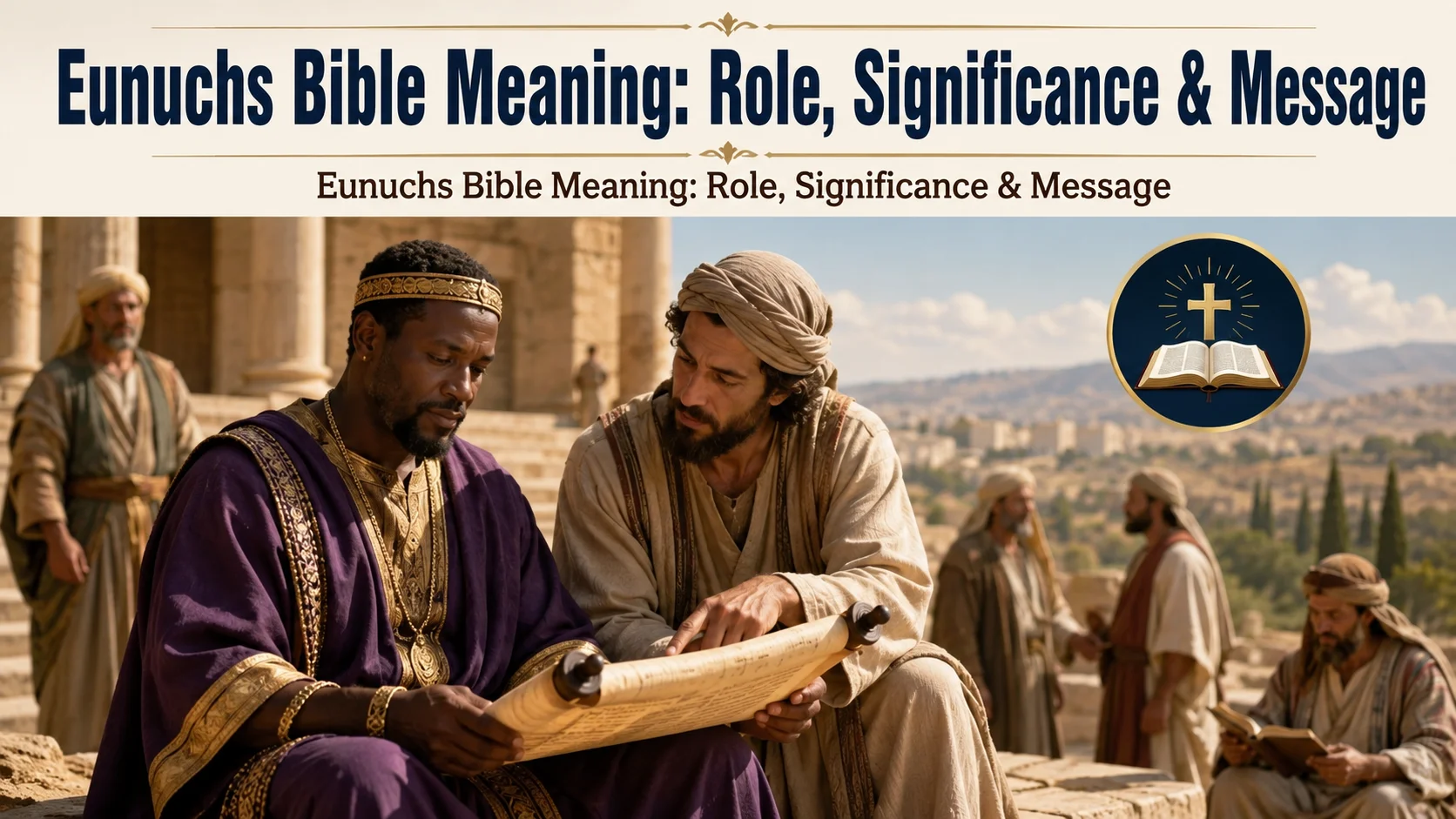
The Ethiopian Eunuch and Early Christianity
One of the most important eunuch stories appears in the Book of Acts.
A Turning Point Narrative
The Ethiopian eunuch encountered the Christian message while reading Scripture during a journey.
After receiving guidance and understanding, he chose baptism. This event became a powerful symbol of faith crossing cultural and geographic boundaries.
Why This Story Matters
The Ethiopian eunuch represents someone seeking truth, asking questions, and responding with faith.
Many readers view this account as demonstrating that spiritual opportunity extends beyond traditional social categories.
Symbolism of Eunuchs in the Bible
Biblical symbolism often goes beyond literal descriptions. Eunuchs came to represent deeper spiritual themes.
Core Symbolic Meanings
| Context | Meaning in the USA | Common Associations | Notes |
| Service | Faithful responsibility | Duty and trust | Linked to stewardship |
| Devotion | Commitment to God | Spiritual focus | Emphasized in teachings |
| Inclusion | Divine welcome | Acceptance | Seen in Isaiah and Acts |
| Sacrifice | Personal dedication | Self-discipline | Symbolic interpretation |
| Identity | Value beyond status | Human dignity | Important modern theme |
Key Symbolic Associations
• Loyalty despite challenges
• Service without recognition
• Faith beyond social labels
• Trustworthiness and responsibility
• Spiritual dedication
Read More:Eunuch Bible Meaning: Understanding Its Spiritual Significance
Spiritual Meaning of Eunuchs
For many believers, the deeper significance lies in spiritual symbolism rather than historical practice.
Faith Over Social Status
A recurring biblical theme teaches that God evaluates the heart rather than outward circumstances.
Because of this, eunuchs became symbols of people whose worth is not determined by societal expectations.
Spiritual Messages Often Drawn
• Inner character matters most
• Faithfulness brings honor
• God sees beyond appearances
• Spiritual purpose transcends limitations
• Belonging comes through faith
Eunuchs and Symbolism in the United States
American readers often approach biblical themes through lenses of equality, dignity, and personal faith.
Modern American Interpretations
In the United States, discussions about eunuchs frequently focus on inclusion, belonging, and spiritual value.
Many churches emphasize that biblical narratives repeatedly show God working through unexpected individuals.
Cultural Associations
• Acceptance within faith communities
• Personal calling and vocation
• Human dignity
• Respect for individual journeys
• Spiritual growth despite obstacles
These themes resonate strongly with contemporary audiences.
Emotional and Psychological Associations
Symbols often carry emotional meaning that extends beyond their historical roots.
Feelings Connected to Eunuch Symbolism
The biblical image of the eunuch can evoke themes of resilience, perseverance, and hope.
Many readers identify with stories involving individuals who feel different, overlooked, or excluded.
Common Emotional Themes
• Courage during uncertainty
• Desire for belonging
• Personal transformation
• Hope and acceptance
• Faith despite challenges
Because of these associations, eunuch narratives often feel surprisingly relevant today.
Modern Usage and Contemporary Discussions
Although eunuchs belong primarily to ancient history, the symbolism remains active.
Where the Symbolism Appears Today
Modern discussions arise in Bible studies, theology courses, faith-based social media, and religious publications.
The focus is usually symbolic rather than literal.
Modern Applications
• Bible study groups
• Religious podcasts
• Online faith discussions
• Academic religious research
• Personal spiritual reflection
The stories continue to inspire conversations about identity and purpose.
Misunderstandings and Controversies
Like many biblical topics, eunuchs are sometimes misunderstood.
Common Misconceptions
Some people assume every biblical reference describes the exact same situation. However, historical contexts varied significantly.
Others overlook the symbolic and spiritual dimensions by focusing only on physical definitions.
Areas of Debate
• Historical definitions and classifications
• Interpretation of Jesus’ teachings
• Symbolic versus literal readings
• Questions of inclusion
• Cultural context differences
Most discussions benefit from recognizing both historical realities and theological interpretations.
How the Meaning Has Changed Over Time
The understanding of eunuchs has evolved considerably.
Ancient Perspectives
In ancient societies, eunuchs were often viewed through practical and political lenses. Their identity was closely tied to social roles.
Modern Perspectives
Today, readers frequently emphasize spiritual symbolism, dignity, and inclusion.
As a result, discussions have shifted from institutional functions toward personal meaning and faith-based reflection.
Major Changes
• From court service to spiritual symbolism
• From political role to faith lessons
• From social status to personal identity
• From historical category to theological reflection
• From ancient custom to modern discussion
FAQs
Were eunuchs respected in biblical times?
Many were. While experiences differed across cultures, numerous eunuchs held influential positions within governments and royal courts.
Why is the Ethiopian eunuch important?
His story demonstrates openness to faith and serves as an early example of Christianity reaching diverse people and regions.
Did Jesus speak positively about eunuchs?
Jesus discussed eunuchs in a thoughtful and nuanced way. His teaching highlighted commitment and dedication rather than social status.
What do eunuchs symbolize spiritually?
They often symbolize devotion, faithfulness, sacrifice, and God’s concern for people beyond conventional expectations.
Are eunuchs a symbol of inclusion in the Bible?
Many readers interpret passages such as Isaiah and Acts as emphasizing welcome, dignity, and spiritual belonging.
Why are people still interested in eunuchs today?
The topic connects ancient history with modern questions about identity, purpose, community, and faith.
Conclusion
The biblical story of eunuchs is about far more than an ancient social category. Throughout Scripture, eunuchs appear as servants, officials, seekers, and faithful individuals whose lives intersect with major moments in God’s story.
Today, Eunuchs Bible Meaning: Role, Significance, & Message continues to resonate because it highlights enduring themes of dignity, service, acceptance, and spiritual purpose. The Bible repeatedly points readers toward character and faithfulness rather than outward status.