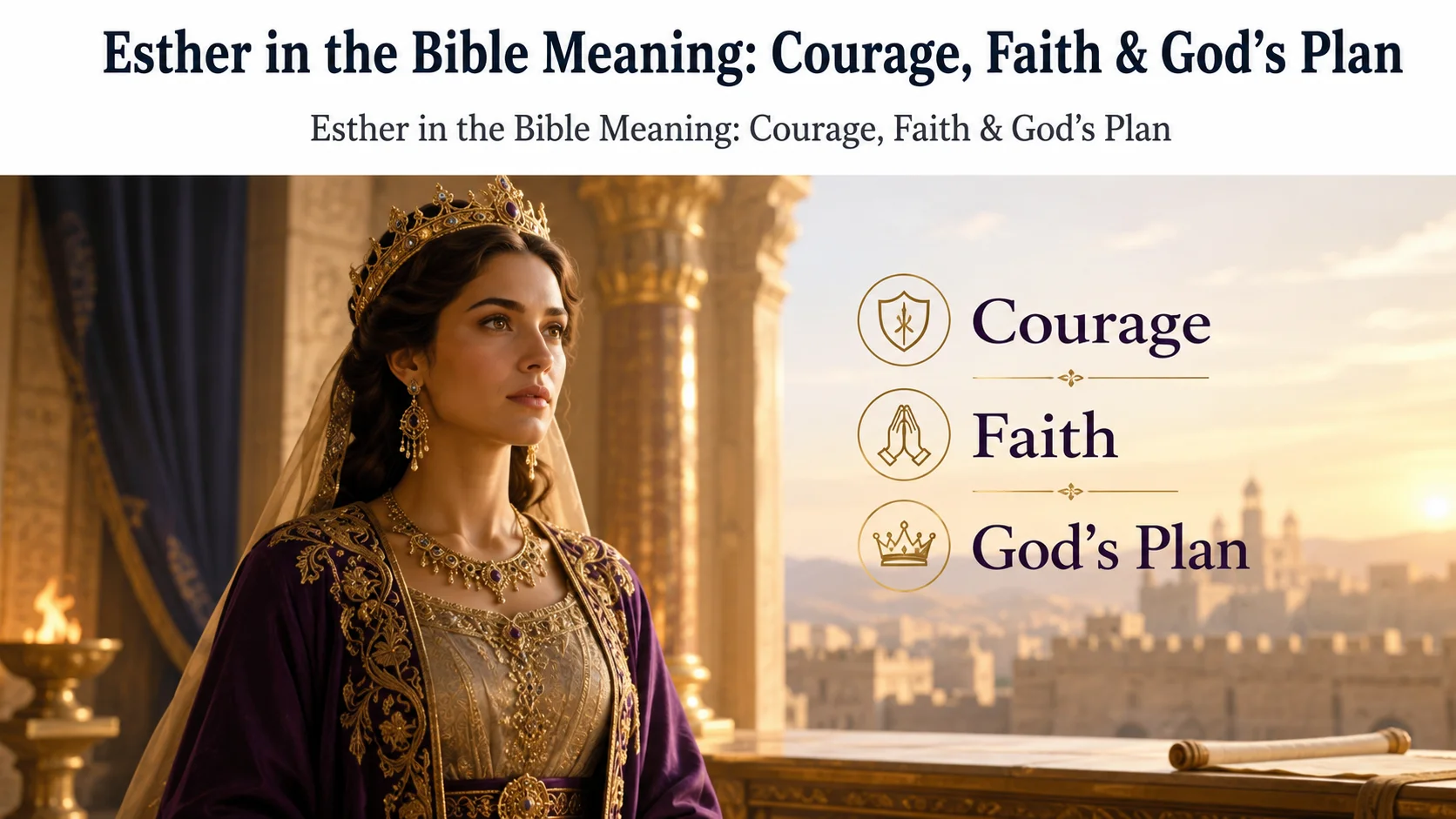
Esther in the Bible Meaning: Courage, Faith, & God’s Plan (2026) continues to inspire millions of people across the United States and beyond. Her story is one of bravery, wisdom, and trust during a time of great danger. Unlike many biblical figures, Esther began as an ordinary young woman who eventually became a queen and helped save her people.Today, many readers see Esther as a symbol of standing up for what is right, even when the risks are high.
Her story appears in religious teachings, women’s leadership discussions, motivational messages, and cultural celebrations. Because of its timeless themes, the Book of Esther remains meaningful for modern audiences.The symbolism of Esther goes beyond history. It touches ideas of destiny, courage, hidden purpose, and faith during uncertain times. These themes continue to resonate strongly in American culture.
Quick Answer
In the United States, Esther in the Bible is widely seen as a symbol of courage, faith, leadership, and trusting God’s plan. Esther’s willingness to risk her position to protect others represents bravery under pressure, while her story also symbolizes purpose, wisdom, and hope during difficult times.
What Is the Story of Esther in the Bible?
Understanding Esther’s symbolism begins with understanding her story. The Book of Esther takes place in ancient Persia, where a young Jewish woman becomes queen.
The Basic Narrative
Esther was raised by her cousin Mordecai after losing her parents. She later became queen of Persia after being chosen by King Ahasuerus.
When a royal official named Haman planned to destroy the Jewish people, Esther faced a difficult choice. She could remain silent or risk her life by approaching the king without permission.
Why Her Story Matters
• She used influence for the good of others.
• She chose courage over personal safety.
• She protected a vulnerable community.
• She acted with wisdom and patience.
• She became a symbol of faithful leadership.
Who Was Queen Esther?
For many readers, Esther represents more than a historical figure. She serves as an example of character and moral strength.
Esther’s Character Traits
The biblical account presents Esther as thoughtful rather than impulsive. She carefully planned her actions and sought guidance before making important decisions.
Her strength came not from physical power but from wisdom, integrity, and courage. This combination makes her story relatable across generations.
Qualities Commonly Associated with Esther
• Wisdom during difficult situations.
• Courage under intense pressure.
• Humility despite royal status.
• Loyalty to her people.
• Patience before taking action.
• Strong moral conviction.
Esther’s Symbolism of Courage
Courage is the most recognized meaning associated with Esther today. Her decision to approach the king became the defining moment of her story.
Courage Despite Fear
Esther was not fearless. Instead, her story suggests she acted despite fear. This distinction is important because many people identify with feeling afraid while still doing what is right.
A Symbol for Modern Readers
In American culture, Esther often symbolizes:
• Speaking truth to authority.
• Defending vulnerable people.
• Taking risks for justice.
• Standing firm under pressure.
• Choosing responsibility over comfort.
Why This Symbolism Endures
People continue to connect with Esther because courage remains relevant. Whether facing personal challenges, leadership decisions, or ethical dilemmas, her example offers a powerful model.
Esther and the Meaning of Faith
Faith is another major theme in Esther’s story. Interestingly, God’s name is not directly mentioned in the Book of Esther.
Hidden Yet Present
Many readers believe the story demonstrates divine guidance working behind the scenes. Events unfold in ways that seem ordinary yet lead to extraordinary outcomes.
Because of this, Esther often symbolizes trusting God’s plan even when it is not immediately visible.
Faith-Related Meanings
• Trust during uncertainty.
• Hope in difficult seasons.
• Belief in a greater purpose.
• Spiritual perseverance.
• Confidence beyond visible circumstances.
Esther and God’s Plan
One of the most discussed themes in Esther’s story is divine purpose.
Chosen for a Purpose
Mordecai’s famous challenge suggests Esther may have reached her position “for such a time as this.” This idea has become one of the most quoted concepts from the book.
Many readers interpret this as a reminder that circumstances may prepare people for important moments.
Purpose and Destiny
• Life can have deeper meaning.
• Opportunities may carry responsibility.
• Difficult situations can serve larger goals.
• Ordinary people can impact history.
• Timing often plays an important role.
Historical Background of Esther
The story takes place during the Persian Empire, one of the ancient world’s most powerful civilizations.
Ancient Persian Context
Esther lived in a royal environment shaped by court politics, cultural diversity, and strict laws. Women rarely held significant public influence.
Against this backdrop, Esther’s actions become even more remarkable.
Historical Significance
The story has been preserved for centuries because it addresses universal themes:
• Survival during adversity.
• Identity and belonging.
• Leadership during crisis.
• Moral decision-making.
• Community protection.
Esther’s Meaning in American Culture
Esther’s symbolism has developed unique significance in the United States.
A Model of Leadership
American audiences frequently view Esther as an example of principled leadership. Her story appears in educational settings, religious communities, and leadership discussions.
Common American Associations
| Context | Meaning in the USA | Common Associations | Notes |
| Faith Communities | Trust in God | Prayer and courage | Very common interpretation |
| Women’s Leadership | Strength and wisdom | Positive influence | Frequently discussed |
| Personal Growth | Purpose and calling | Self-discovery | Popular motivational theme |
| Family Teaching | Integrity and bravery | Moral lessons | Often taught to children |
| Community Service | Helping others | Sacrifice and compassion | Widely respected value |
Modern Relevance
Esther’s story fits American values that celebrate courage, responsibility, and standing up for others.
Spiritual Meaning of Esther
Beyond historical interpretation, Esther carries spiritual significance for many believers.
Inner Transformation
Her journey moves from uncertainty to confidence. As a result, she often symbolizes personal growth and spiritual maturity.
Spiritual Lessons
• Courage can develop over time.
• Faith often requires action.
• Purpose may emerge unexpectedly.
• Character matters during challenges.
• Wisdom strengthens leadership.
Esther as a Symbol of Female Strength
Esther has become one of the Bible’s most recognized female figures.
Leadership Without Force
Unlike many leaders in history, Esther achieved influence through wisdom, diplomacy, and courage rather than military or political power.
Why Many Women Relate to Esther
• She overcame difficult circumstances.
• She used her voice effectively.
• She balanced humility and strength.
• She influenced major events.
• She protected her community.
Emotional and Psychological Symbolism
Symbols often connect deeply with human emotions. Esther’s story is no exception.
What Esther Represents Emotionally
Many people associate Esther with resilience and inner strength. Her journey reflects common emotional experiences such as fear, uncertainty, hope, and determination.
Psychological Associations
• Confidence during adversity.
• Calm under pressure.
• Responsible leadership.
• Emotional resilience.
• Purpose-driven action.
Read More: Naomi in the Bible Meaning: Loss, Faith & Restoration
Why Readers Connect With Her
Esther feels relatable because she began as an ordinary person facing extraordinary circumstances.
Esther in Modern Media and Popular Culture
Today, Esther’s symbolism appears in many modern settings.
Contemporary Uses
Her story is frequently referenced in books, speeches, social media posts, and inspirational content.
Common Modern Applications
• Leadership conferences.
• Faith-based discussions.
• Motivational messages.
• Women’s empowerment themes.
• Community service initiatives.
Digital Age Relevance
The phrase “for such a time as this” remains widely shared online, often connected to purpose and courage.
The Jewish Festival of Purim and Esther
Esther’s story is closely connected to the Jewish holiday of Purim.
What Is Purim?
Purim celebrates the deliverance of the Jewish people described in the Book of Esther. It remains one of Judaism’s most joyful observances.
Symbolic Themes of Purim
• Celebration after hardship.
• Protection and survival.
• Community unity.
• Joy and gratitude.
• Remembering history.
Misunderstandings and Controversies
Like many biblical figures, Esther’s story has inspired different interpretations.
Common Debates
Some readers focus primarily on divine intervention, while others emphasize Esther’s personal courage and leadership.
Different traditions may highlight different aspects of the story.
Important Clarifications
• Esther symbolizes both faith and action.
• Interpretations vary across communities.
• Historical details are debated by scholars.
• The core themes remain widely respected.
Modern Perspective
Most modern discussions focus on Esther’s enduring lessons rather than controversies surrounding historical details.
How Esther’s Meaning Has Changed Over Time
The understanding of Esther has evolved throughout history.
Earlier Interpretations
Historically, Esther was often viewed primarily as a protector of her people and a model of faithfulness.
Modern Interpretations
Today, many readers also emphasize:
• Female leadership.
• Personal empowerment.
• Ethical responsibility.
• Social courage.
• Purpose-driven living.
Continuing Relevance
Although interpretations have expanded, courage and faith remain at the center of Esther’s symbolism.
FAQs
What does Esther symbolize in the Bible?
Esther primarily symbolizes courage, faith, wisdom, and purpose. Her willingness to protect others despite personal risk remains her defining symbolic meaning.
Why is Esther considered brave?
She approached the king without being summoned, which could have cost her life. Her decision placed the safety of others above her own security.
What is the spiritual lesson of Esther?
Many people see Esther’s story as a lesson in trusting divine guidance while taking responsible action. Faith and courage work together throughout the narrative.
Why is Esther important in American culture?
Americans often admire Esther as a model of leadership, integrity, and resilience. Her story aligns with values such as responsibility and standing up for others.
What does “for such a time as this” mean?
The phrase suggests that a person may be uniquely positioned to fulfill a meaningful purpose. It is commonly used to encourage courage during important moments.
How is Esther connected to Purim?
The Jewish festival of Purim commemorates the events described in Esther’s story. It celebrates deliverance, remembrance, and community joy.
Conclusion
The enduring meaning of Esther in the Bible centers on courage, faith, wisdom, and trust in a greater purpose. Her story shows how one person’s choices can influence the lives of many others.Today, Esther in the Bible Meaning: Courage, Faith, & God’s Plan (2026) continues to resonate with American readers because its themes remain timeless.
Whether viewed through a religious, cultural, or symbolic lens, Esther represents the power of acting with conviction when it matters most.Her story invites readers to reflect on their own moments of responsibility, courage, and purpose. In a changing world, those lessons remain as meaningful as ever.