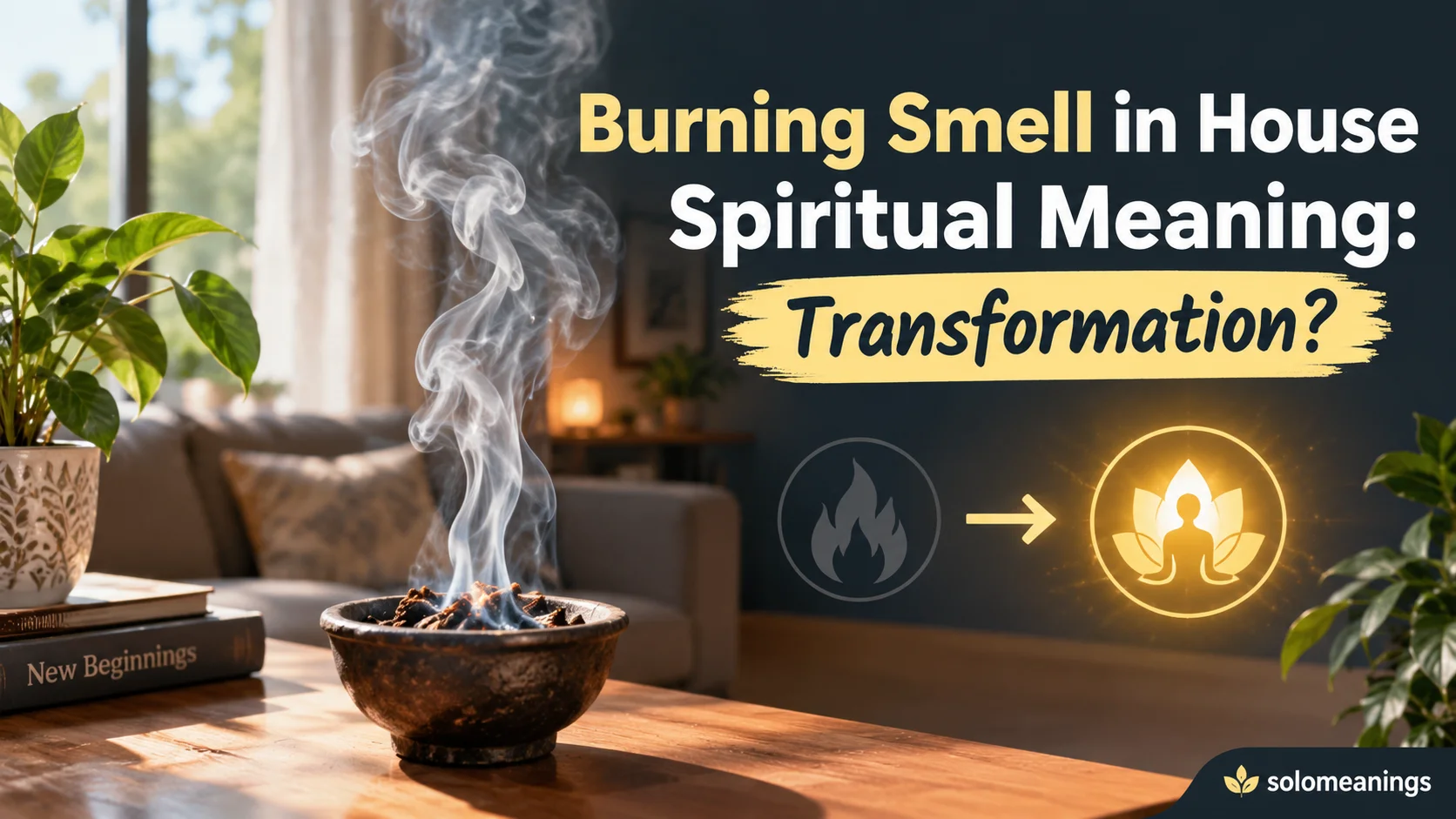
A burning smell in house spiritual meaning can feel mysterious, especially when you can’t find an obvious source. In spiritual symbolism, smoke and fire often represent change, release, purification, warning, and transformation.
For many people in the United States, an unexpected burning scent immediately creates a sense of alertness. Fire is both useful and dangerous, so the smell naturally carries emotional weight. Spiritually, that same reaction can become a symbol of something demanding attention.
However, symbolism isn’t proof that a supernatural event is happening. A burning odor may come from an appliance, wiring, food, dust, or another physical source. If the smell is real, always check your home first.
Quick Answer
Burning Smell in House Spiritual Meaning: Transformation? In American spiritual interpretations, it can symbolize transformation, cleansing, an ending, or a warning to pay closer attention. Broader traditions also connect smoke with prayer, remembrance, purification, and movement between the physical and spiritual worlds.
TL;DR
• Fire often symbolizes transformation, energy, destruction, and renewal.
• Smoke can represent cleansing, prayer, mystery, or spiritual transition.
• A strange smell may symbolize a need for awareness.
• Personal memories can strongly shape the meaning of a scent.
• Spiritual interpretations should never replace checking for real fire hazards.
What Does a Burning Smell in a House Symbolize?
A burning smell can carry several symbolic meanings at once. For an American reader, the strongest ideas are usually transformation, warning, release, and renewal.
Fire as a Symbol
Fire changes whatever it touches. Because of that, many symbolic traditions use fire to represent powerful life changes.
A burning smell may therefore become a metaphor for something changing beneath the surface.
It can suggest that an old habit, relationship, belief, or stage of life is ending. At the same time, the symbol can point toward a new beginning.
Smoke as a Symbol
Smoke adds another layer of meaning. Unlike fire, smoke moves, spreads, and eventually disappears.
Spiritually, this can represent transition. Something may be leaving one state and moving toward another.
Common symbolic associations include:
• Transformation after a difficult period
• Release of emotional or spiritual burdens
• A warning to notice hidden problems
• Cleansing and clearing of old energy
• Transition between one chapter and another
What Is the Spiritual Meaning of Smelling Smoke?
Smelling smoke without an obvious source has a different symbolic meaning from smelling smoke caused by a visible fire.
Some spiritual communities describe unexplained scents as clairalience, meaning a perceived form of intuitive or “clear smelling” experience. These interpretations remain matters of belief rather than established fact.
Smoke as a Spiritual Signal
In symbolic language, smoke can mean that something isn’t completely visible yet. You may sense change before you understand it.
That makes smoke a useful metaphor for uncertainty. It can encourage you to slow down and examine what’s happening around you.
Memory and Personal Meaning
A scent can also bring back powerful memories. The smell of wood smoke might remind someone of camping, family gatherings, or childhood.
Therefore, the meaning may be deeply personal. Your first emotional reaction can sometimes reveal more than a general spiritual dictionary.
What Does Fire Symbolize Spiritually?
Fire has been a major spiritual symbol for thousands of years. Its meaning isn’t limited to destruction.
Transformation and Renewal
Fire destroys one form while creating conditions for another. This makes it a natural symbol for transformation.
For example, a person leaving an old lifestyle may describe the experience as “burning away the past.” The image suggests release rather than simple loss.
Energy and Passion
Fire also represents energy, creativity, courage, and desire. A burning smell may therefore feel meaningful during a period of strong motivation.
In this interpretation, the symbol isn’t about something ending. Instead, it points toward something becoming active.
Destruction and Caution
Fire has another side. It can destroy homes, possessions, and landscapes.
Because of this, spiritual interpretations should never assume every burning smell is positive. Sometimes the symbol is simply a reminder to pay attention.
What Are the Ancient Roots of Smoke and Fire Symbolism?
The connection between smoke and spirituality is much older than modern spiritual trends.
Ancient Incense and Ritual
Ancient societies frequently burned aromatic materials during religious ceremonies. Frankincense and myrrh, for example, were traded widely across the ancient world.
In many traditions, rising smoke created a visible connection between earth and the heavens. The movement of smoke made an invisible spiritual idea easier to picture.
Ancient Mesoamerican cultures also used incense burners during important ceremonies. Maya censers produced clouds of smoke during major ritual events.
Smoke as an Offering
In Jewish and Christian traditions, incense became closely connected with prayer and sacred worship. The rising fragrance could symbolize prayers moving toward heaven.
Similar ideas appeared elsewhere. In parts of East Asia, incense could be associated with ancestors, reverence, and spiritual practice.
These traditions don’t all mean the same thing. However, they show why smoke has remained such a powerful spiritual image.
What Does a Burning Smell Mean in the United States?
In the United States, fire has both practical and cultural meanings. It represents warmth, celebration, danger, independence, survival, and renewal.
Everyday American Associations
Think about common American experiences involving fire. Campfires suggest friendship and relaxation, while candles can suggest remembrance or celebration.
Fireplaces often represent home and comfort. Wildfires, however, represent destruction and loss.
Because of these mixed associations, a burning smell can produce very different emotions.
| Context | Meaning in the USA | Common Association | Symbolic Reading |
| Campfire | Comfort and togetherness | Family, outdoors | Connection |
| Candle flame | Remembrance or celebration | Birthdays, memorials | Memory |
| Fireplace | Warmth and home | Winter gatherings | Security |
| Wildfire | Danger and destruction | Environmental loss | Warning |
| Incense smoke | Reflection or spirituality | Meditation and prayer | Cleansing |
American Media and Popular Culture
Movies and television also influence how Americans understand smoke. A smoky room may suggest mystery, danger, memory, or supernatural activity.
As a result, people may connect an unexplained burning smell with something hidden. That association is cultural as much as spiritual.
What Does a Burning Smell Mean in Other Spiritual Traditions?
Different cultures interpret smoke in different ways. There isn’t one universal spiritual definition.
Asian Traditions
Incense has a long history across several Asian religious and cultural settings. Its smoke may accompany prayer, ancestor remembrance, meditation, or ceremonial practice.
In some Chinese traditions, incense smoke has been understood as connecting heaven and earth. Yet individual practices differ by community and historical period.
Abrahamic Traditions
In Jewish and Christian traditions, incense has strong ritual symbolism. Fragrant smoke can represent prayer and devotion.
Islamic cultures have also used fragrant smoke and incense in social and religious settings. Cleanliness, fragrance, hospitality, and worship can overlap in these practices.
Indigenous Traditions
Many Indigenous peoples have distinct ceremonial relationships with smoke, plants, and fire. These practices should not be reduced to one generic idea of “energy cleansing.”
Instead, each tradition has its own teachings, protocols, and meanings. Respecting those differences matters.
What Does a Burning Smell Mean Emotionally?
Sometimes the symbolism comes from your emotional reaction rather than the smell itself.
Fear and Alertness
A burning smell can trigger immediate concern. That’s understandable because smell can warn people about fire and other dangers.
If you feel frightened, the symbolic message may simply be “pay attention.” It doesn’t necessarily mean something supernatural is happening.
Peace and Nostalgia
Some people experience burning scents as comforting. Wood smoke might remind them of childhood trips or family gatherings.
In that situation, the symbolism may involve belonging, memory, or emotional connection.
Transition and Uncertainty
A strange smell can also appear during stressful periods. You may naturally search for meaning when life feels uncertain.
Spiritually, you might interpret the experience as a reminder to pause and reflect.
Read More: Caterpillar in House Spiritual Meaning: New Beginnings
Can a Burning Smell Symbolize Transformation?
Yes, transformation is one of the strongest symbolic interpretations.
Burning Away the Old
Fire changes materials permanently. Symbolically, that makes it a powerful image for letting go.
The “old” thing could be a habit, fear, expectation, or outdated identity. The important idea is not destruction alone, but what follows it.
Making Space for Something New
Transformation often requires space. Symbolically, fire clears what no longer belongs.
You might see a burning smell as a personal reminder to ask:
• What am I ready to release?
• Which part of my life needs a fresh direction?
• What old belief no longer fits me?
• Where am I resisting necessary change?
• What new opportunity could follow this ending?
What Does a Burning Smell Mean for Spiritual Cleansing?
Smoke is often associated with purification because many traditions use burning materials during ceremonies.
Cleansing as a Symbol
Spiritually, cleansing means removing what feels unwanted, heavy, or outdated.
A burning smell may therefore symbolize emotional housekeeping. It can encourage you to create a calmer environment or reconsider what you carry mentally.
Avoiding Oversimplification
However, cleansing traditions aren’t interchangeable. Sage, incense, resins, herbs, and other materials have different cultural histories.
It’s better to appreciate those traditions without treating every practice as identical.
Does a Burning Smell Mean a Spirit Is Present?
Some spiritual beliefs connect unexplained smells with spirits, ancestors, or loved ones who have died.
Ancestral Interpretation
A person might associate cigarette smoke with a deceased relative who smoked. Another person might connect wood smoke with a grandparent’s home.
The personal connection is often the important part of the interpretation.
Keep the Interpretation Personal
There is no reliable way to prove that an unexplained scent comes from a spirit.
Therefore, it’s healthier to treat this interpretation as symbolic rather than certain. You can honor the memory without assuming a supernatural explanation.
What Does the Type of Burning Smell Symbolize?
The specific scent can change its symbolic meaning.
Wood Smoke
Wood smoke often suggests warmth, grounding, family, and memories of nature.
It can also represent returning to something simple or familiar.
Incense
Incense commonly carries spiritual associations because it has been used in prayer and ceremony for centuries.
Symbolically, it may suggest reflection, devotion, remembrance, or inner quiet.
Cigarette Smoke
Cigarette smoke can have a strong personal association. For some people, it recalls a relative, friend, or earlier period of life.
Therefore, memory may matter more than a universal symbolic meaning.
Burning Rubber or Plastic
These smells tend to create stronger feelings of danger and discomfort. Symbolically, they may represent something unnatural, unstable, or urgently needing attention.
Still, this type of odor should be investigated physically first.
Is a Burning Smell Always a Spiritual Sign?
No. A burning smell can have a completely ordinary explanation.
Check the Physical Source First
Your home may produce burning odors from several sources. Electrical equipment, cooking, heaters, dust, candles, appliances, and wiring can all create unusual smells.
A real burning odor should never be ignored because you believe it has spiritual meaning.
Unexplained Smells
There is also a recognized phenomenon called phantosmia. It means perceiving an odor that isn’t actually present.
Changes in smell can have many causes, including infections, sinus problems, medications, smoking, head injuries, and nervous-system conditions.
If unexplained smells keep happening, especially with other unusual symptoms, consider discussing them with a qualified healthcare professional.
How Should You Interpret a Burning Smell Spiritually?
A thoughtful interpretation starts with context.
Notice What Happened Before the Smell
Ask yourself what you were doing or thinking when it appeared. Were you remembering someone? Making a major decision? Feeling anxious? Starting something new?
These details can help you understand your personal symbolism.
Notice Your Emotional Response
Your reaction can also provide clues.
• Fear may point toward a need for caution
• Calmness may connect with comfort or acceptance
• Sadness may reveal an important memory
• Excitement may reflect personal growth
• Confusion may suggest uncertainty about change
The goal isn’t to force a supernatural explanation. Instead, use the experience as an opportunity for thoughtful reflection.
Can a Burning Smell Represent an Ending?
Yes. Fire often represents the closing of one stage and the beginning of another.
Endings and Release
Something being burned cannot return to its original form. Symbolically, this makes fire a strong image for irreversible change.
That can feel frightening, but endings aren’t always negative. Sometimes an ending creates room for growth.
The Transformation Cycle
A useful symbolic cycle is:
Old state → Fire → Release → Transformation → New beginning
This doesn’t mean every burning smell predicts a major life event. Rather, it provides a framework for thinking about change.
Why Does the Symbolism of Burning Smell Keep Changing?
Meanings shift because cultures and personal experiences change.
Older Meanings
Historically, smoke often had direct religious or ritual associations. People saw it during sacrifices, ceremonies, prayers, incense rituals, and offerings.
Today, many Americans encounter smoke in very different settings.
Modern Meanings
Modern interpretations often blend spirituality with psychology, social media, personal memory, and popular culture.
That has created broader meanings such as transformation, intuition, ancestral remembrance, and emotional release.
Still, older interpretations haven’t disappeared. They continue in religious and cultural practices around the world.
FAQs
Is smelling something burning a spiritual sign?
Some people interpret it as a warning, transformation, cleansing, or spiritual reminder. However, an unexplained smell can also have physical causes.
What does smelling smoke spiritually mean?
Spiritually, smoke may symbolize transition, purification, mystery, remembrance, or awareness. Its meaning depends heavily on personal context.
Does a burning smell mean someone is thinking about me?
Some spiritual beliefs connect familiar scents with deceased loved ones or emotional bonds. There isn’t a reliable way to confirm that interpretation.
What does fire symbolize spiritually?
Fire commonly symbolizes transformation, purification, passion, destruction, and renewal. Different religions and cultures give these ideas different meanings.
Is smelling smoke with no source normal?
An unexplained smell can happen through a phenomenon called phantosmia. If it happens repeatedly, consider discussing the change with a healthcare professional.
Should I worry about a burning smell in my house?
Yes, you should take a real burning odor seriously. Check for obvious hazards and leave the area if you suspect an active fire or dangerous fumes.
Conclusion
A burning smell can carry powerful symbolism because fire and smoke have shaped human culture for thousands of years. Spiritually, they may represent transformation, release, cleansing, warning, remembrance, or renewal.
The Burning Smell in House Spiritual Meaning: Transformation? question doesn’t have one universal answer. Your culture, memories, emotions, and circumstances all influence how you understand the experience.