The number 24 holds a deeply symbolic, spiritual, and meaningful place within the Bible, often representing divine order, priestly service, and heavenly worship. Throughout Scripture, this number appears in significant contexts that reveal God’s perfect plan, sacred authority, and eternal kingdom. Many Bible students and believers view the number 24 as a reminder of God’s organized worship, faithful leadership, and holy presence among His people.
One of the most important biblical connections to 24 is found in the organization of the priesthood during the reign of King David. The priests were divided into 24 divisions, ensuring continuous service, worship, and ministry before God. This arrangement reflected God’s wisdom, structure, discipline, and commitment to maintaining sacred worship. As a result, the number 24 became associated with spiritual responsibility, dedication, obedience, and faithful service to the Lord.
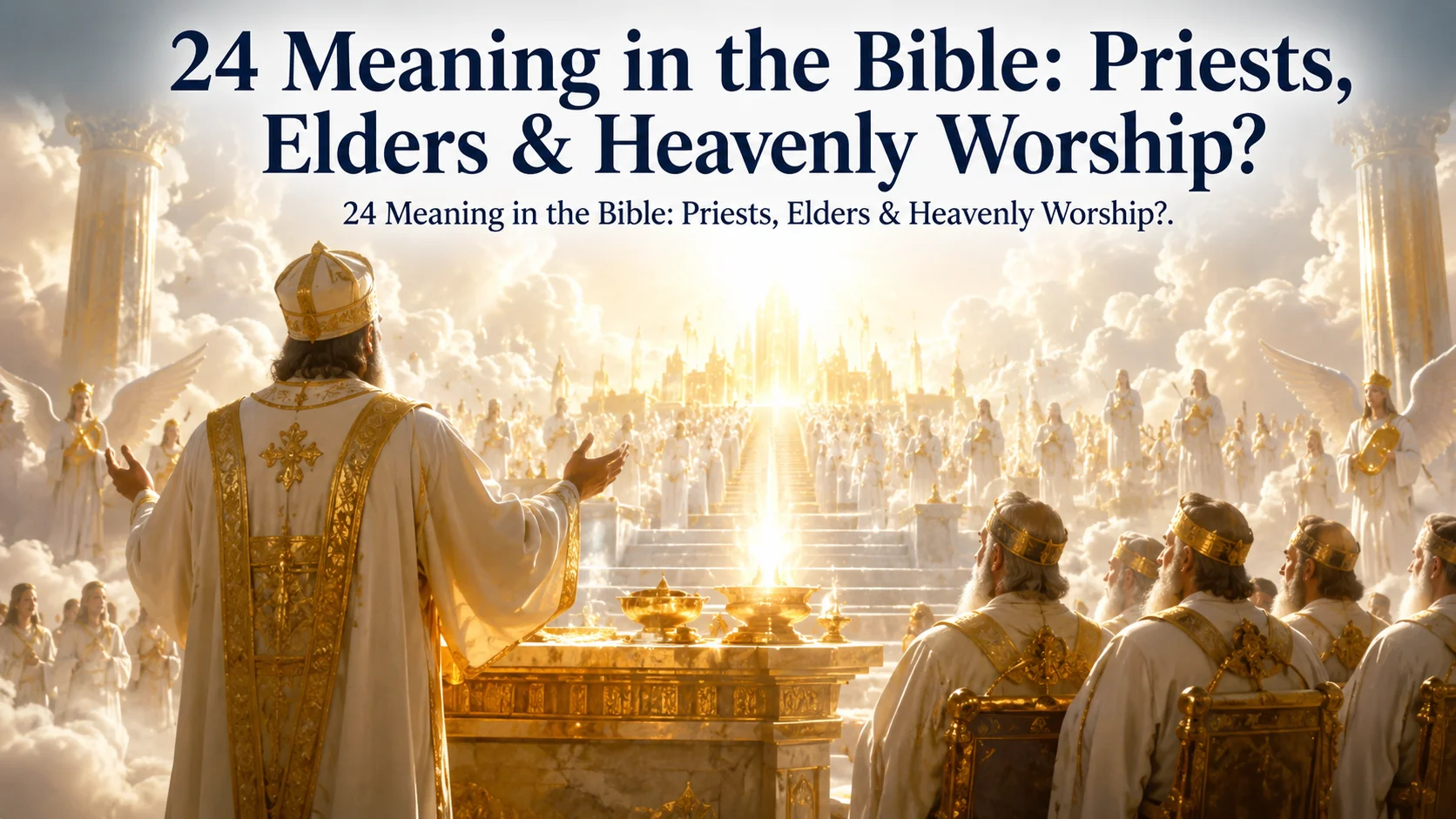
The number 24 also appears prominently in the Book of Revelation, where 24 elders surround God’s heavenly throne in constant adoration, praise, and worship. These elders symbolize honor, authority, redemption, and the unity of God’s people throughout history. Their presence highlights the themes of eternal worship, divine majesty, heavenly leadership, and God’s everlasting glory. For many believers, the number 24 serves as a powerful symbol of faithfulness, reverence, spiritual completeness, and the ultimate purpose of worshiping God forever.
Quick Answer
The 24 Meaning in the Bible: Priests, Elders & Heavenly Worship primarily symbolizes divine worship, spiritual leadership, and God’s orderly plan. In Christian understanding, the number is most closely associated with the twenty-four elders in heaven and the twenty-four priestly divisions established for temple service. Together, these images point to continuous worship and faithful service before God.
What Does the Number 24 Represent in the Bible?
Core Biblical Meaning
The number 24 is not as common as 7, 12, or 40, yet it carries deep symbolic value. Most biblical interpretations connect it with organized worship and spiritual responsibility.
The number often represents:
• Sacred worship before God
• Spiritual leadership and service
• Divine organization and structure
• Unity among God’s people
• Heavenly authority and honor
• Continuous praise and devotion
Why It Matters
For modern readers, 24 highlights the importance of faithful service. Rather than focusing on mystery alone, the number points toward active worship and dedication.
Historical Origins of Biblical Number 24
The Old Testament Foundation
The symbolism of 24 begins in ancient Israel. During King David’s reign, the priesthood was divided into twenty-four groups to ensure orderly temple worship.
This structure allowed priests to serve according to a rotating schedule. Each division had specific duties and times of service.
A Symbol of Order
Ancient Israel placed great importance on organized worship. The division into twenty-four groups demonstrated that worship was not random but carefully arranged according to God’s instructions.
Because of this, the number became associated with sacred order and spiritual responsibility.
The Twenty-Four Priestly Divisions
David’s Organization of the Priesthood
One of the clearest appearances of 24 occurs in the priestly system established by King David.
The descendants of Aaron were divided into twenty-four priestly courses. Each group served in the temple during assigned periods throughout the year.
Symbolic Lessons
The priestly divisions teach several spiritual principles:
• Every believer has a role in worship
• Service requires commitment and discipline
• God’s work involves cooperation
• Worship should be continual
• Leadership carries responsibility
• Sacred duties deserve honor
For many Christians today, these divisions symbolize faithful ministry and dedication.
Read More: Spiritual Yellow Butterfly Meaning in the Bible: Message of Hope
The Twenty-Four Elders in Revelation
A Heavenly Vision
The Book of Revelation contains the most famous reference to the number 24. Around God’s throne sit twenty-four elders dressed in white robes and wearing golden crowns.
These elders appear repeatedly during scenes of heavenly worship.
Their Symbolic Role
The elders are often understood as representatives of God’s redeemed people. Different Christian traditions interpret them in slightly different ways, but most agree they symbolize honor, worship, and spiritual authority.
Key features include:
• White robes representing purity
• Golden crowns symbolizing victory
• Worship directed toward God alone
• Participation in heavenly praise
• Reverence before divine authority
Their presence reinforces the theme of eternal worship.
Priests, Elders, and the Number 24
The Connection Between Both Images
Many biblical scholars see a direct relationship between the twenty-four priestly divisions and the twenty-four elders.
The priesthood served before God on earth. The elders worship before God in heaven.
This connection creates a powerful symbolic bridge between earthly worship and heavenly worship.
Unity of Worship
The imagery suggests:
• Earthly worship reflects heavenly realities
• God values faithful service
• Worship continues beyond earthly life
• Spiritual leadership carries eternal significance
For believers, this creates a sense of participation in a much larger story.
Symbolism of Heavenly Worship
Continuous Praise
One of the strongest themes connected to 24 is constant worship. The heavenly throne room scenes show praise occurring without interruption.
This imagery communicates that God’s worthiness never changes.
What Heavenly Worship Symbolizes
• Adoration and gratitude
• Recognition of God’s sovereignty
• Humility before divine power
• Joyful obedience
• Eternal fellowship with God
The number 24 therefore becomes linked with worship that never ceases.
Biblical Contexts of the Number 24
Key Appearances in Scripture
The number appears in several important settings.
| Context | Meaning in the Bible | Common Associations | Notes |
| Priestly Divisions | Organized worship | Service and duty | Established by David |
| Temple Ministry | Sacred order | Religious leadership | Rotational service |
| Twenty-Four Elders | Heavenly authority | Worship and praise | Found in Revelation |
| Heavenly Throne Room | Divine presence | Eternal worship | Symbolic imagery |
| Spiritual Leadership | Responsibility | Faithfulness | Servants of God |
A Consistent Pattern
Across different biblical settings, 24 consistently points toward worship, leadership, and sacred order.
What Does 24 Symbolize for Christians in the USA?
Modern American Christian Understanding
In the United States, many Christians encounter the number 24 through Bible studies, sermons, and discussions about Revelation.
It is commonly interpreted as a symbol of:
• God’s organized kingdom
• Faithful worshippers
• Spiritual leadership
• Unity among believers
• Eternal praise in heaven
Personal Reflection
Some believers view recurring appearances of the number as a reminder to remain committed to prayer and worship. However, mainstream Christian teaching generally emphasizes biblical meaning rather than personal predictions.
Spiritual Meaning of 24 Beyond Christianity
Broader Religious Perspectives
Although the biblical symbolism of 24 is uniquely Christian and Jewish in origin, the number appears in other traditions as well.
Various cultures have connected 24 with cycles, completeness, or cosmic order.
Shared Themes
Across different traditions, recurring themes include:
• Harmony and balance
• Sacred organization
• Cyclical patterns of life
• Spiritual discipline
• Community responsibility
These parallels show how numbers often become symbols of larger spiritual ideas.
Emotional and Psychological Associations
How People Respond to the Symbol
Numbers can carry emotional meaning when attached to powerful stories. Because 24 is linked with worship and heavenly imagery, it often evokes positive feelings.
Common emotional associations include:
• Reverence and respect
• Hope and encouragement
• Peace and spiritual focus
• Trust in divine order
• Sense of belonging
Modern Symbolic Impact
For many readers, the image of twenty-four elders surrounding God’s throne creates a feeling of unity and purpose.
The Number 24 in Modern Christian Culture
Contemporary Uses
The symbolism of 24 appears in various forms of Christian expression today.
Examples include:
• Church artwork
• Bible study materials
• Religious literature
• Worship music themes
• Inspirational social media content
Symbolic Identity
Some believers use the imagery of the twenty-four elders to represent humility, praise, and devotion.
The focus typically remains on worship rather than superstition.
Common Misunderstandings About the Number 24
Is It a Secret Prophetic Code?
One common misunderstanding is that every appearance of 24 carries a hidden prediction.
Most biblical scholars caution against treating numbers as automatic forecasts of future events.
Separating Symbolism From Speculation
Helpful distinctions include:
• Symbolism differs from fortune-telling
• Context matters in interpretation
• Biblical numbers often teach themes
• Not every occurrence is symbolic
• Historical setting remains important
A balanced approach focuses on the number’s biblical message rather than speculation.
How the Meaning of 24 Has Evolved
Ancient Understanding
Originally, 24 was connected mainly with priestly service and temple worship.
Ancient readers would have recognized its connection to religious structure and sacred duty.
Modern Interpretation
Today, many Christians also associate the number with heavenly worship because of Revelation’s influence.
This shift has expanded its symbolism to include:
• Eternal praise
• Spiritual victory
• Heavenly community
• God’s universal kingdom
The core themes remain remarkably consistent despite changing times.
FAQs
Why are there twenty-four elders in Revelation?
Many interpretations suggest they symbolize the complete people of God worshiping before the throne. They represent honor, authority, and faithful devotion.
What do the twenty-four elders symbolize?
They commonly symbolize worship, spiritual leadership, and redeemed believers. Their crowns and robes emphasize victory and holiness.
Why did David create twenty-four priestly divisions?
The divisions ensured orderly temple worship. They allowed priests to share responsibilities fairly throughout the year.
Is the number 24 considered holy in Christianity?
The Bible does not specifically call 24 a holy number. However, it is strongly associated with sacred worship and divine order.
Does seeing the number 24 have spiritual significance?
Many believers find personal encouragement in biblical numbers. Still, Christian teaching generally emphasizes Scripture’s message over personal number signs.
How does 24 relate to worship?
The number appears in contexts centered on worship, including temple service and heavenly praise. This connection makes worship its strongest symbolic theme.
Conclusion
The 24 Meaning in the Bible: Priests, Elders & Heavenly Worship centers on worship, leadership, and God’s perfect order. From the twenty-four priestly divisions established in ancient Israel to the twenty-four elders surrounding God’s throne in Revelation, the number consistently points toward faithful service and reverent praise.
Although interpretations may vary among Christian traditions, the central symbolism remains remarkably stable. The number 24 reminds readers that worship is both an earthly calling and a heavenly reality.
As people continue exploring biblical symbolism, the story behind 24 offers a powerful picture of devotion, unity, and the enduring relationship between God’s people and divine worship.